Cork render vs silicone render is a choice between a flexible, textured, spray-applied coating made from cork granules in a water-based binder, and a thin-coat silicone finish applied over a base coat with reinforcing mesh that is strongly water-repellent and has a long track record on UK homes. Cork offers a soft, distinctive texture, good flexibility and quick application, often over a prepared existing surface; silicone offers proven weather performance, a crisp finish and the reinforcement of a full render system. Any thermal benefit from a thin cork coat is modest and no substitute for proper insulation. As an indicative guide, cork typically costs around £55–£100 per m² and silicone £65–£95.
- Cork is cork granules in a water-based binder, spray-applied; silicone is a thin-coat finish over a reinforced base coat.
- Cork is flexible and has a soft, textured look; silicone is crisp, fine-textured and strongly water-repellent.
- A thin cork coat adds only a modest thermal benefit; it isn’t insulation in the EWI sense.
- Silicone has the longer track record in the UK climate.
- Cost: cork indicative £55–£100/m², silicone £65–£95/m².
- The condition of the existing wall decides which is realistic as much as the finish does.
What each finish is
Spray-applied cork is a coating made from granulated cork mixed into a water-based binder. Cork is the bark of the cork oak, harvested without felling the tree, and much of the world’s supply comes from Portugal and Spain. The mix is sprayed onto the wall with specialist equipment, building up a finish with a soft, slightly granular texture. Our cork render page explains the product and how it’s used.
Silicone render is a thin-coat render system. On a typical wall, beads are fixed at corners and openings, a base coat is applied with reinforcing mesh bedded across the whole wall, then a primer and a thin through-coloured finish bound with silicone resins. The finish is strongly water-repellent and vapour-permeable. See our silicone render page for the full system.
The key structural difference is that silicone is normally the top layer of a full, reinforced render build-up, whereas cork is often sprayed as a coating system over a sound, prepared existing surface. That shapes almost every comparison below.
Cork and silicone at a glance
| Spray-applied cork | Silicone | |
|---|---|---|
| Indicative cost / m² | £55–£100 | £65–£95 |
| What it is | Cork granules in a water-based binder | Silicone-resin finish over base coat and mesh |
| Application | Spray-applied, often over existing surface | Hand or machine, in several stages |
| Flexibility | High | High (with mesh) |
| Water repellency | Good (varies by product) | Very high |
| Breathability | Described as breathable | High |
| Thermal benefit | Modest at typical thickness | Negligible on its own |
| Look | Soft, granular texture | Fine, even, crisp |
| UK track record | Newer | Long-established |
| Needs painting | No | No |
indicative Ballpark figures. Product data varies between manufacturers, so check the specific system being quoted.
How each goes on
Cork is applied with spray equipment. After scaffolding and protection, the existing surface is cleaned, any loose or hollow areas repaired, cracks treated and a primer applied where the system requires one. The cork mix is then sprayed on in one or more passes to the specified thickness. Because there’s often no separate base coat and mesh stage, a job can move quickly on a suitable wall, weather permitting.
Silicone goes on in stages: beads, base coat with mesh, a curing period, primer, then the finish, which may be trowel-applied or sprayed. Each stage needs suitable weather and curing time. It takes more visits to the wall, but the result is a reinforced render system that can level and bridge an uneven or patched background.
Both should be kept out of frost and rain while they’re applied and curing, and both need careful masking because overspray travels. Our guide to spray render explains the general pros and cons of machine application.
Flexibility and cracking
Flexibility is one of cork’s main selling points. Cork is naturally elastic, and in a flexible binder it can accommodate small movements in the wall and bridge fine hairline cracks in the surface beneath, which is why it’s often marketed for tired, lightly crazed render.
Silicone finishes are also flexible, and a silicone system gets much of its crack resistance from the reinforcing mesh in the base coat, which spreads stresses across the wall and around openings. That reinforcement is a real strength over mixed substrates, old patched walls and the junctions between extensions and the main house.
Neither will hide genuine structural movement. Wide, stepped or recurring cracks need investigating and fixing before any finish goes on, whichever you choose. And neither will hold onto hollow, blown render beneath it: the background must be sound.
Insulation claims: keeping them in proportion
Cork is a good natural insulator in bulk, which is why cork coatings are sometimes described as insulating or thermally improving. It’s worth keeping that in proportion. A sprayed cork finish is typically only a few millimetres thick, and at that thickness its contribution to a wall’s overall thermal performance is modest. Some manufacturers publish thermal data for their products, so ask for it if insulation matters to you. But a thin coat is not comparable with an external wall insulation system, which uses insulation boards many centimetres thick.
A thin silicone finish adds little insulation on its own either. If your goal is a meaningfully warmer house, the conversation is about insulation, not about which finish you choose; silicone and other thin-coat finishes are widely used as the top coat on insulated systems. Our guide to external wall insulation render explains how those systems work.
Some cork products are also described as having acoustic benefits. As with thermal claims, ask for the manufacturer’s test data for the specific product rather than relying on general descriptions.
Breathability
Both are generally described as vapour-permeable, meaning they let moisture vapour escape from the wall rather than trapping it. Silicone’s breathability is well documented; it’s one reason silicone is used on a wide range of walls, including some older properties over a suitable base coat. Cork coatings are also marketed as breathable, with figures varying by product.
On a modern cavity wall, either is usually fine. On an older solid wall that needs to dry out through its face, breathability matters much more, and you should ask for the specific product’s vapour permeability data and how it will perform over whatever is already on the wall. A breathable finish over a non-breathable existing render doesn’t make the wall breathable. Our guide to breathable render explains what to look for.
Water repellency and weathering
Silicone’s defining strength is water repellency. Rain beads and runs off, carrying dirt with it, and the surface dries quickly, which helps on exposed elevations, coastal homes and gable ends facing the prevailing weather. Its performance in the UK climate is well established over many years.
Cork coatings are designed to resist rain while remaining breathable, and products typically include water-repellent properties. How each product performs on a very exposed, rain-lashed elevation is something to check with the manufacturer’s data and, ideally, by seeing local examples that have been through several winters.
On a sheltered or moderately exposed wall, the difference may be small. On a severely exposed one, silicone’s longer track record gives more certainty.

Look and texture
This is the most obvious difference from the street.
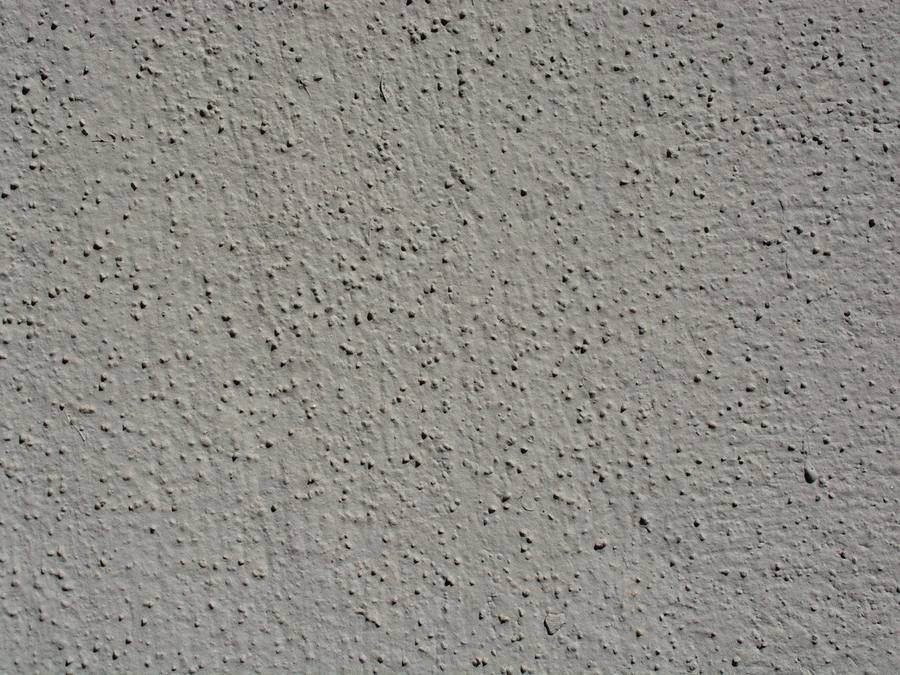
Cork has a soft, slightly granular, natural-looking texture. Many people like it on cottages, rural houses and homes where a gentler, less manufactured surface suits the character. It’s also forgiving of minor unevenness, because the texture disguises small imperfections.
Silicone gives a fine, even, crisp finish, set by the grain size of the aggregate. It suits modern houses, clean lines and contemporary colours, and can be specified in different grain sizes for a slightly more or less textured look.
The only reliable way to choose is to see both in real life. Photographs flatten texture, and a sample board looks different on a whole elevation in changing light. Ask your installer for addresses of local houses finished in each, ideally a few years old.
Colour choice
Both are through-coloured, so neither needs painting. Silicone offers a very wide palette, from whites and creams through stone and greys to strong and dark shades such as anthracite, with heat-reflective formulations available for darker colours. Cork coatings are also available in a broad range of colours, though the textured surface makes the same colour read slightly softer and more muted than on a fine silicone finish.
If you have a specific colour in mind, check it’s available in the product being quoted, and look at a sample outside in daylight, against your roof and windows, before you decide.
Durability and track record
Silicone render has been used on UK homes for many years, and installers, manufacturers and surveyors have a good understanding of how it ages in British weather. Well applied to a suitable wall, it can be expected to last for many years with light maintenance.
Spray-applied cork is newer in the UK. It has a longer history in southern Europe, and manufacturers offer their own guarantees, but there’s simply less local, long-term evidence of how it performs across the full range of UK walls and exposures. That isn’t a criticism of the product; it’s a reason to look carefully at the manufacturer’s guarantee, the installer’s experience and local examples.
For both, lifespan depends far more on preparation, the condition of the background and the quality of installation than on the product name.
Cleaning and maintenance
Neither needs painting, and both benefit from occasional attention on shaded or damp walls.
Silicone’s smooth, water-repellent surface sheds dirt well, and on most walls it needs cleaning infrequently. When it does, a soft brush and a suitable render cleaner usually restore it.
Cork’s textured surface can hold more airborne dirt in its texture over time, particularly on walls under trees or near busy roads. Manufacturers recommend gentle cleaning methods suited to their products; follow them, and avoid aggressive pressure washing on either finish.
For repairs, small areas of either can be patched, though matching a weathered colour and texture exactly is never perfect. Cork can typically be refreshed by re-spraying over a sound existing coat; silicone can be cleaned, primed and over-coated with a new thin finish. Keep gutters and downpipes clear, and check that sills throw water clear of the wall, whichever you choose.
How the prices compare
As an indicative guide, cork typically costs around indicative £55–£100 per m² and silicone £65–£95. The ranges overlap almost entirely, so on many houses the price won’t decide it.
As illustrative arithmetic, a hypothetical 100m² of wall would be roughly indicative £5,500–£10,000 in cork and £6,500–£9,500 in silicone for the finish work. Where cork can go directly over a sound existing surface, avoiding a full base coat stage, the job can come in towards the lower end. Where the wall needs significant repair or levelling first, the gap narrows or reverses. Scaffolding, protection and access cost much the same either way and should be itemised.
If the existing render is failing and has to come off, both options start from the same place: an all-in strip and re-render is typically indicative £100–£170 per m². Our silicone render cost guide explains silicone pricing in more detail, and our house rendering cost guide covers whole-house budgets.
Which walls suit which
Sound existing render that looks tired. This is where cork is most often proposed, because it can go over a cleaned, repaired, primed surface without a full new render build-up. Silicone can also refresh sound render, usually with a base coat and mesh first, or sometimes a new thin finish over an existing thin-coat system.
Uneven, patched or mixed substrates. Silicone over a levelling base coat with full mesh is generally the more robust specification, because the base coat evens out the surface and the mesh reinforces junctions.
Pebbledash and heavy textures. Both need the existing finish to be sound. A levelling base coat is normally needed before silicone; ask how a cork system deals with deep texture and loose stones.
New blockwork and extensions. Silicone is the established choice. Check the cork manufacturer’s guidance for new masonry.
Older solid walls. Breathability matters most; check vapour data for both, and consider whether lime or a mineral finish would be more appropriate.
What preparation each needs
Whichever finish you choose, preparation decides how long it lasts, and it’s where quotes differ most.
For both: the wall is cleaned of dirt, algae and loose material; any green growth is treated with a suitable biocide; hollow or blown areas are cut out and rebuilt; cracks are investigated and repaired; and leaking gutters, downpipes or sills are fixed so water isn’t running down the new finish. Windows, doors, paths and plants are masked and protected.
For cork: because the coating often goes directly over the existing surface, that surface has to be genuinely sound. Flaking paint must come off, and a primer specified by the manufacturer is usually applied to control suction and help adhesion. Cork can disguise minor unevenness, but it doesn’t level a badly uneven wall the way a base coat does.
For silicone: after repairs, beads are fixed and a base coat is applied with mesh across the whole wall. That base coat can level an uneven or patched background and bridge junctions between different materials, which is why silicone is often specified over older, mixed walls. The extra stage adds time and cost, but also robustness.
Ask each installer to walk you round the wall and show you what they’ve found, and how their preparation deals with it. A quote that skips over preparation is the one to question.
The verdict, scenario by scenario
Sound but tired render on a modern house, moderate exposure, and you like a softer texture. Cork is a reasonable option worth pricing, especially if a quicker, less disruptive application appeals.
Exposed, coastal or rain-lashed elevation. Silicone, for its proven water repellency.
Uneven, cracked or patched wall. Silicone over a levelling base coat with full mesh, after repairs.
Crisp, contemporary look or a dark colour. Silicone.
Cottage or rural property where a natural, textured surface suits. Cork may suit the character well, provided the wall is sound and breathability is checked.
You want a warmer home. Neither finish on its own will make a big difference; look at insulation first.
You want the most certainty. Silicone’s longer UK track record counts for a lot.
Weighing cork against silicone? SmartMatch™ pairs you with one vetted local specialist for a free survey and an honest view on what suits your walls.
Get a free quote →Installers and guarantees
With either product, the installer matters more than the brand. Ask how long they’ve been applying the specific system, how many jobs they’ve done, and whether you can see examples that are a few years old.
Check exactly what the guarantee covers: the product, the workmanship, or both; for how long; whether it’s backed by the manufacturer or insured; and what conditions apply, such as maintenance requirements. For cork, where UK experience is shorter, a clear manufacturer-backed guarantee through a trained installer is particularly worth having. For silicone, many manufacturers offer system guarantees when their products are applied by trained installers.
How they sit among other finishes
Silicone is the benchmark most other finishes get compared against. If you’re still deciding, our silicate vs silicone render guide covers a highly breathable mineral alternative, our acrylic vs silicone render guide covers the tougher, slightly cheaper resin option, and our K-Rend vs silicone render guide explains how that brand fits in. Each has a place; the right one depends on your wall.
Comparing cork and silicone quotes
A cork quote and a silicone quote are rarely like for like. One may be a coating over the existing surface; the other a new reinforced render build-up. To compare fairly, ask each installer to state: the full specification for each layer, including primer, base coat and mesh if used; what preparation and repairs are included; how hollow or cracked areas will be dealt with; the finish thickness; scaffolding, protection, sills and fittings; waste and VAT; the guarantee and who backs it; and how unforeseen work will be priced.
Ask each whether the other product would suit your wall, and why or why not. Our guide on how to compare rendering quotes explains how to brief installers so their figures line up.
When neither might be right for you
Neither is the right answer if the existing render is hollow or failing and needs stripping first, if there’s an unresolved damp or structural problem, or if the building is historic and built in lime, where a traditional lime render may be more appropriate. If your main goal is a warmer home, an insulated render system is a different conversation. If your brickwork is sound and attractive, cleaning and re-pointing may be all it needs. And some homeowners also compare masonry wall coatings, a different product worth weighing on its merits.
Most of our specialists take on projects from around £3,500, so they’re best suited to larger repairs and re-renders; for a single small job, a local builder or plasterer may be quicker.
If you’d like expert advice on your walls, SmartMatch™ weighs render-type experience, verified reviews, online reputation, insurance and accreditation to introduce you to one vetted local specialist for a free, no-obligation survey and written quote. Our spray cork and silicone render pages explain each option in more depth, and our exterior rendering guide covers the wider choices.
Frequently asked questions
What is the difference between cork render and silicone render?
Is cork render better than silicone render?
Is cork render cheaper than silicone?
Does cork render insulate a house?
Is cork render breathable?
Which is more water-repellent, cork or silicone?
Can cork render go over existing render?
Does cork render crack?
How long does cork render last compared with silicone?
How do I clean cork render?
Get cork and silicone priced for your walls
Tell us about your property and SmartMatch™ pairs you with one vetted local render specialist for a free, no-obligation survey and written quote.
Get a free quote →