Tyrolean render is a decorative, textured finish created by flicking ("throwing") a cement-based mix onto the wall with a hand-cranked or machine spray, building up a distinctive rough, stippled surface. Common on mid-20th-century and council-era UK homes, it's hard-wearing and hides imperfections, costing around £50–£80 per m². It's a traditional, budget-friendly rendering finish, though less fashionable than modern smooth renders.
If you've seen a wall with a rough, spattered, almost honeycomb texture, that's Tyrolean — built up in layers by spraying rather than trowelling.
- A textured finish sprayed or flicked onto a render base, giving a rough, stippled surface.
- Applied with a 'Tyrolean gun' (a hand-cranked flicker) or machine, in several thin layers.
- Very common on 1950s–1970s and council-era UK housing; hard-wearing and good at hiding flaws.
- Typically painted, with a repaint cycle; cost around £50–£80/m².
- Durable and cheap, but dated-looking and harder to clean than smooth modern renders.
What is Tyrolean render?
Tyrolean render is a decorative textured finish rather than a render system in its own right. It's created by spraying or flicking a fluid cement-based mix onto a prepared render base coat, building up a characteristic rough, stippled, almost honeycombed surface. The name comes from the Tyrol region of the Alps, where the rugged style originated.
In the UK it became hugely popular through the mid-20th century and is strongly associated with 1950s–1970s and council-era housing, where its hard-wearing texture and ability to disguise imperfect brickwork made it a practical, economical choice. Many homeowners today recognise it as that distinctive rough finish on older semis and terraces.
The texture is built up by repeatedly passing a "Tyrolean gun" — a hand-cranked drum with flicking blades — across the wall, or by using a machine spray. Several thin layers create the depth of texture. Because it's cement-based and not self-coloured, Tyrolean is normally painted, and like other traditional finishes it needs repainting over time. It's durable and cheap, but its dated appearance and the difficulty of cleaning its rough surface mean many homeowners now replace it with smooth modern render.
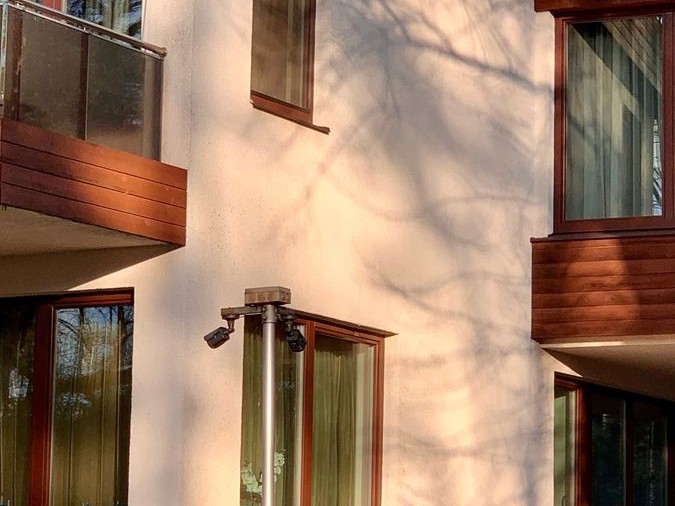
How Tyrolean render works
- Base coat — a sand and cement scratch/base coat is applied to give a sound, keyed surface.
- Tyrolean layers — the fluid Tyrolean mix is flicked or sprayed on in several passes, each adding texture and depth.
- Drying and painting — once cured, the finish is painted with masonry paint, often in white or a pale colour.
The build-up of multiple sprayed layers is what gives Tyrolean its rugged, three-dimensional look. The texture genuinely is hard-wearing and excellent at masking minor unevenness in the wall beneath — which is exactly why it was so widely used on mass housing. The downsides flow from that same texture: it collects dirt and algae in its crevices, is harder to clean than a smooth wall, and being cement-based it offers limited breathability.
How is Tyrolean render applied?
- Preparation — scaffolding, cleaning and a sound base coat with beads for edges.
- Spraying/flicking — the Tyrolean mix is applied in several thin layers, the operator working methodically across each elevation for an even texture.
- Curing — the finish is left to cure fully.
- Painting — masonry paint is applied once the render is dry.
Getting an even texture across a whole wall takes a steady, practised hand — patchy or inconsistent flicking shows badly on the finished surface. As with all cement finishes, it can't be applied in frost or heavy rain and must dry fully before painting.
Benefits of Tyrolean render
- Hard-wearing texture — the rugged surface copes well with weathering and knocks.
- Hides imperfections — excellent at disguising uneven or patchy brickwork beneath.
- Economical — a budget-friendly traditional finish.
- Distinctive look — suits properties where matching the existing period style matters.
- Repaintable — colour can be changed at each repaint.
- Proven durability — many Tyrolean finishes from decades ago are still in place.
Repairing, matching or replacing Tyrolean render? Get a free, no-obligation quote from one vetted specialist.
Get a free quote →Drawbacks and things to consider
- Dated appearance — strongly associated with mid-century housing; less desirable than smooth modern render to many buyers.
- Hard to clean — dirt and algae lodge in the texture, and the rough surface can't be wiped or gently washed as easily as smooth render.
- Needs painting and repainting — not self-coloured, so expect a repaint cycle.
- Limited breathability — cement-based, so not ideal for older solid walls.
- Can crack — like other cement finishes, it can crack over a moving or poorly prepared substrate.
- Texture consistency — depends heavily on the operator's skill.
How much does Tyrolean render cost in the UK?
Tyrolean render typically costs £50–£80 per square metre applied, plus painting. Whole-property guides:
| Property | Typical cost |
|---|---|
| Per m² | £50–£80 |
| Mid-terrace house | £4,500–£8,000 |
| 3-bed semi-detached | £6,000–£10,500 |
| Detached house | £10,000–£16,000+ |
Budget figures only, and painting adds to the total. Replacing Tyrolean with a modern smooth render costs more because of removal. A survey gives the accurate number.
What affects the price?
- Repair vs full re-render — patching existing Tyrolean is cheaper than a full new finish.
- Whether you're replacing it — removing old Tyrolean to fit smooth render adds removal cost.
- Painting — masonry paint and a second visit.
- Access and scaffolding — height and elevations.
- Wall area and detailing — features and openings.
- Region — labour rates vary nationally.
Tyrolean vs other finishes
| Tyrolean | Pebbledash | Silicone (smooth) | Monocouche | |
|---|---|---|---|---|
| Texture | Rough/stippled | Stony | Smooth/fine | Fine scraped |
| Needs painting | Yes | Usually no | No | No |
| Modern look | No | No | Yes | Yes |
| Ease of cleaning | Hard | Hard | Easy | Medium |
| Cost | £ | £ | £££ | ££ |
Tyrolean and pebbledash are the two classic textured finishes of older UK housing, and both are commonly removed today in favour of smooth modern render. If you want a contemporary look, silicone or monocouche over a sound wall is the usual upgrade. If you're matching or repairing existing Tyrolean to keep a property's character, a cement-based approach is appropriate.
Is Tyrolean render right for your home?
- Matching existing Tyrolean — repairs or extensions on a property that already has it.
- Budget textured finishes — where a hard-wearing, economical look is wanted.
- Hiding imperfect brickwork — its texture masks uneven walls well.
For most modern refurbishments, homeowners now prefer to remove Tyrolean and fit a smooth, self-coloured render for a contemporary, low-maintenance, easier-to-clean finish. On older solid walls, breathability points to lime rather than a cement-based Tyrolean. A surveyor can advise whether to repair, repaint or replace.
Maintenance, cleaning and lifespan
Tyrolean is durable and can last 15–25 years or more, but its rough surface is its maintenance challenge. Dirt and algae lodge in the texture and are harder to remove than on smooth render — a soft brush and render cleaner help, but avoid harsh jet washing, which can blast the texture off. Expect to repaint periodically. Keep an eye out for cracks and have them filled before water gets behind the finish.
Common problems (and how to avoid them)
- Uneven texture — from inconsistent flicking; avoided by an experienced operator working methodically.
- Algae and dirt build-up — inherent to the texture; minimised with a biocidal wash and keeping vegetation back.
- Cracking — over a moving or poorly prepared base; a sound base coat and good prep prevent most of it.
- Blown sections — where the finish has debonded; tapping reveals hollow areas needing repair.
Why so many UK homes have Tyrolean render
If you own a home built or refinished between the 1950s and 1970s, there's a good chance it wears a Tyrolean finish, and there are practical reasons for that. In the post-war building boom, councils and developers needed finishes that were cheap, fast to apply over large estates, durable in the British climate and forgiving of the variable brickwork of mass construction. Tyrolean ticked every box: the sprayed texture hid imperfections, shrugged off weather, and could be applied quickly across whole terraces. The result is that Tyrolean became part of the visual signature of mid-century British housing. Understanding that heritage helps when you're deciding what to do with it — on some streets the texture is part of a consistent character, while on an individual modernised home it can look dated and out of step with updated neighbours.
Removing Tyrolean for a modern finish
The most common Tyrolean project today isn't repair but replacement: stripping the dated texture and re-rendering with a smooth, self-coloured modern finish. As with pebbledash removal, the first question is whether the existing Tyrolean is sound enough to render over, or whether it needs hacking off first — a decision made by tap-testing for hollow, blown areas. If it's sound, a base coat and mesh can often go straight over it, saving the considerable cost and mess of removal; if it's failing, it comes off back to sound masonry. The usual replacement is a silicone render for its low-maintenance, self-cleaning, no-paint finish, which is about as far from rough, hard-to-clean Tyrolean as you can get. It's one of the most transformative upgrades available to a tired mid-century property.
How to choose the right renderer
Whether you're repairing Tyrolean to match or removing it for a modern finish, you want a renderer experienced with textured finishes and with the removal and re-rendering process. They should assess the existing finish, advise honestly on repair versus replacement, and show you comparable jobs. RenderSmart's SmartMatch™ weighs experience, verified reviews and reputation to pair you with the one best-fit local specialist for your Tyrolean project.
Frequently asked questions
What is Tyrolean render?
How is Tyrolean render applied?
Does Tyrolean render need painting?
How much does Tyrolean render cost?
Can you render over Tyrolean?
Should I remove Tyrolean render?
Is Tyrolean render durable?
Why is Tyrolean render hard to clean?
Is Tyrolean render breathable?
What's the difference between Tyrolean and pebbledash?
Can Tyrolean render be repaired?
Does Tyrolean render crack?
Is Tyrolean render old-fashioned?
How long does Tyrolean render last?
Do I need planning permission to render my house?
Does rendering need building regulations approval?
Get a free Tyrolean render quote
Tell us about your property and SmartMatch™ pairs you with one vetted local rendering specialist — for a free, no-obligation quote and survey.
Get a free quote →