Silicone render is a modern, thin-coat exterior wall finish made from a mineral or cement base enhanced with silicone resin. It's water-repellent, breathable, crack-resistant and self-cleaning, comes pre-coloured in almost any shade, and typically lasts 20–30 years. In the UK it usually costs around £65–£95 per m² supplied and applied, making it one of the most popular rendering choices for modern homes.
It's the best all-round option for most UK houses because it keeps driving rain out while still letting the wall breathe — a balance that older renders like sand & cement simply can't strike.
- Thin-coat (1.5–2mm) finish applied over a mesh-reinforced base coat — a system, not a single product.
- Water-repellent yet breathable, so it resists rain without trapping moisture in the wall.
- Through-coloured: the colour runs through the topcoat, so it never needs painting.
- Typical UK cost £65–£95/m²; a 3-bed semi usually lands around £8,000–£12,000 all-in.
- Lifespan of 20–30 years and largely self-cleaning, but only if installed by a skilled applicator.
What is silicone render?
Silicone render is a thin-coat render system applied to the outside of a building as a decorative and protective finish. It is used on new builds to give a clean contemporary look, and just as often to transform tired, cracked or pebbledashed older homes into something that looks brand new.
Unlike traditional sand-and-cement render, which is trowelled on thickly and usually painted, silicone render is applied in a thin coat (typically 1.5–2mm) over a reinforced base coat. The defining ingredient is silicone resin, which is blended into the topcoat. That resin is what gives the finish its headline quality: it makes the surface water-repellent yet breathable at the same time. Older renders force you to choose one or the other; silicone gives you both.
Because the colour is mixed through the product rather than painted on top, the finish is described as "through-coloured". A small chip won't reveal a different colour underneath, and there's no repainting cycle every five years. For most homeowners that combination — low maintenance, modern looks and genuine weather protection — is why silicone has become the default premium choice across the UK.
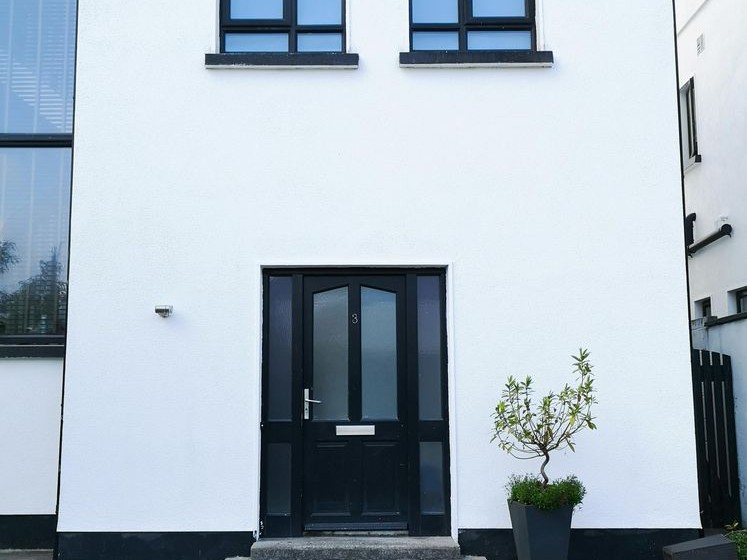
How the silicone render system works
It helps to think of silicone render as a build-up of layers rather than a single coating. Each layer has a job, and skipping or rushing one is where failures come from:
- Base coat — a cement-based adhesive mortar trowelled onto the prepared wall to create a sound, level bed.
- Reinforcing mesh — an alkali-resistant fibreglass mesh is pressed into the wet base coat. This is the single most important step for controlling cracking, as it ties the system together and spreads any movement across the whole wall.
- Primer — a coloured, grit-loaded primer that aids adhesion of the topcoat and evens out the surface so the final colour is consistent.
- Silicone topcoat — the through-coloured, textured finish you actually see, available in a range of grain sizes (commonly 1mm, 1.5mm or 2mm).
The clever part is the chemistry of that topcoat. The silicone resins make the surface hydrophobic, so rainwater beads up and runs off rather than soaking in. At the same time the coating stays vapour-permeable, meaning any moisture inside the wall — from cooking, washing or rising damp — can still escape as water vapour. Trapping that moisture is exactly what causes blown, spalled and damp render on cheaper systems, so this breathability is the whole point of paying more for silicone.
How is silicone render applied?
A professional silicone job is methodical. Rushing the prep or applying in the wrong weather is the most common cause of early failure, so a good renderer takes their time:
- Preparation and access — scaffolding is erected, the wall is cleaned, any failing existing render is hacked off, and the substrate is repaired and made sound. Beads are fitted around windows, doors and corners for crisp, straight edges.
- Base coat and mesh — the adhesive base coat is applied and the fibreglass mesh embedded into it, then a thin second pass covers the mesh. This is left to cure fully.
- Primer — once the base coat is bone dry, the tinted primer is rolled or brushed on.
- Topcoat and "rubbing up" — the silicone finish is applied with a trowel and then rubbed up with a plastic float to create the even, consistent texture. Each elevation is ideally completed in one continuous session to avoid visible join lines where one batch meets another.
Timescales depend on the size of the property, how much preparation is needed and the weather. A typical terraced or semi-detached house takes anywhere from a few days to a couple of weeks. Crucially, silicone render should not be applied in frost, on a frozen wall, or in heavy rain, and ideally not in strong direct sun that dries it too fast. UK weather is the reason rendering jobs are often booked weeks in advance for a settled spell.
Benefits of silicone render
The popularity of silicone isn't marketing — it genuinely outperforms older finishes on the things homeowners care about:
- Breathable and water-repellent at once — keeps driving rain out while letting the wall dry, the combination that protects the masonry long-term.
- Crack-resistant — the flexible, mesh-reinforced system absorbs the small seasonal movements of a building far better than rigid cement render, which tends to craze and crack.
- Self-cleaning — because dirt struggles to key to the hydrophobic surface, ordinary rainfall lifts most grime away, keeping walls looking fresh for longer.
- Through-coloured, so no painting — the colour is integral to the coat. No five-yearly repaint, and no faded patches where the surface is knocked.
- Huge colour and texture range — hundreds of standard shades plus colour-matching, in fine through to coarse textures.
- Long lifespan with guarantees — commonly 20–30 years, and most manufacturers offer a system warranty when an approved applicator installs it.
- Adds kerb appeal and value — a clean rendered façade is one of the most visible upgrades a property can have, which matters at resale.
Thinking about silicone render for your home? Get a free, no-obligation quote from one vetted local specialist.
Get a free quote →Drawbacks and things to consider
No finish is perfect, and an honest picture helps you budget and plan properly:
- Higher upfront cost — silicone sits at the premium end, above acrylic, monocouche and traditional sand & cement. You're paying for performance and longevity.
- It demands a skilled installer — a thin-coat system is far less forgiving than thick render. Poor application shows up as visible joins, patchy texture or early failure. This is precisely why matching with the right specialist matters so much.
- The substrate must be sound — silicone render is a finish, not a cure. It won't fix structural movement, penetrating damp or rising damp underneath; those have to be resolved first or they'll reappear through the new render.
- Algae and staining can still occur — far less than other renders, but on heavily shaded, north-facing or constantly damp walls a green tinge can develop over time. Many systems now include biocide additives to slow this.
- Weather-dependent installation — the UK climate limits when it can be applied, which can affect scheduling.
How much does silicone render cost in the UK?
As a rule of thumb, expect to pay £65–£95 per square metre supplied and applied, including the full system and labour but excluding any major repairs or insulation. Here's how that translates to whole properties:
| Property | Typical cost |
|---|---|
| Per m² | £65–£95 |
| Mid-terrace house | £5,000–£8,000 |
| 3-bed semi-detached | £8,000–£12,000 |
| Detached house | £12,000–£17,000+ |
| Bungalow | £8,000–£12,000 |
These are realistic ballpark figures for budgeting, not quotes. The only accurate number is a price based on a site survey of your actual walls, access and condition.
What affects the price?
Two houses of the same size can be quoted very differently. The main cost drivers are:
- Preparation and removal — stripping old pebbledash or failed render adds significant labour and skip costs.
- Scaffolding and access — height, awkward elevations and the length of hire all add up.
- Number of storeys and wall area — more square metres, more material and labour.
- Detailing — bay windows, sills, arches and decorative features take longer to render neatly.
- Region — labour rates vary across the UK; the South East typically sits above the North and Midlands.
- Insulation — adding external wall insulation under the render dramatically changes both cost and benefit.
Silicone render vs other render types
The quickest way to understand silicone is to see it against the alternatives:
| Silicone | Acrylic | Monocouche | Sand & Cement | |
|---|---|---|---|---|
| Breathable | High | Low | Medium | Low |
| Water-repellent | High | High | Medium | Low |
| Crack resistance | High | High | Medium | Low |
| Self-cleaning | Yes | Partly | No | No |
| Needs painting | No | No | No | Usually |
| Typical lifespan | 20–30 yrs | 15–25 yrs | 20–30 yrs | 10–20 yrs |
| Relative cost | £££ | ££ | ££ | £ |
Acrylic render is cheaper and very tough, but its plastic content makes it the least breathable of the modern options, so it's best avoided on older solid walls. Monocouche is a thick single-coat product that's quick to apply but more prone to hairline cracking and less flexible. Sand and cement is the cheapest but is rigid, usually needs painting and cracks more readily. For the majority of modern UK homes, silicone offers the best all-round balance — which is why it's our most-requested finish.
Is silicone render right for your home?
Silicone suits the vast majority of properties, but it shines in specific situations:
- Tired or dated façades — pebbledash, painted brick or failing render that you want to modernise in one go.
- Homes exposed to driving rain — coastal, hilltop or west-facing properties benefit most from the water-repellent surface.
- Older solid-wall homes — where breathability matters, silicone is far safer than acrylic, though a true period or listed property may be better served by lime render.
- New builds and extensions — for a clean, low-maintenance contemporary finish.
It's less suitable where there's unresolved damp or structural movement, or on listed buildings where breathability requirements are stricter and a lime-based system is usually specified. A good surveyor will flag this before any work starts.
Maintenance, cleaning and lifespan
One of silicone's biggest selling points is how little it asks of you. The self-cleaning surface keeps most walls looking good with no intervention. Where a property is shaded or surrounded by trees and a green algae film develops, the wall can simply be cleaned with a soft brush and a proprietary render cleaner, or gently with a low-pressure wash — never a harsh jet wash, which can damage the surface. With sound installation and the occasional clean, a silicone finish will comfortably last 20–30 years, and often longer, before it needs any attention.
Common problems (and how to avoid them)
Almost every silicone render problem traces back to either the wall underneath or the person applying it:
- Visible joins or patchiness — caused by stopping mid-elevation or applying in unsuitable weather. Avoided by working elevation-by-elevation with enough labour on site.
- Cracking — usually means the mesh was skimped or the substrate is moving. A properly meshed system on a sound wall rarely cracks.
- Damp coming through — silicone won't fix underlying damp; that has to be diagnosed and cured first.
- Algae growth — minimised by specifying a biocide-treated system and keeping vegetation cut back from the walls.
The single best way to avoid all of these is to use a genuinely experienced silicone applicator — not the cheapest quote from someone who normally does traditional render.
How to choose the right silicone render installer
Thin-coat systems live or die on workmanship. Look for a renderer who installs your chosen manufacturer's system regularly (many offer approved-installer status and longer warranties as a result), who can show you recent local jobs, and who surveys the wall properly before quoting rather than pricing off a photo. That's exactly what RenderSmart's SmartMatch™ is built to do: instead of chasing three random firms, we weigh experience, verified reviews and reputation to pair you with the one best-fit local silicone specialist for your property.
Frequently asked questions
Is silicone render worth the extra money?
How long does silicone render last?
Does silicone render crack?
Can you apply silicone render over pebbledash?
Is silicone render breathable?
Does silicone render need painting?
How much does it cost to silicone render a 3-bed semi?
How long does it take to render a house with silicone?
Can silicone render be cleaned?
Will silicone render stop damp?
What's the difference between silicone and silicone-silicate render?
Does silicone render add value to a property?
Can you get coloured silicone render?
Is silicone render suitable for listed buildings?
Do I need planning permission to render my house?
Does rendering need building regulations approval?
Get a free silicone render quote
Tell us about your property and SmartMatch™ pairs you with one vetted local silicone render specialist — for a free, no-obligation quote and survey.
Get a free quote →