Most K-Rend cracking traces back to movement in the wall or a shortcut in the hidden layers — the base coat, mesh and preparation — rather than the topcoat itself failing. Fine hairline crazing is often cosmetic; diagonal cracks from window and door corners usually point to missing reinforcement; and wide, stepped, regularly spaced or growing cracks can signal a problem in the wall that must be fixed before any render repair. Repairs are possible, but matching a weathered through-coloured finish is genuinely difficult, so a proper diagnosis comes first.
- K-Rend is a thin through-coloured topcoat over a reinforced base — most cracking starts in the layers beneath.
- Hairline crazing is often cosmetic; diagonal cracks from openings usually mean missing reinforcement.
- Wide, stepped, regularly spaced or growing cracks may be about the wall, not the render — investigate first.
- Cracks let water in, which freezes, widens them and can debond the render, so don’t leave them for years.
- Repairs rebuild the system locally, but colour-matching weathered through-coloured render is hard.
- Photograph and date cracks so you can show a specialist whether they’re stable or growing.
Why does K-Rend crack?
A crack in render is almost always a symptom of something else, not the render spontaneously failing. Every building moves — expanding and contracting with temperature, settling, and flexing where different materials meet — and render is a rigid skin stretched over all of that. When the system can’t absorb the movement, it cracks. So the useful question isn’t “why did the render crack?” but “what made it crack here?”
The two big answers are movement and installation shortcuts: a skimped base coat, missing or badly bedded mesh, no diagonal reinforcement at openings, application over an unsound or wet background, or work rushed in poor weather. Genuine product failure is much less common. That’s good news, because most cracking is preventable and, once the cause is understood, fixable. For a general guide to reading any rendered wall, see cracked render; this guide focuses on K-Rend systems specifically.
Why the hidden layers decide whether K-Rend cracks
K-Rend’s through-coloured finish is a thin topcoat. It isn’t designed to hold the wall together on its own; that job belongs to the base coat beneath it and the fibreglass mesh bedded into that base. K-Rend’s base coats include K-Rend HP12 and HPX, chosen to suit the wall being rendered, and the mesh spreads small stresses across the wall instead of letting them concentrate in one line.
That’s why the first thing a specialist wants to know about a cracked K-Rend wall is what’s underneath. Was the base coat applied at a proper thickness? Was render mesh bedded across the whole wall, or only patched in places? Were the corners of windows and doors given extra diagonal pieces? Was the background sound, dry and suitable? A crack in the topcoat is often just the visible end of an answer to one of those questions.
What different cracks in K-Rend usually mean
Fine hairline crazing — a faint network of shallow lines — is usually cosmetic, often from minor shrinkage as the render cured. Diagonal cracks from the corners of windows and doors are the classic sign of stress concentrating at openings that weren’t reinforced with diagonal mesh. Straight cracks at junctions, such as where an extension meets the original house or where render crosses from block to brick, usually reflect two parts of the building moving differently.
More serious are wide, stepped or steadily growing cracks, which can point to the building rather than the render — see the section on when the crack isn’t a render problem below. And cracks with bulging, flaking or hollow-sounding render around them suggest the render is losing its bond — see blown render. Each needs a different response.
Where cracks most often appear on a K-Rend house
Location is often as telling as shape. On a typical K-Rend house, cracks tend to cluster in a handful of places: the corners of window and door openings; above lintels; where an extension, porch or garage meets the main house; at the line where render changes background, such as from blockwork to an old brick wall; around meter boxes, flues and pipes; and near the base of the wall, where splashback and ground moisture are highest.
Cracks that follow a grid of straight lines across a wall can mean the joints of the background are “reading through” — a sign the base coat or mesh wasn’t sufficient to bridge them. Cracks at the joint between two lengths of bead, or along a bead line, often come down to how the bead was fixed and lapped. Noting exactly where your cracks are, and sketching them on a photo of the elevation, gives a specialist a head start.

What’s normal and what’s not
Broadly low-concern: fine hairline crazing, small shrinkage lines, and short cracks that appeared early, have stayed the same and aren’t letting water in. A sound render can carry a few minor marks over its life, and these are worth keeping an eye on rather than treating as an emergency.
Worth proper attention: any crack wide enough to let water in, diagonal cracks from openings, cracks that are visibly growing over weeks or months, stepped or regularly spaced cracks, and anything paired with bulging or hollow render. The three simple tests are width, movement and water. A crack you could slide a coin into, one that’s getting longer or wider, or one with damp staining around it is in a different category from a hairline you can barely see.
How to record and monitor a crack
Before anyone looks at it, start a simple record. Photograph each crack with a ruler or tape measure held alongside it, so the width and length are visible, and include a wider shot showing where it sits on the elevation. Note the date. Repeat the photos from the same position every few weeks, and after a cold snap or a spell of heavy rain.
This costs nothing and is genuinely useful. A specialist can tell much more from a crack that has been photographed over a few months than from a single look, because the key question — is it still moving? — is answered by the record. Note too whether doors or windows nearby have started sticking, and whether there’s any damp inside on the same wall. If the render is still under guarantee, a dated record also helps when you contact the installer.
Why you shouldn’t ignore a crack
Even a crack that looks minor deserves attention because of what water does once it gets in. A crack gives rain a route behind the topcoat, where it can sit against the base coat and the wall. In cold weather trapped water freezes and expands, levering the crack wider and starting to debond the render around it, turning a thin line into a spreading patch of failed render over a few winters.
Water behind render can also affect the wall itself and, on some constructions, contribute to damp inside. None of this makes a stable hairline a crisis, but it does mean cracks are best assessed early. The cheapest point to deal with K-Rend cracking is at the start, before water has had seasons to do its work.
Always diagnose the cause first
This is the most important principle in the guide: find out why it cracked before repairing it. Patching the surface without dealing with the cause wastes money, because the same forces will crack the repair. A diagonal crack from a window corner needs the missing reinforcement put right; a crack from movement in the building needs that movement investigated; a debonding patch needs the bond failure and any damp dealt with.
A good specialist will look at the crack pattern, tap the surrounding render to listen for hollow areas, check for damp, ask about the history of the wall and look at your photo record. Where the pattern suggests movement in the building, they should tell you to get a structural opinion before any render work. A quick cosmetic patch may be tempting, but on through-coloured render it’s rarely money well spent.
When the crack isn’t a render problem
Sometimes the render is simply the messenger. Stepped cracks that are wider at one end, horizontal cracks repeated at regular heights up a cavity wall, cracks above lintels, or doors and windows that have started sticking can all point to settlement, wall-tie or lintel problems in the building; our guide to cracked render explains those patterns. In each case a render repair alone won’t last, and the right first step is a building surveyor or structural engineer.
Likewise, if the wall behind is damp — from a leaking gutter, a failed sill, a bridged damp-proof course or a solid wall that needed a more breathable finish — cracking and debonding may be a symptom of moisture rather than the cause. Older solid-walled buildings in particular may be better suited to a lime system than a cement-based one. A specialist who tells you the problem is beyond render is doing you a favour.
How K-Rend repairs are carried out
Once the cause is understood and resolved, a proper repair follows a logical sequence. The specialist cuts out the cracked or debonded render back to sound, well-bonded material, ideally to straight, neat edges or a natural break in the wall. The background is checked and prepared, then the system is rebuilt in that area: base coat, mesh lapped into the surrounding sound render, primer, and a matching through-coloured topcoat finished to the same texture.
For cracks caused by ongoing movement, the fix may include extra reinforcement or a movement joint so the wall can move without cracking again. The point is that a repair recreates the full reinforced system, not just a smear of filler along the line. A crack simply filled on the surface tends to reopen, and on a through-coloured finish the filler usually shows.
Why colour-matching a K-Rend repair is so hard
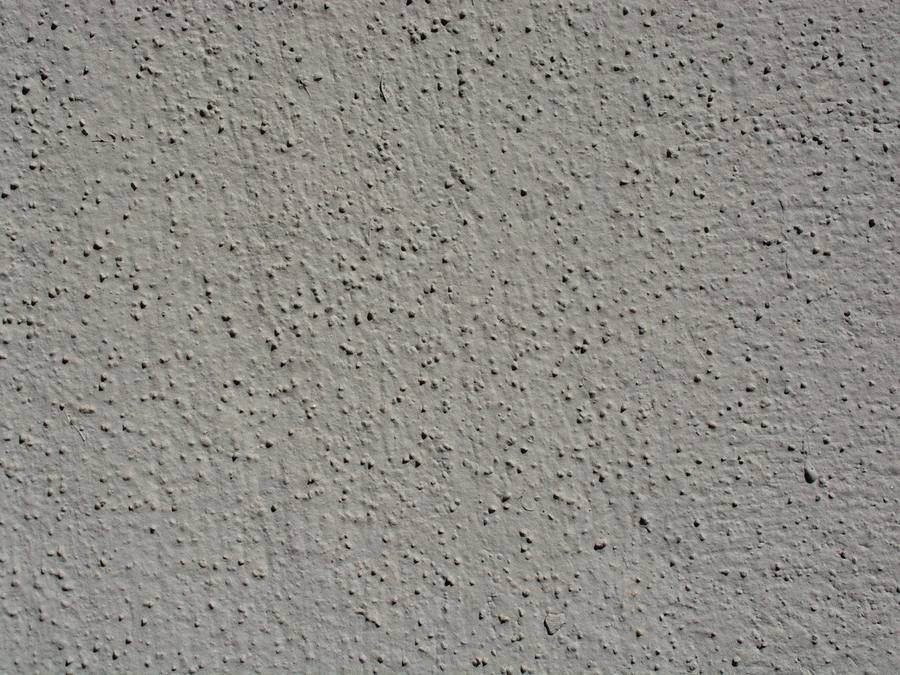
Here’s the part that surprises people: making a repair to through-coloured render invisible is genuinely difficult. The colour runs through the material, so there’s no paint to touch up. A new patch of the same named shade will often differ subtly from render that has weathered for years outdoors. It may look slightly fresher or a touch different in tone, and texture is just as hard to match — the eye picks up both.
Skilled installers improve the odds by using the same system and shade, sampling first, matching the texture carefully and taking the repair to a natural break such as a corner, bead or downpipe so the change isn’t in the middle of an open wall. On a small, well-placed repair the result can be very acceptable. Go in with realistic expectations, though: if the original shade and system aren’t on record, or the wall is prominent, a perfect match may not be achievable.
What K-Rend crack repairs typically cost
As an indicative guide, a small crack repair is typically indicative £150–£400, and larger patch repairs indicative £800–£2,500. Re-rendering a single elevation is commonly indicative £3,500–£5,000. Access is a big variable: a crack at first-floor level may need a tower or scaffold, which should be itemised in the quote. Any structural investigation or work is separate and should be priced by the relevant professional.
For a fuller breakdown see render repair cost, and for whole-house figures if re-rendering is on the table, house rendering cost. Most of our specialists take on projects from around £3,500, so they’re best suited to larger repairs and re-renders; for a single small job, a local builder or plasterer may be quicker.
Got cracks you’re unsure about? Get one vetted local K-Rend specialist to diagnose the cause and give you a free, no-obligation quote.
Get a free quote →Repair or re-render the elevation?
For a single, localised crack or small failed patch on an otherwise sound wall, a targeted repair is usually the sensible choice, accepting that it may be slightly visible. Where cracking is widespread, several areas sound hollow, or the colour-match matters a lot on a prominent wall, re-rendering the whole elevation can be the better answer despite the higher cost, because it gives one uniform finish with no patchwork.
The deciding factors are the extent of the problem, how visible the wall is and how much appearance matters to you. A repair on a rear wall few people see is an easy call; the same repair on the front of the house might tip toward re-rendering that face. Our guide on whether to repair or replace render walks through the decision in more detail.
Should you fill a crack yourself?
It’s tempting to run a bead of filler or sealant along a crack, but on K-Rend it rarely helps. A filler won’t match the colour or texture of through-coloured render, so it draws the eye to the crack; it doesn’t address the cause; and a surface seal can make a later proper repair harder, because it all has to be cut out. Some products can also trap moisture behind them.
If a crack is clearly letting water in and a specialist can’t visit for a while, ask them for interim advice rather than guessing. Otherwise, the most useful DIY job is the photo record described above, plus keeping gutters, downpipes and sills in good order so less water reaches the wall.
Questions to ask about a K-Rend crack repair
When a specialist visits to look at cracking, a few direct questions will show whether they’re diagnosing the problem or just pricing a patch:
- What do you think caused this crack, and what in the wall or the render tells you that?
- Does anything need a surveyor or structural engineer before render work starts?
- How far will you cut back, and where will the repair stop — at a corner, bead or downpipe?
- Will the repair rebuild the full system, with mesh lapped into the sound render around it and diagonal reinforcement at any opening?
- Which base coat, topcoat, shade and texture will you use, and can you sample the match first?
- How will you reach the crack, and is access itemised in the quote?
- What workmanship guarantee covers the repair, and could it affect any cover still running on the original job?
Clear, specific answers are a good sign. If every crack gets the same quick fix regardless of shape or position, the cause probably hasn’t been looked for.
Cracking and your guarantee
If you’re hoping to claim for cracking, understand how cover usually splits. Cracking caused by workmanship — missing mesh, poor preparation, a thin base coat — usually falls under the installer’s workmanship guarantee rather than a manufacturer’s product guarantee. Cracking caused by movement in the building itself is often outside both.
If cracks appear on a recent job, contact the installer first, with your photo record and paperwork. Keep a note of who did the work, what system and shade were specified, and the guarantee terms. Our render guarantee guide explains the layers and where the gaps are.
Preventing cracks in the first place
Most preventable cracking is decided on the day the render goes on. A K-Rend system built on a sound, properly prepared background, with a base coat at the right thickness, mesh bedded across the whole wall, diagonal reinforcement at every window and door corner, movement joints where the building needs them, and curing in suitable weather, resists the movement that causes most cracks.
If you’re commissioning a job, ask the installer to confirm each of those in writing. For an existing wall, keep water off the render — clear gutters, sound sills and flashings, good drainage at the base — and deal with small cracks promptly. Our guide on how to clean K-Rend includes a quick post-clean inspection that helps you catch cracks early.
When a crack needs prompt attention
Most cracks can be assessed at a sensible pace, but any showing the structural warning signs described above should be looked at without delay, because the structure comes first.
Act quickly, too, on cracks that are clearly letting water in, and wherever render is bulging or coming away, since each winter makes those worse and loose render at height can be a hazard. A fine, stable hairline, by contrast, can be monitored and mentioned at the next sensible opportunity. If you’re unsure which category a crack falls into, a specialist assessment settles it.
The bottom line on K-Rend cracking
A crack in K-Rend is usually a message, not a catastrophe. Most trace back to movement or a shortcut in the hidden layers, and most are fixable once the cause is understood. Read the crack, record it, diagnose the cause before repairing, and go in with realistic expectations about colour-matching on a through-coloured finish.
For a small, localised crack on a sound wall, a targeted repair through render repair is sensible; for widespread or prominent cracking, re-rendering an elevation may be the better answer. For the wider context on render systems, preparation and lifespan, see our guide to exterior rendering.
Frequently asked questions
Why is my K-Rend cracking?
Are hairline cracks in K-Rend normal?
What do diagonal cracks from window corners mean?
When is a crack in K-Rend serious?
How should I record a crack before getting it checked?
Can K-Rend cracks be repaired?
Will a K-Rend repair match the rest of the wall?
How much does it cost to repair cracked K-Rend?
Should I fill a crack in K-Rend with sealant?
Is cracking covered by my render guarantee?
Get a free K-Rend repair assessment
Tell us about your property and SmartMatch™ pairs you with one vetted local render specialist who’ll diagnose the cause before quoting a fix — for a free, no-obligation survey and written quote. No directory roulette, no pressure.
Get a free quote →