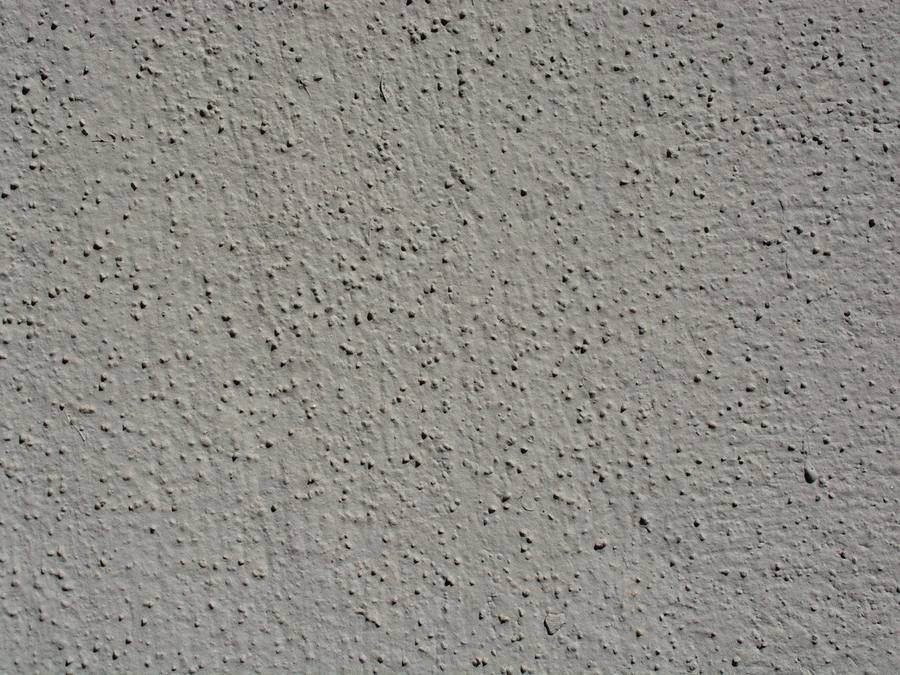
K-Rend roughcast (dry-dash) is a textured finish where stone aggregate is thrown or pressed into the wet topcoat, giving a coarse, hard-wearing surface. Compared with the smooth scraped finish, it’s tougher and better at hiding minor wall imperfections, but harder to clean and more traditional-looking. It’s still through-coloured, so it doesn’t need routine painting. It uses more material and skill than scraped, so expect it to be priced a little higher. The choice is about looks, the wall and upkeep — not which performs structurally.
- Roughcast (dry-dash) throws or presses stone aggregate into the wet topcoat for a coarse, textured surface.
- It’s tougher and hides minor imperfections better than a smooth scraped finish.
- It’s harder to clean and looks more traditional than the smooth modern finish.
- It’s still through-coloured, so it doesn’t need routine repainting.
- It uses more material and labour than scraped, so it usually costs a little more.
- An even dash is a skill — check the installer has done the finish before, and see samples.
What is K-Rend roughcast?
Roughcast — in K-Rend terms, the dry-dash finish — is one of the main ways a K-Rend topcoat is finished; scraped is the other common one, and some ranges offer further finishes. Instead of being scraped back to a fine, even texture, the topcoat has stone aggregate thrown or pressed into it while wet, so the finished surface is coarse, textured and studded with small stones. It gives the look many people associate with older UK pebbledash, but as part of a modern through-coloured render system rather than the old painted cement version.
The result is a hard-wearing, characterful finish with a more traditional, rustic feel than the smooth render on most new builds. Because it’s a K-Rend system finish, it keeps the brand’s core benefits — it’s through-coloured so it doesn’t need routine painting, and it sits on the same mesh-reinforced base coat. The aggregate changes the surface character and how the wall behaves day to day, which is what this guide unpacks. For the system as a whole, see K-Rend explained.
Roughcast, dry-dash and pebbledash: untangling the words
The words get used loosely, which causes confusion when you compare quotes. Installers often use “roughcast” and “dry-dash” interchangeably for a finish where the aggregate goes onto the wet topcoat as a separate step. In traditional building terms, though, “roughcast” (harling in Scotland) often describes a wet-dash, where the aggregate is mixed into the final coat and the whole mix is thrown on, while “pebbledash” describes the dry method.
For a homeowner the practical point is simple: don’t assume two quotes that both say “roughcast” are describing the same finish. Ask each installer how the aggregate is applied, what size and colour of aggregate they intend to use, and whether the topcoat is a through-coloured K-Rend product. Then ask to see an example. Those three answers tell you far more than the label does.
How a K-Rend dry-dash finish goes on
The build-up beneath is the same as for any K-Rend system. The wall is prepared — cleaned, or stripped where old render has failed — then beads are fixed at corners and edges, the base coat goes on with reinforcing mesh bedded into it, and the base is left to cure. A primer follows, then the through-coloured topcoat.
The difference is the final step. While the topcoat is still wet, the aggregate is thrown or pressed into it so it bonds into the surface. Timing matters: too early and the stone sinks or slides; too late and it won’t hold. Working a whole elevation in one continuous push, and stopping only at a natural break such as a corner or bead, helps avoid visible joins between sections. Windows, doors, sills and paving need covering before dashing starts, because loose stone scatters.
Details deserve a conversation before work starts. Decide how the dash will meet window and door reveals, the plinth or base of the wall, and any brick, stone or timber you’re keeping. Some homeowners prefer smooth bands, or margins, around openings and at corners to frame a dashed wall and give it crisper edges; others want the texture carried right up to the frames. Neither is wrong, but changing your mind once the aggregate is on is costly, so agree it in the written quote and check how it’s being done on the first elevation.
Like any render, the job needs reasonably dry, frost-free weather to cure properly. A good installer will hold off in heavy rain, frost or strong sun rather than rush a finish that is very hard to correct once the aggregate is on.
Roughcast versus the scraped finish
The real decision is roughcast versus the scraped texture finish — the fine, even, slightly stippled surface on most modern rendered homes. The two look quite different: scraped reads clean, smooth and contemporary, while roughcast reads coarse, textured and traditional. Neither is structurally superior; it’s a choice about appearance and practicality.
Roughcast’s advantages are that it’s tougher and better at hiding minor imperfections, because the busy texture disguises small undulations that a smooth finish would reveal. Its drawbacks are that it’s harder to clean — the rough surface holds dirt and algae more readily — and that its traditional look doesn’t suit every home. Our guide to textured vs smooth render covers the same trade-off across other render types.
Roughcast and scraped K-Rend compared
| Factor | Roughcast (dry-dash) | Scraped |
|---|---|---|
| Look | Coarse, textured, traditional | Fine, even, contemporary |
| Hides wall imperfections | Well | Less well |
| Resistance to knocks and wear | Tougher | Durable |
| Ease of cleaning | Harder | Easier |
| Through-coloured | Yes | Yes |
| Material and labour | More | Less |
| Ease of blending a later repair | Harder | Easier |
Read the table as a set of trade-offs rather than a score. If a wall is uneven and exposed and you like a textured look, roughcast lines up well; on a side passage where bins and bikes brush the wall, its tolerance of knocks is a practical bonus. If you want a crisp modern face and the least cleaning, scraped is the natural choice.
Using roughcast on part of the house
Roughcast doesn’t have to cover every wall. Some homeowners dash only the upper storey above a brick or scraped ground floor, keep a scraped finish on the front and dash the less visible side and rear walls, or use a dashed gable above a smooth main wall. Done well, a change of texture can give a plain house some definition; done badly, it looks like two jobs that never met.
The same rules apply as for a change of colour. Put the break where the building gives you one — a floor line, a corner, a bead or a projecting bay — never in the middle of a flat wall, and make sure the drawing or photo in the quote shows exactly where each finish stops. Think about the scaffold too: if the dash is limited to one area, ask how the loose stone will be kept off the scraped or brick surfaces next to it, because aggregate pressed into a fresh smooth finish is very hard to remove cleanly.
Coverage and cost
A dry-dash finish uses more material than a scraped one — the aggregate is an extra component — and it takes more care to apply evenly, so it usually costs a little more. As an indicative guide, silicone and K-Rend systems are commonly around £65–£95 per m² fitted, with whole jobs priced by elevation at roughly £3,500–£5,000 for one wall up to £12,000–£17,000+ for four or more. Where the finish sits within those ranges depends on the installer and the wall, so ask for the dash and scraped options to be priced separately.
On a whole job, the finish is usually a smaller lever than the condition of the wall, scaffolding, detailing and labour. If old render has to come off first, that changes the numbers far more than the choice of texture. Our K-Rend cost guide covers the full breakdown, and the house rendering cost guide puts it in the context of different house types.
Want roughcast and scraped priced side by side for your walls? Get a free, no-obligation quote from one vetted local specialist.
Get a free quote →Colours and appearance
Roughcast is still through-coloured, so it can be chosen from the K-Rend colour range and doesn’t need routine painting. But the texture changes how a colour reads: the coarse surface creates tiny shadows that tend to make the same shade look slightly deeper and less uniform than it would scraped smooth. The aggregate also has its own colour, and on a dashed wall you see a mix of render and stone, so the overall impression depends on the combination.
That’s why judging a roughcast colour from a smooth swatch or a screen is unreliable. Our K-Rend colours guide covers choosing shades in general; for roughcast specifically, insist on seeing the render colour and the aggregate together, as a dashed sample, before committing. The colour is effectively permanent until the wall is re-rendered.
How to sample a roughcast finish properly
A good sampling routine saves expensive regret. Ask the installer for a dashed sample board, or a small test area in an inconspicuous spot, using the exact topcoat colour and aggregate proposed. Then look at it properly:
- Outdoors, not in a showroom or van — daylight changes texture dramatically.
- At different times of day, including low evening light, which exaggerates texture.
- Against the wall it will go on, next to your roof, windows and door colours.
- From the street as well as up close; aggregate that looks lively at arm’s length can read as flat or busy from the pavement.
If you can, find a completed roughcast job nearby that is a few years old. Seeing how a dashed wall has weathered on a real house, including under sills and at ground level, tells you more than any sample.
What good and poor roughcast workmanship looks like
Dashing is a hand skill, and the difference between good and poor work is visible from the street. Good roughcast has even coverage with no bald patches where render shows through, no heavy clumps or ridges of stone, and a consistent density from the top of the wall to the bottom. Lines at corners, reveals and beads are clean, and there are no obvious bands where one day’s work met the next.
Poor work shows as patchy, streaky or blotchy texture, visible horizontal lines at scaffold lift heights, stone missing around openings, and aggregate stuck to window frames, sills or paving. Some of this can be touched in at the time, but much of it can’t be fixed without redoing the topcoat. That’s why it’s worth asking an installer how many dashed finishes they’ve done recently, and checking at the end of the first elevation before the scaffold moves on.
Cleaning and upkeep
The honest trade-off with roughcast is upkeep. Its coarse surface has more nooks that hold moisture, dirt and the early stages of algae, so it tends to green up faster and is harder to clean than a smooth scraped finish. The cleaning method is the same as for any K-Rend: a gentle, render-safe biocidal wash left to work, never a pressure washer, which can strip a textured finish and drive water into the render. Our guide on how to clean K-Rend walks through it.
If low maintenance is a priority and the wall is shaded or north-facing, that’s a point in favour of scraped. If you love the roughcast look, it’s entirely manageable — expect to clean it a touch more often, keep gutters clear so water doesn’t run down the face, and trim back plants that hold damp against the wall. The base coat beneath a dashed finish, such as K-Rend HPX, is chosen to suit the wall rather than the finish.
Which homes suit roughcast?
Roughcast looks most at home on traditional-looking and rural properties of modern construction, on homes whose neighbours are mostly dashed, and on exposed elevations where its toughness is an asset. It’s also the pragmatic choice where a wall’s surface is uneven and a smooth finish would highlight every undulation — for instance on an older extension built in mixed materials.
It tends to look less convincing on sleek, contemporary homes, where the clean lines of a scraped finish are usually the better match, and it can feel heavy on small, tightly detailed elevations. Street context matters too: a single roughcast house in a row of smooth renders can stand out, for better or worse. A good installer who has done both will tell you honestly which suits your property.
Swapping tired pebbledash for a roughcast K-Rend finish
Many people interested in roughcast K-Rend currently live with old painted pebbledash and want the same textured character without the repainting. There are broadly two routes: render over the existing dash if it’s sound and well bonded, or strip it back and re-render. Which is right depends on the condition of what’s there, and our guide on whether to remove pebbledash or render over it covers the decision.
Where stripping is needed, the cost rises: as an indicative guide, stripping and re-rendering commonly runs around £100–£170 per m². RenderSmart’s specialists strip pebbledash as part of a full re-render rather than as a standalone job, so the finish — roughcast or scraped — is chosen as part of the same project.
Repairs and patching on a dashed finish
Roughcast is forgiving of small surface marks, but it’s less forgiving when a section has to be repaired. Matching a patch means matching the render colour, the aggregate and the density of the dash, and even a skilled installer can struggle to make a repair disappear on a large, plain elevation. Repairs often look best when they run to a natural break such as a corner, bead or window.
That’s one more reason to keep a written record of the exact topcoat, colour and aggregate used. If cracks appear, the cause matters more than the cosmetic fix — most trace back to movement, the substrate or missing reinforcement. Our guide to K-Rend cracking explains what to look for and when a repair is enough.
When roughcast might not be right for you
Roughcast isn’t the right choice for every home or every owner. It may not suit you if your house is crisply modern, if the walls are heavily shaded and you want the least cleaning possible, or if you’re likely to add openings or extensions soon and want repairs to blend easily. It’s also worth thinking twice if you’re choosing it purely to hide a poor wall — texture disguises small undulations, but it doesn’t fix cracking, damp or movement underneath.
More fundamentally, neither K-Rend finish is usually right for older solid-wall and period homes, which need to breathe and generally suit a lime render instead; a specialist should assess those walls first.
Questions to ask your installer about roughcast
- How will the aggregate be applied, and what size and colour of stone are you proposing?
- Is the topcoat a through-coloured K-Rend product, and which range?
- Can I see a dashed sample in my chosen colour, and a completed job a few years old?
- How will you avoid joins and lift lines across each elevation?
- How will windows, sills and paving be protected from loose stone?
- Can you price the scraped finish too, so I can compare like for like?
Clear, specific answers — and a willingness to put them in the written quote — are a good sign that the installer has done the finish many times.
The bottom line on K-Rend roughcast
K-Rend roughcast is a tough, characterful, through-coloured finish that brings a traditional textured look and doesn’t need routine painting. Against the scraped finish it wins on robustness and hiding imperfections, and loses on ease of cleaning, ease of repair and contemporary looks — and it usually costs a little more. Neither is structurally better; both rely on a sound base coat and properly bedded mesh, and both sit within the wider choices covered in our guide to exterior rendering.
Choose roughcast if your home leans traditional or exposed, or a textured look is what you want; choose scraped for a clean modern face and the easiest upkeep. Whichever you pick, see a proper dashed sample in daylight, check the installer’s experience with the finish, and get it specified in writing. Most of our specialists take on projects from around £3,500, so they’re best suited to larger repairs and re-renders; for a single small job, a local builder or plasterer may be quicker. For whole-house K-Rend render work, a survey settles which finish suits your walls.
Frequently asked questions
What is K-Rend roughcast?
What's the difference between roughcast and scraped K-Rend?
Is roughcast the same as pebbledash?
Does K-Rend roughcast need painting?
Is roughcast harder to clean than smooth render?
Does roughcast cost more than a scraped finish?
Is roughcast more durable than scraped K-Rend?
Can I choose any K-Rend colour in roughcast?
Can a roughcast wall be repaired invisibly?
What homes suit a roughcast finish?
Get a free K-Rend quote
Tell us about your property and SmartMatch™ pairs you with one vetted local render specialist experienced in both finishes — for a free, no-obligation quote and survey, and an honest view on which suits your home. No directory roulette, no pressure.
Get a free quote →