Monocouche render colours typically run from whites and off-whites through creams, ivories, stone and buff shades to light and mid greys, with the pigment mixed through the whole coat so it doesn’t need routine painting. Very dark and strongly saturated colours are less common than in silicone or acrylic ranges. Because it’s cement-based, monocouche can cure to slightly different shades across a wall and can show white lime bloom, especially on darker colours, so paler shades are the more forgiving choice. The usual finish is scraped, which softens the colour slightly; always choose from a physical sample in the finish you’re getting.
- Typical ranges cover whites, creams, stone, buff and light-to-mid greys; deep darks are limited.
- Colour runs through the full coat, so there’s no painting — and no easy change later.
- Paler shades hide curing variation and lime bloom far better than dark ones.
- Scraped and dash finishes change how the same colour reads, so sample in your finish.
- Two-colour schemes need a planned break, usually a bead, at every colour change.
- Get the manufacturer, colour reference and finish written on the quote and keep the record.
What colours monocouche usually comes in
Every manufacturer has its own palette and names, but most monocouche render ranges cluster in the same places:
Whites and off-whites — from bright white to softer, slightly warm or grey-tinted whites.
Creams and ivories — warm, flattering shades that suit brick details and clay roofs.
Stone, buff and sand — earthy neutrals that echo natural stone and hide road dirt well.
Light and mid greys — for modern houses and extensions with dark grey windows.
Deep charcoals, near-blacks and vivid colours are much rarer. Monocouche is a cement-based render coloured with mineral pigments, and its palettes lean towards light, natural shades. If you want a dark or strong colour, check it’s actually offered for the system your renderer proposes, or consider a thin-coat finish; our silicone vs monocouche comparison covers the trade-offs. For colour choice in general, see our guide to render colours.
How colour works in a one-coat render
Monocouche goes on as one thick coat, usually built up in two passes of the same material, then scraped back once it has firmed up. The pigment is in all of it. Scrape it, chip it or wear it, and the same colour sits underneath.
That’s the appeal: no masonry paint, no repainting cycle. The flip side is that the colour is effectively fixed. Changing it later means a new finish coat over the top, not a weekend with a roller, so the time spent sampling at the start is time well spent. Our exterior rendering guide shows where monocouche fits among the other through-coloured systems.
Pairing a monocouche colour with your roof, windows and brick
A render colour never sits on its own. On most houses it shares the view with a roof, window frames, a front door and often some retained brick, and the right shade is the one that sits comfortably with all of them.
Clay or red-brown roof tiles usually look best with warm shades: creams, ivories, buff and stone. A cool, blue-tinged grey next to warm tiles can look flat.
Slate or grey concrete tiles give you more freedom. Cool off-whites and light-to-mid greys pick up the roof tone, while a soft stone adds warmth without clashing.
Dark grey or black windows suit crisp off-whites and light greys, which give the frames a sharp outline. White frames work with almost anything, though a stark bright-white render can make older frames look slightly off-white by comparison.
Retained brick plinths, quoins or bays need a render that flatters their tone rather than fights it. Our guide to render colours for red brick covers that combination in depth.
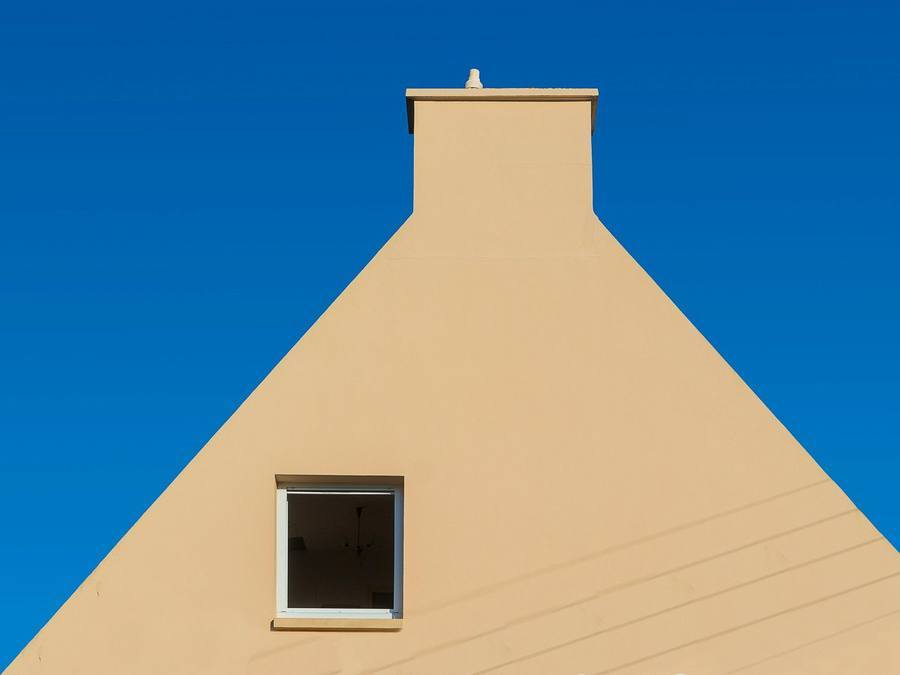
Monocouche colours by property type
Post-war and estate semis. Paired houses read as one building, so a dramatic change on your half stands out. Shades close to the neighbour’s, or a pale neutral that sits well beside it, usually look most settled.
Bungalows. Low, wide elevations carry a lot of colour at eye level, so very bright white can feel glaring and darker greys can feel heavy. Mid-tone creams and stones tend to sit well.
New builds and modern extensions. Clean off-whites and light greys suit crisp lines and large glazing, and the fine scraped texture keeps the look contemporary. An extension can match the house or contrast deliberately, but a near-miss shade usually looks like an error.
Older solid-walled houses. Here colour comes second to suitability. Monocouche isn’t usually the right render for soft, solid-walled older buildings, which generally need a breathable lime-based approach; check with a specialist before choosing a shade.
Using two monocouche colours on one house
Two-tone schemes are popular on modern houses: a pale main colour with a darker grey panel around the entrance, a contrasting plinth band, or a different shade on a projecting bay or extension.
With monocouche, every colour change has to be planned. The two colours can’t simply be blended wet into each other, so the change is normally made at a bead, stop or natural break such as an internal corner or a change in wall plane. Each colour area also needs to be finished in its own clean run so that neither suffers from day joints.
Ask what colour the beads and stops will be, because they show at every edge and corner. Our guide to render beads explains the types and where they go.
Keep the contrast proportionate. A small darker feature on a pale house usually looks deliberate; a fifty-fifty split can make a modest house look busy.
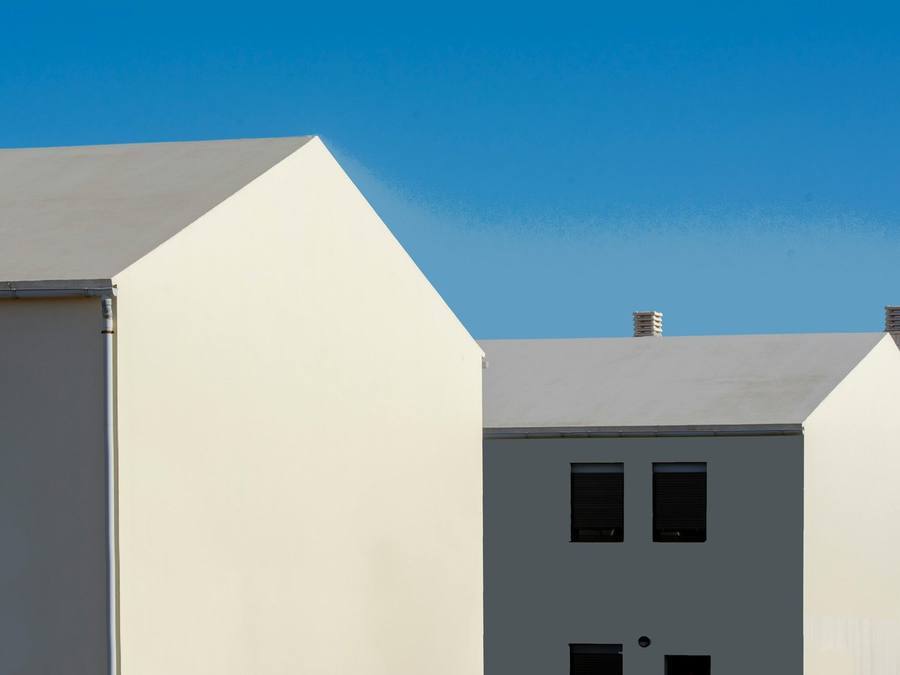
Why colour can vary between batches and areas
A cement-based render sets by chemical reaction with water, so the conditions on the day affect the final shade more than with resin-based finishes.
Batches. Bags from different production batches can differ very slightly. Good practice is to order enough for each elevation from one batch and check batch numbers on delivery.
Curing conditions. Sun on one part of a wall and shade on another, a drying wind, or rain on fresh render can make areas cure lighter or darker.
Scraping time. Scraping too early or too late changes the texture, and texture changes how the colour reads.
Lime bloom. Free lime migrating to the surface can leave a white haze, most visible on greys and darker shades.
Some slight variation settles as the render fully cures. Marked patchiness is a different matter; our guide to monocouche render problems explains the causes and fixes.
Choosing a monocouche colour? SmartMatch™ pairs you with one vetted local specialist for a free survey, samples in your finish and a written quote.
Get a free quote →What a consistent monocouche colour looks like at handover
When the scaffold comes down, stand well back from each elevation on an overcast day, when flat light shows colour most honestly. Then look closer.
Even colour across each wall. Slight softness is normal while the render finishes curing; clear blotches, bands or a different shade on one scaffold lift are not.
Joints in sensible places. Any line where one day’s work met the next should fall at a corner, bead or opening, not halfway across a wall.
A consistent texture. The scraped surface should look the same top to bottom. Smoother or coarser patches change how the colour reads, even if the material is identical.
Clean edges. Beads, sills and window surrounds should be free of render smears, and there should be no tide marks or runs from rain on fresh work.
If something looks wrong, photograph it, note the date and raise it with the installer straight away. Early colour issues are easier to resolve while the job is fresh.
Scraped, dash and other finishes
Scraped is the classic monocouche finish. Scraping back the firmed-up surface exposes the fine aggregate and leaves a soft, even, slightly granular texture. It reads a touch lighter and more matt than a smooth chip suggests, and the fine texture breaks up minor shade differences.
Dash or roughcast finishes throw stone chips into the fresh render. The colour of the chips joins the colour of the render, so a pale render with a mixed aggregate looks quite different from the same render scraped. It hides dirt and variation very well, at the cost of a more traditional look.
Some ranges list other textures as well. Smoother finishes show colour most crisply, but also show marks and shade variation most readily. Whatever finish you’re offered, ask to see it on a sample board rather than a colour chip.
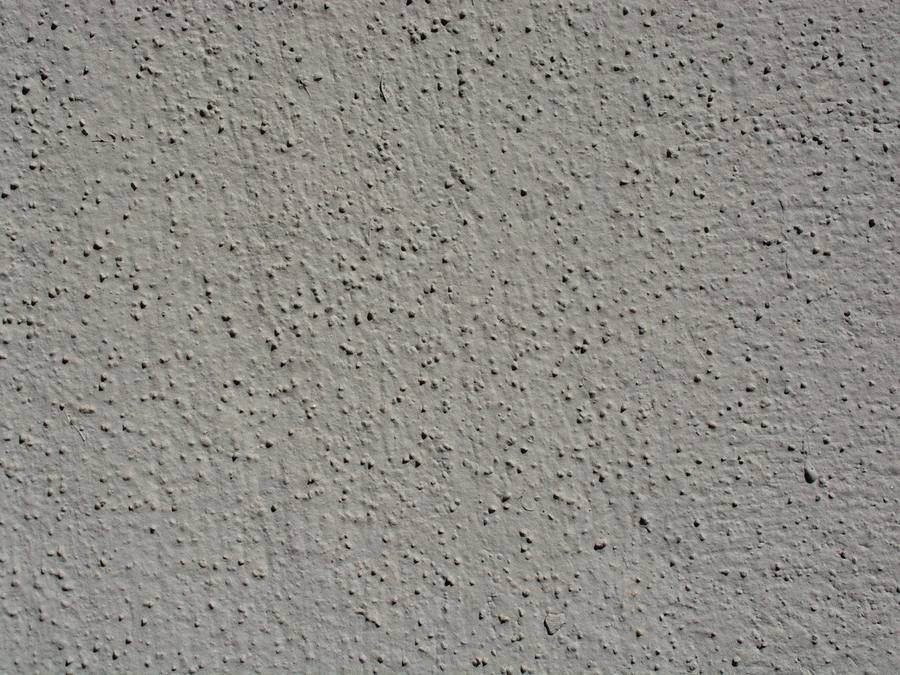
How light, aspect and scale change a monocouche colour
The same monocouche shade can look like three different colours on three sides of one house.
Scale. A colour spread across a whole elevation reads lighter and brighter than on a small board. If two samples look close, the paler one may look almost white once it covers the house.
Aspect. North-facing walls get cool, even light that pushes creams towards grey and greys towards blue. South- and west-facing walls get warm, strong sun that lifts and warms the colour, and can wash out pale shades at midday.
Texture. The scraped surface throws tiny shadows, so in low, raking light the wall reads slightly darker and more textured than it does head-on.
Surroundings. Trees, lawns and neighbouring brick all reflect colour onto a wall. A cream beside a big green hedge can pick up a cooler cast than the sample suggested.
None of this means a colour is wrong; it means samples need judging in the place they’ll actually go.
How different monocouche shades weather
Most of what changes on a monocouche wall over the years is surface soiling, and each part of the range shows it differently.
Whites show dirt and green growth soonest, especially under sills and on shaded walls. They need cleaning to stay crisp.
Creams, stone and buff are the most forgiving. Road dust and light soiling blend into the colour, so they look fresh for longest between cleans.
Greys hide dirt well but show lime bloom readily, particularly in the first months.
Monocouche is less water-repellent than silicone, so on shaded or north-facing walls dirt and algae can take hold sooner whatever the colour. Our guide to do render colours fade explains how to tell genuine colour change from surface soiling.
Choosing a monocouche colour from samples
Shortlist first. Narrow the range to two or three candidates before asking for samples. Start from what won’t change — roof, windows, any brick you’re keeping and the houses either side — and rule out anything that fights them. Comparing a dozen boards at once usually ends in indecision.
Get a real sample. Printed charts and screens are unreliable. Ask for a scraped sample board in each shortlisted colour, as large as possible.
Judge it outside. Hold it against the wall on at least two elevations, beside your roof, windows and any brick you’re keeping, in sun and overcast light, and at different times of day.
Look at finished work. Ask your renderer for addresses of jobs in your colour that are a few years old, so you can see how it has weathered rather than how it looked on day one.
Put it in writing. The manufacturer, colour name or reference and finish should appear on the quote.
Colour questions to ask before you sign
Most monocouche colour problems are decided before the first bag is opened. These questions, asked at survey or quote stage, tell you a lot about how carefully a renderer handles colour.
Is my shade a standard colour in this product? It confirms the colour exists in the system being quoted, not just in a different range from the same manufacturer.
Can I see a scraped sample in my finish? A renderer who is happy to make or supply a proper board is usually one who takes colour seriously.
How will you keep each wall consistent? Listen for one batch per elevation, batch numbers checked on delivery, and a crew large enough to complete each wall or section to a natural break in one go.
What happens if the weather turns? A good answer covers not starting when frost or rain is forecast and protecting fresh work from sun, wind and showers.
What if bloom appears? Ask how they’d deal with it and which cleaning products the manufacturer approves, so you know the plan before you need it.
Where will the colour breaks and beads go? On a two-tone scheme especially, ask to see the breaks marked on a drawing or photo of your house.
Matching an existing monocouche colour
Extensions, porches and repairs often need to match monocouche that has been on the wall for years. That’s harder than it sounds.
Even in the same named colour from the same manufacturer, fresh monocouche rarely matches a weathered wall exactly. New render looks cleaner and sometimes a little brighter, and production batches vary slightly. If you don’t know the original product, a specialist can compare samples against the wall to find the closest current colour, but a perfect match can’t be promised.
The practical answers are the ones good renderers use: take the new work to a natural break so the change reads as deliberate, or apply a new finish across the adjoining elevation so old and new start weathering together. On an extension, a deliberate contrast colour is sometimes the neater solution.
For the future, keep the manufacturer, colour reference, finish and, if you can get them, the batch numbers from your job with your house paperwork.
Colour changes, planning and estate rules
A similar-looking render is usually permitted development, but a marked colour change, a protected area such as a Conservation Area, a listed building, a flat, or estate covenants and planning conditions can all mean you need consent. Rules differ in Wales, Scotland and Northern Ireland, so check with your council before committing; our guide to planning permission rendering covers the detail.
Three monocouche colour decisions, worked through
Principles are easier to apply when you see them on a real kind of house. These three are typical of the jobs specialists quote for.
A semi with a red-brick bay and clay roof tiles. The roof and the retained brick are both warm, so the shortlist starts with creams, ivories and soft stones. A cool grey would fight both. The neighbour’s half matters too: if it is still brick or old pebbledash, a mid-tone cream usually sits more comfortably beside it than a bright white that makes the pair look mismatched. Samples go on the front, beside the bay, and on the side wall in shade.
A white-rendered house getting a modern extension with anthracite windows. Here the choice is match or contrast. Matching means accepting that new white will look cleaner than the weathered original for a while, so the join should fall at a natural break. Contrasting with a light grey on the extension lets the new frames stand out and makes the break look intended. Either works; a near-miss off-white usually doesn’t.
A bungalow under a slate roof. Slate gives freedom, but the low, wide walls are seen close up from the garden and the street. A soft off-white or pale stone avoids glare and keeps the house from looking heavy. Because the whole elevation is at eye level, consistent texture and well-placed day joints matter as much as the shade.
Does the colour affect the cost?
The colour itself is rarely the main cost driver; area, access, preparation and the condition of the wall matter far more. Still, it’s worth asking whether your chosen shade is a standard stock colour and whether it affects price or lead time, and whether a dash finish or a two-colour scheme changes the quote, since extra beads and separate runs add labour.
As an indicative guide, monocouche typically costs around indicative £55–£90 per m² installed. Our monocouche render cost guide breaks that down, and our house rendering cost guide puts it in the context of a whole-house job, where indicative prices run from indicative £3,500–£5,000 for one wall to indicative £12,000–£17,000+ for four or more.
Changing the colour of monocouche later
Because the colour runs through the render, you can’t simply paint a fresh shade over monocouche the way you would with sand and cement, at least not without changing the character and maintenance of the wall.
Where the existing render is sound and well bonded, the usual route is a new finish coat over the top, often a thin-coat silicone or acrylic system applied after cleaning and preparation. That opens up a much wider colour range, including the darker shades monocouche ranges tend to lack. Our guide to silicone render colours covers what that wider palette looks like.
Any hollow, cracked or crumbling areas need repairing first, or the new finish will fail with them. Compatibility matters too: the new coat must be suitable for a cement-based background, so ask the specialist which system they propose and why.
Some homeowners also consider masonry paint or a wall coating as an alternative. Whatever the route, make sure the product is breathable and suitable for cement-based render.
When monocouche might not suit your colour choice
If your heart is set on anthracite, a strong heritage colour or a crisp, perfectly uniform modern finish, a thin-coat silicone or acrylic system may serve you better. Our monocouche render page explains which walls it suits.
And if you’re only refreshing the colour of sound render on a small area, a full re-render is probably more than you need. A careful clean, or a finish coat over the affected elevation, may be enough.
SmartMatch™ weighs render-type experience, verified reviews, online reputation, insurance and accreditation to introduce you to one vetted local specialist for a free, no-obligation survey and written quote. Most of our specialists take on projects from around £3,500, so they’re best suited to larger repairs and re-renders; for a single small job, a local builder or plasterer may be quicker.
Frequently asked questions
What colours does monocouche render come in?
Can you get dark grey or anthracite monocouche?
Does monocouche render need painting?
Why does my monocouche look different shades in different places?
What is the best monocouche colour?
Does the finish change how a monocouche colour looks?
Can I have two monocouche colours on one house?
Can a new extension match my existing monocouche colour?
Can I change the colour of monocouche render later?
Do I need planning permission to change my render colour?
See monocouche colours on your own wall
Tell us about your property and SmartMatch™ pairs you with one vetted local render specialist for a free, no-obligation survey and written quote.
Get a free quote →