Yes, render colours fade, but slowly and unevenly: modern through-coloured renders with stable mineral pigments change very gradually, while painted render fades and chalks faster and is renewed when it’s redecorated. Deep, saturated colours on south- and west-facing walls change most; pale and earthy shades change least. Much of what looks like fading is actually a film of dirt, algae or white lime bloom on the surface, which careful cleaning can often remove. Even, gradual change over years is normal; patchy shade differences within months usually point to how the render was applied.
- UV light breaks down pigments and binders; it’s strongest on south- and west-facing walls.
- Pale and earth-tone colours hold up best; strong, saturated and very dark shades change most.
- Dirt, algae, lime bloom and run-off streaks often masquerade as fading and can usually be cleaned.
- Compare an exposed patch with a sheltered one before deciding the wall has really faded.
- Patchy colour within the first months is an installation issue, not weathering.
- A sound but faded wall can be cleaned or recoated; it rarely needs re-rendering for colour alone.
Why render colours change over time
Three processes are at work. Ultraviolet light slowly breaks down pigments. Some of the pigments used for bright, saturated reds, blues and greens are less lightfast than the iron oxide pigments behind ochres, buffs and reddish browns, which is one reason stone and cream shades age so gracefully.
The binder weathers too. In masonry paint especially, UV gradually degrades the binder that holds the pigment, leaving loose pigment on the surface. That’s chalking: rub the wall and colour comes off on your hand, and the wall looks paler and duller.
The surface erodes. Over many years, rain and frost wear the very top of any render, exposing fresh material and slightly changing the texture and how it catches light. On a well-made through-coloured render this is so gradual that most people never notice it. For how this fits into a render’s whole working life, see how long does render last.
How quickly render colour changes
Colour change on render doesn’t happen at a steady rate, and knowing the usual sequence helps you judge what you’re looking at.
The first weeks and months. This is when application problems show. Patchy shades from mixed batches or uneven curing and visible day joints tend to appear early. Minor variation can settle as the render fully cures, but marked differences rarely disappear on their own.
The first few years. Pigment change on a good through-coloured render is usually imperceptible at this stage. What you’re more likely to notice is soiling: a dulling film on pale walls near roads, the first green tinge on shaded sides, and streaks under sills that lack proper drips.
The long term. Over many years, sunny elevations soften gradually and the surface texture wears slightly. Painted render goes through its own shorter cycle of fading, chalking and repainting within this period.
So a dramatic change in a short time almost always points to something other than UV, such as dirt, growth, bloom or water getting into the wall.
When it looks like fading but isn’t
A film of dirt. Traffic grime and airborne dust dull pale colours evenly, so a cream wall slowly reads as beige. A small test clean in a discreet spot usually reveals the original shade underneath.
Algae and lichen. On shaded, damp elevations a fine green or grey growth softens the colour long before it’s obviously green. Our guide to algae on render explains why some walls are prone to it.
Lime bloom and efflorescence. On cement-based renders, including monocouche, free lime or salts can migrate to the surface and leave a white, chalky haze. On a darker colour it looks exactly like fading, but it’s a deposit sitting on top of the render.
Streaks and run-off. Dark vertical marks below sills and copings are a water-management issue rather than colour loss; see our guide to render staining.
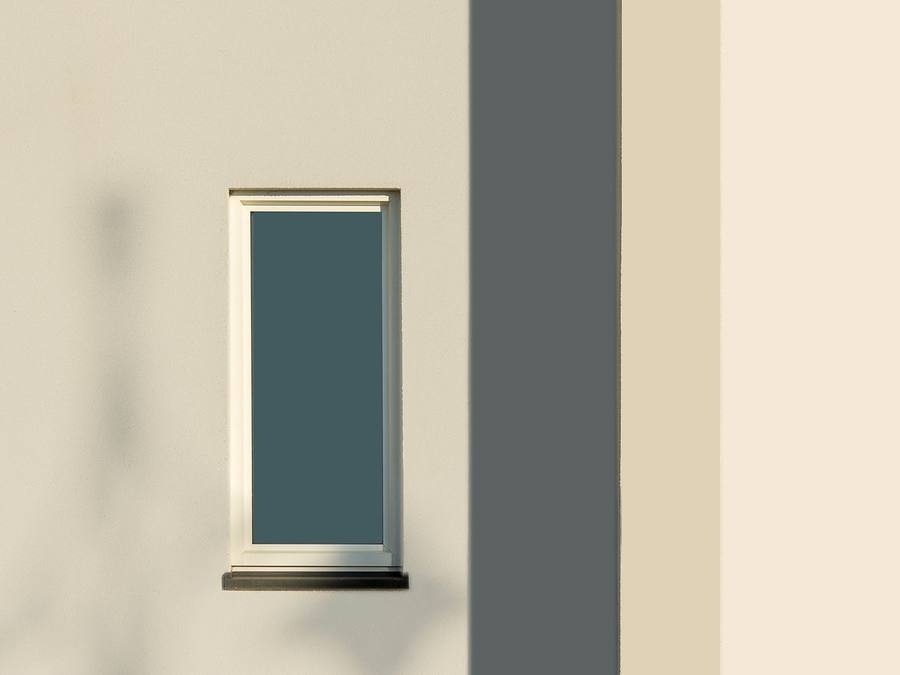
How to check whether your render has really faded
Before deciding the colour has gone, compare like with like. Every house has a few spots the weather barely reaches, and they make a useful reference.
Look in sheltered places. Check the render tucked under the eaves, under a porch canopy, behind a downpipe or where a satellite dish bracket, sign or trellis has been removed. If those areas are noticeably richer in colour than the open wall, the exposed render has genuinely changed.
Do a rub test. Wipe a dark cloth firmly across the surface. A coloured powder on the cloth points to chalking, which is typical of ageing paint. Grey or black residue is dirt, and a green smear is organic growth.
Try water and a soft brush. In a small, discreet patch, gently brush with clean water and let it dry fully. If the colour comes back, you’re dealing with surface soiling, not lost pigment. Avoid household chemicals, bleach or abrasive pads for this test; they can mark render permanently.
Compare elevations. If the south or west wall is paler than the north wall but each is even across its own surface, that’s weathering. If one wall is blotchy, banded or patchy, the cause usually lies elsewhere.
Which render systems hold their colour best
Through-coloured systems carry the pigment right through the finish, so even when the surface weathers there’s more of the same colour beneath. That’s the main reason through colour render holds its appearance better than paint, which is a thin film that fades and is periodically renewed.
The system still matters, because the binder decides how the surface weathers and how much dirt it holds onto.
One rule applies across all of them: the colour card is only half the story. How well the render was applied, cured and detailed to keep water off it has as much effect on how it looks years from now as the pigment does.
How painted render fades
Plain sand and cement render, painted pebbledash and many older Tyrolean finishes get their colour from masonry paint. Paint is a thin film exposed to the full force of the weather, so it’s the first thing on a house to lose colour.
The typical pattern is a gradual softening of the shade, then chalking, and eventually flaking where water has got behind the film. Strong and dark paint colours show it soonest; whites and pale neutrals hide it longest. Different elevations of the same house often need repainting at different intervals for exactly this reason.
The upside is that fading on painted render is simple to deal with: it’s renewed at redecoration, and you can change colour at the same time. Use a breathable masonry paint suitable for the render, and make sure loose, chalky material is cleaned off first or the new coat won’t bond well.
Silicone, acrylic and silicate finishes
These thin-coat finishes are through-coloured and are generally among the most colour-stable options for UK houses. Each behaves a little differently as it ages.
Silicone finishes are water-repellent, so rain beads and runs off rather than soaking in. That helps keep airborne dirt from bedding into the surface, so the colour tends to stay cleaner for longer. Any change is usually slow and even.
Acrylic finishes are tough and hold colour well, but they are less water-repellent than silicone, so shaded walls can pick up dirt and growth sooner. A tired acrylic wall is often a soiled wall rather than a faded one.
Silicate (mineral) finishes are highly breathable and have a flat, matt mineral look that tends to weather in a soft, natural way rather than looking washed out.
Whichever you have, the manufacturer’s cleaning advice is the place to start before assuming the colour has gone.
Monocouche, dash and roughcast finishes
Monocouche is a cement-based, through-coloured render. Its pigments are stable, but as a cement product it can show lime bloom, especially in its first months and on darker shades. That white haze is a common reason a monocouche wall looks faded or patchy. Our monocouche render colours guide explains which shades are the more forgiving.
Dash and roughcast finishes have stone chips thrown into the render. Natural stone aggregate doesn’t fade the way pigment does, so the overall look of a dashed wall can stay remarkably consistent. What changes is the dirt lodged between the chips and any growth on shaded sides, which dulls the wall without the colour itself going anywhere. If the dash has been painted, it behaves like any painted wall.
Textured finishes in general hide slight colour change better than smooth ones, because the light breaks up across the surface.
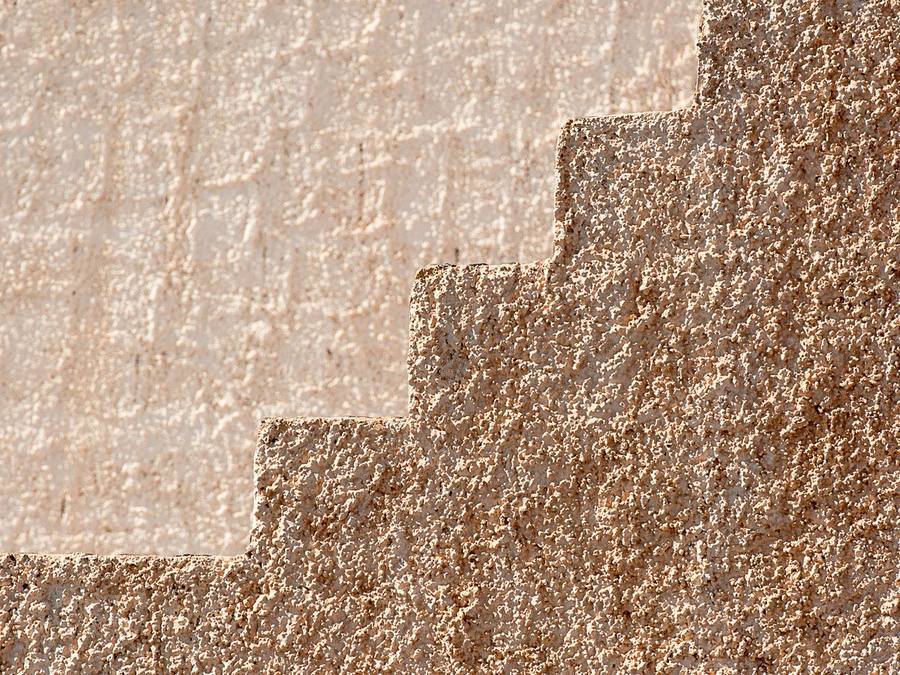
Lime render and limewash: fading by design
Lime finished with limewash is a special case. Limewash is designed to weather gently and be renewed, and its soft, slightly uneven ageing is part of the look on traditional and historic buildings. A limewashed wall that has softened in colour isn’t failing; it’s doing what it’s meant to do.
Renewal is part of the maintenance cycle rather than a repair, and it’s a job for someone who understands traditional materials. Modern masonry paints are generally not a substitute on lime, because they can trap moisture in the wall. Our guide to lime render vs limewash explains how the two work together.
How shade choice and aspect affect fading
Pale and earthy colours — off-whites, creams, stone, buff and soft greys — change least, and any change is hard to see. Strong, saturated colours such as bright blues, reds and greens are the most likely to soften noticeably. Very dark shades run hotter in the sun and show pale chalking and bloom more clearly, even when the pigment itself is stable.
Aspect matters as much as shade. South- and west-facing walls take the most UV and the hottest afternoon sun, so they change first. North-facing walls barely fade but are more prone to algae. It’s common for a house to look slightly different on its sunny front and its sheltered side after some years, and that’s normal weathering rather than a fault.
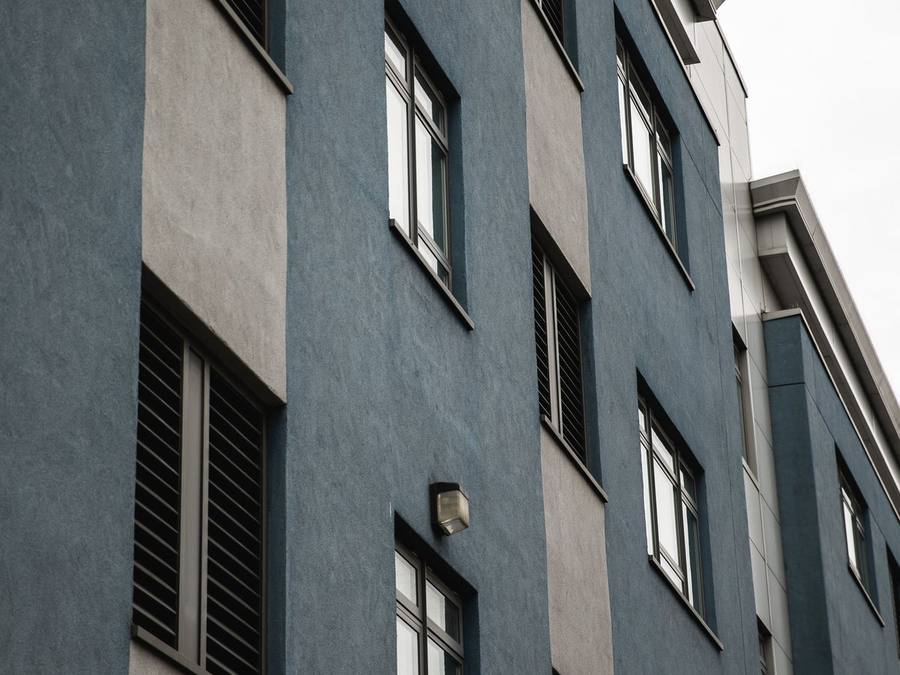
How location and exposure affect render colour
Two houses with the same render can age quite differently depending on where they stand.
Coastal homes face wind-driven rain, salt-laden air and strong, open light. Expect sunny, seaward elevations to soften sooner than sheltered ones.
Exposed, elevated sites get more driving rain and more surface erosion. On these, a textured finish and a mid-tone colour are usually more forgiving than a smooth bright white or a deep shade.
Busy roads deposit a fine film of traffic grime that greys pale colours evenly. It shows first on the elevation facing the road.
Gardens and trees shade walls, drop debris and keep surfaces damp, which encourages growth on the sides that see least sun.
Choosing a render colour that ages well
If you’re re-rendering, a few choices make a big difference to how the colour looks in years to come.
Favour mid-to-pale earthy shades if long-term consistency matters most. Stone, buff, soft cream and warm off-white change least and hide dirt better than brilliant white.
Be realistic about bright white. White doesn’t fade in the usual sense, but it shows every streak and speck of growth. Our guide to the white render house covers how to keep it looking crisp.
Check dark colours against the system. Some manufacturers limit very dark shades on certain systems, or don’t allow them over insulation boards, because of heat build-up. Ask your renderer whether your chosen shade is approved for the build-up proposed.
Sample on the sunniest wall. Judge samples on your south or west elevation as well as in shade, since that’s where change will show first. Our guide to render colours covers shortlisting and sampling in more detail, and our exterior rendering guide compares the systems themselves.
Matching new render to a weathered wall
Fading becomes most obvious when fresh render goes next to old. A repair patch, a new porch or an extension in the “same” colour will almost always look brighter or slightly different from render that has weathered for years, even when it’s the same product and colour name.
Good renderers plan for this rather than hope. They take repairs to a natural break such as a corner, bead line or opening, so the eye reads the change as deliberate. On an extension, they may suggest a new finish coat across the adjoining elevation so old and new weather together from the same starting point.
Keep a record of the manufacturer, product, colour reference and finish of your render. It won’t guarantee a perfect match later, but it gives anyone carrying out repairs the right starting point. If your original installer can tell you which batch was used, note that too.
Normal weathering or a defect?
Usually normal: a slow, even softening of colour over years; a sunny elevation slightly lighter than a shaded one; light chalking on an old painted render.
Worth raising with the installer: obvious patches, blotches or bands of different shade within the first months; visible lines where one day’s work met the next; a heavy white bloom that keeps returning; colour that differs sharply between scaffold lifts. These usually point to mixed batches, uneven thickness, poor sequencing or curing in bad weather.
If the job is recent, check what any workmanship or product guarantee you were given says about appearance, and contact the installer promptly. Our guide to the render guarantee explains what to look for in the wording. Photograph the wall in even, overcast light and note the dates; that record makes any conversation much easier.
Render looking tired or uneven? SmartMatch™ pairs you with one vetted local specialist for a free survey and an honest view on cleaning, recoating or re-rendering.
Get a free quote →Questions that protect your render colour before work starts
Most colour problems are set in the first few weeks, so it pays to ask the right things before the scaffold goes up. Our list of questions to ask a renderer covers the whole job; for colour, focus on these.
Which product and colour reference? Get the manufacturer, product, colour and finish written on the quote.
One batch per elevation? Ask whether material for each wall will come from one production batch and whether batch numbers will be checked on delivery.
Where will the joints fall? A good renderer plans to finish each wall, or each section to a natural break, in one continuous run.
What about the weather? Ask how the work will be protected from rain, frost, hot sun and drying wind while it cures.
How is it detailed to shed water? Sills with drips, overhanging copings and clear gutters keep run-off from streaking the colour.
What aftercare is recommended? Ask which cleaning products the manufacturer approves, so you don’t damage the finish later.
How faded render is refreshed
Clean first. A gentle, low-pressure clean with a product the render manufacturer approves often brings back far more colour than people expect. Never use a high-pressure jet on through-coloured render; it can strip the surface.
Treat bloom. Persistent lime bloom can be removed with specialist cleaners designed for cement-based render, applied after a test area. Find and stop any water feeding it first.
Recoat. Where the render is sound but genuinely faded, a compatible through-coloured finish can go over the top, often with a primer, and is a chance to change colour. Painted render is simply redecorated with a breathable masonry paint. Some homeowners also consider a wall coating over sound render.
What dealing with faded render costs
Because fading is cosmetic, the cheapest fix that works is usually the right one. Cleaning costs depend heavily on access, wall height and the product used, so ask for it priced and itemised separately. A recoat over sound render also depends on the system, preparation and access, so get it quoted against the actual wall rather than relying on a rule of thumb.
Faded render often comes with minor damage that’s worth fixing at the same time. As an indicative guide, small crack repairs typically cost around indicative £150–£400, and larger patch areas indicative £800–£2,500. If the render underneath is failing and the colour is the least of your worries, a full re-render is a different scale of job: typically indicative £3,500–£5,000 for one wall, rising to indicative £12,000–£17,000+ for four or more. Our house rendering cost guide explains what drives those figures.
When the problem isn’t really the colour
Colour change is cosmetic. Cracks, hollow-sounding patches, damp inside or render coming away are not, and they need sorting before any recoat. Putting a fresh colour over failing render simply hides the problem for a while and wastes the money spent on the finish.
It may also be that a different approach suits you better than any render work. If the wall is sound and you simply want a new colour on painted render, a decorator may be all you need. If the render is sound and only dirty, a cleaning specialist may be the right call.
SmartMatch™ weighs render-type experience, verified reviews, online reputation, insurance and accreditation to introduce you to one vetted local specialist for a free, no-obligation survey and written quote. Most of our specialists take on projects from around £3,500, so they’re best suited to larger repairs and re-renders; for a single small job, a local builder or plasterer may be quicker.
Frequently asked questions
Do render colours fade?
Which render colours fade the least?
How can I tell if my render has faded or is just dirty?
Why has my render gone patchy rather than faded evenly?
Is the white haze on my render fading?
Do dark render colours fade faster?
Why is one side of my house a different shade from the other?
Can faded render be restored?
Will a repair match my faded render?
Does monocouche render fade?
Bring your render’s colour back
Tell us about your property and SmartMatch™ pairs you with one vetted local render specialist for a free, no-obligation survey and written quote.
Get a free quote →