Traditional sand and cement render is mixed on site, applied in two or three coats and usually painted, so it needs repainting periodically. Monocouche is a factory-made, through-coloured cement-based render applied in one thick coat and scraped to finish, so it doesn’t need routine painting. As an indicative guide, sand and cement typically costs around £35–£60 per m² and monocouche £55–£90. Monocouche costs more up front but removes the repainting cycle and gives a more consistent, modern finish; sand and cement is cheaper, easy to repair and still useful for like-for-like repairs, base coats and outbuildings.
- Both are cement-based, but monocouche is factory-made and through-coloured.
- Sand and cement typically costs indicative £35–£60/m²; monocouche £55–£90/m².
- Cement render is usually painted and needs repainting; monocouche doesn’t.
- Monocouche gives a more consistent finish; cement depends heavily on the mix and the hand.
- Both suit sound, even modern walls best; neither is ideal on historic solid walls.
- Repainting a cement render over the years narrows monocouche’s up-front premium.
What monocouche and cement render are
Sand and cement render — often just called cement render — is mixed on site from sand, cement and water, often with lime or a plasticiser added to make it more workable. It’s applied by hand in two or three coats: a scratch coat pressed into the wall and scored to give a key, sometimes a second coat to build thickness, and a finish coat that’s floated smooth, textured or dashed. Once cured, it’s usually painted with masonry paint. Our sand and cement render page explains it in more detail.
Monocouche — French for “single layer” — is a factory-made, cement-based render with carefully graded aggregates, additives and the colour already mixed in. It comes in bags, is mixed with water on site, and is applied in one thick coat, usually in two passes wet on wet, often by spray machine. Once it has partly set, it’s scraped back with a special tool to give a fine, even texture. Because the colour is in the material, it isn’t painted. See our monocouche render page.
Both belong to the cement-based branch of the render family described in our guide to exterior rendering.
Monocouche vs cement at a glance
| Sand and cement | Monocouche | |
|---|---|---|
| Indicative cost / m² | £35–£60 | £55–£90 |
| Made | Mixed on site | Factory pre-mixed |
| Coats | Two or three | One (two passes) |
| Colour | Painted | Through-coloured |
| Repainting | Periodically | Not routinely |
| Consistency | Depends on mix and applicator | Consistent product |
| Crack resistance | Low–moderate | Moderate |
| Ease of repair | Easy; repaint to hide | Repairable; colour matching harder |
indicative Ballpark figures; your wall, access and region matter more than the product.
Up-front cost
Sand and cement is the cheapest render to put on. The raw materials cost little and are available everywhere. As an indicative guide, it typically costs around indicative £35–£60 per m².
Monocouche costs more, typically around indicative £55–£90 per m². The extra goes on the factory-made material with its pigments and additives.
As purely illustrative arithmetic, 100 m² of wall at those rates comes to indicative £3,500–£6,000 in sand and cement and indicative £5,500–£9,000 in monocouche. Real quotes are priced for the whole job, including scaffolding, preparation, beads and making good, so treat those figures as a way of seeing the gap rather than a budget.
Remember that the cement render price usually doesn’t include painting, or includes just a first coat. A smooth or floated cement render usually isn’t finished until it’s painted, so add the cost of a good-quality masonry paint system to the comparison. See our monocouche render cost guide, and our house rendering cost guide for whole-house prices by number of walls.
The whole-life cost
Painted cement render needs repainting periodically to keep it looking good and to maintain its paint layer’s protection. Each time, there’s paint, labour, crack filling and usually scaffolding or access equipment. Over the life of the render, those repaints can add up to a significant sum.
Monocouche doesn’t need painting. Its maintenance is occasional gentle cleaning, particularly on shaded walls where algae can appear. Over the long term, that difference can close much of the up-front gap between the two — and for homeowners planning to stay put, monocouche often works out as good value or better.
Appearance and consistency
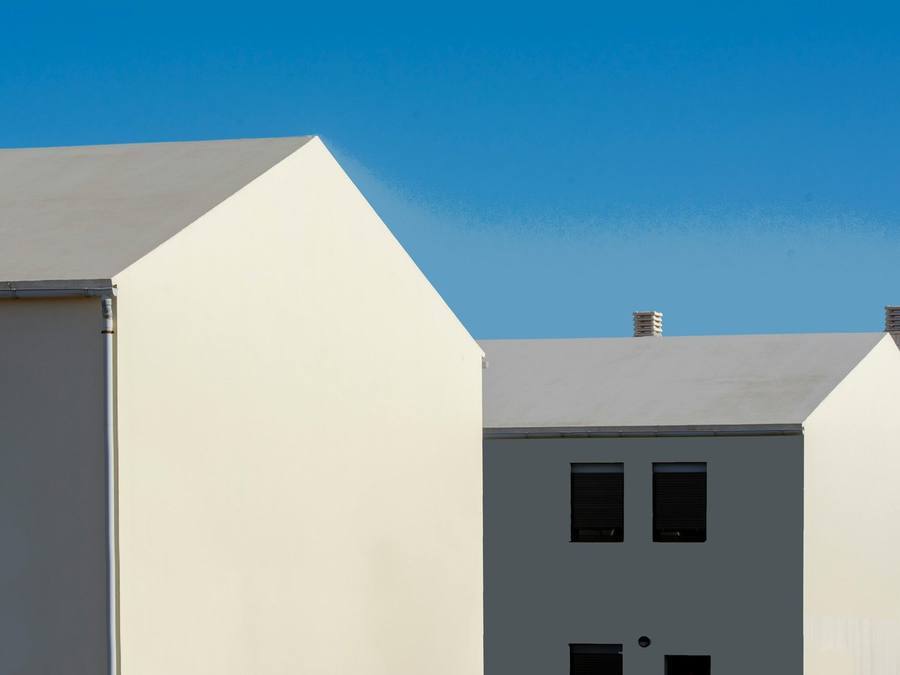
Monocouche gives a clean, uniform, modern finish. Because it’s factory-made, the colour and texture are consistent across the wall and from one bag to the next within a batch, and the scraped finish has a fine, even grain. It comes in a range of through-coloured shades, mostly whites, creams, stone and lighter greys.
Cement render’s appearance depends heavily on the mix and the skill of the person applying it. It can be finished smooth, floated, textured or dashed, and painted any colour, which makes it versatile and easy to change. But the paint fades, chalks and peels over time, and cracks show through, so a painted cement render can look tired between repaints. Our guide to monocouche render colours covers the shades available.
One genuine advantage of painted cement render is flexibility. If you tire of the colour, you can repaint it a different shade at the next redecoration. Monocouche’s colour is fixed in the material: changing it means applying a new finish coat or another system over the top.
That’s worth thinking about when choosing a monocouche colour. Look at samples outside in daylight, against your roof, windows and neighbours’ houses, and choose a shade you’ll be happy with for many years. Neutral whites, creams, stone and soft greys are the safest choices on most houses. If you want a strong or dark colour, check what the product range actually offers and ask about its suitability on your elevation before committing.
Cracking and durability
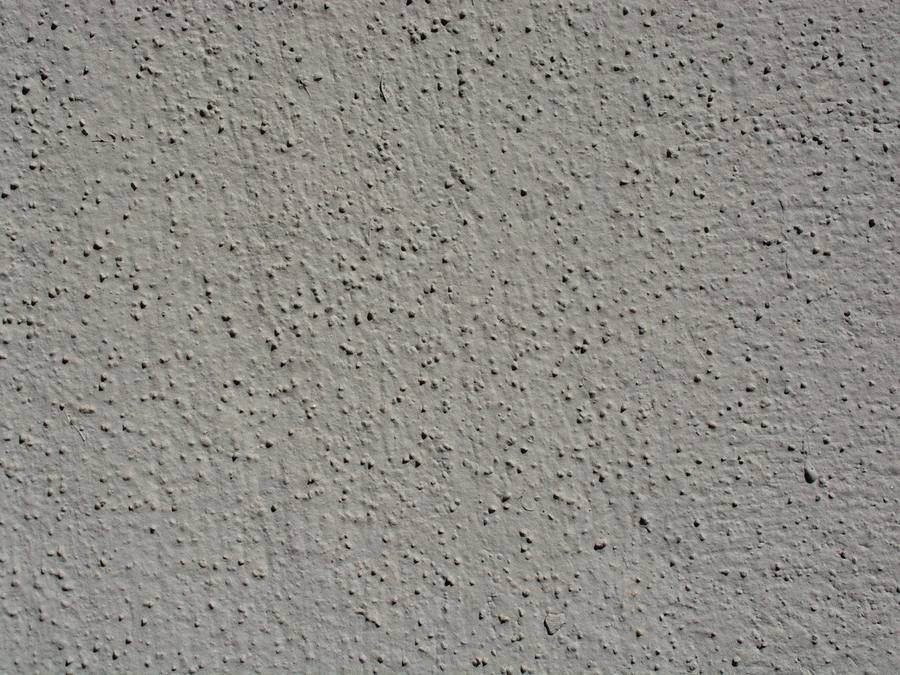
Sand and cement render is hard and rigid, and it’s prone to cracking as it shrinks during curing and as the building moves over time. A mix that’s too strong — too much cement — is particularly crack-prone, which is why lime is often added. Once cracked, it can let water in behind it, and in winter that water can freeze and push the render off the wall.
Monocouche is also cement-based and relatively rigid, but its factory-controlled mix and additives make it more consistent and somewhat more forgiving. It can still develop fine hairline crazing, especially if applied too thinly, in poor weather or on an unsuitable background, and mesh is used at stress points such as the corners of openings. Neither is as crack-resistant as a flexible thin-coat system such as silicone, which uses full mesh across the wall and a more elastic finish to cope with movement. Our guide to monocouche render problems covers the faults specific to one-coat render.
Water resistance and weathering
Cement render on its own is fairly absorbent and relies largely on its paint layer to shed rain. When the paint is in good condition, it performs well; as it ages and cracks, more water gets in.
On exposed elevations, such as gables facing the prevailing weather, that ageing paint layer is the weak point, and you’ll often see a painted cement render looking worst on the wettest side of the house first.
Monocouche has water-repellent additives and offers good weather resistance without paint. It’s not as strongly water-repellent as silicone, so on shaded or exposed walls it can pick up dirt and algae over time, but it generally weathers more gracefully than an ageing painted cement render.
Breathability and older walls
Both are cement-based and less vapour-open than lime, so neither is the safe default on historic solid walls. On modern cavity-wall homes, that’s generally fine. On older solid-walled houses built with lime mortar, both can trap moisture in the masonry, leading to damp and decay.
For historic solid walls, the better choice is usually lime, or a genuinely breathable modern system such as a suitable silicone or mineral render. See our lime vs cement render guide for why this matters.
Which walls suit which render?
New blockwork and extensions. Monocouche is the classic choice: the wall is even and sound, there’s nothing to remove, and its single coat saves time. Sand and cement is the budget alternative, painted afterwards.
Re-rendering a modern cavity-wall house. Monocouche if the wall is sound and even, or can be prepared economically. On uneven or mixed surfaces, a thin-coat system over a levelling base coat may be more straightforward.
Repairs to existing cement render. Sand and cement, matched to the existing render and then repainted, is the natural like-for-like choice.
Outbuildings, garages and garden walls. Sand and cement is often perfectly adequate and the most economical.
Older solid-walled houses. Neither is ideal; lime or a breathable system is usually better.
Uneven walls needing a levelling coat. Sand and cement is sometimes used as a levelling or “dubbing out” coat to bring the wall to a consistent plane before a finish is applied. Many render systems specify their own base coats, though, and using the manufacturer’s base coat is usually required for a system guarantee. If a renderer proposes a cement base coat under a branded finish, ask whether it’s compatible with the system and whether it affects the guarantee.
Application, skill and weather
Sand and cement relies on the skill of the renderer more than most systems. The mix proportions, how each coat is applied and cured, and the finish all depend on the person doing it. In skilled hands, it gives a durable, attractive result; in less skilled hands, inconsistent mixes and rushed curing lead to cracking.
Monocouche is more consistent as a product, but it has its own demands. It must go on at the right thickness — too thin and it’s prone to crazing — and it must be scraped at the right moment as it sets, which depends on the weather. Both should be applied in suitable conditions: not in frost, heavy rain or very hot sun, and protected while they cure.
Maintenance compared
Cement render: repaint periodically, filling cracks and repairing any loose areas first. Keep gutters and downpipes clear, and deal with cracks promptly before water gets in.
Monocouche: no painting. Clean gently when dirt or algae appears, particularly on shaded walls, using a suitable render cleaner and avoiding high-pressure washing. Keep gutters and sills in good order.
Repairs and colour matching
Cement render is easy to repair: damaged areas are cut out, patched in a compatible mix and, once the wall is repainted, a well-matched repair is usually hard to spot. That’s one of its genuine advantages.
Monocouche can be repaired too, but because it’s through-coloured, a patch made with new material from a different batch may not match a weathered wall exactly. Taking a repair to a natural break, or re-coating an elevation, can help.
Living with each render over the years
Living with a painted cement render means a maintenance rhythm: watching for cracks and peeling, filling and touching up, and planning a full repaint every few years, usually with scaffolding. Many owners don’t mind this, especially if they like the flexibility of changing colour.
Living with monocouche is quieter. There’s nothing to repaint, and the main task is an occasional gentle clean on shaded elevations. If fine crazing appears over time, it’s usually cosmetic, and if the finish ever looks tired, a new thin-coat finish can be applied over a sound monocouche base. That lower-maintenance life is the main reason to choose it.
Switching from painted cement to monocouche
Many homeowners comparing the two already have a painted cement render that needs repainting again. Whether monocouche can go over it depends on the condition: a sound, well-bonded cement render may be prepared — loose paint removed, cracks repaired, a suitable bonding or base coat applied — before a new finish goes on. Monocouche needs a suitable background, so painted and dense surfaces often need treating first, and in some cases a thin-coat system is the more reliable choice over old render.
If the cement render is hollow, cracked across large areas or linked to damp, it needs to come off first, and strip-and-re-render work sits in a higher band of around indicative £100–£170 per m². Our re-rendering cost guide covers the removal route.
If you’re not sure what you have, look closely at a chipped corner or the edge of an old repair. A painted render shows a distinct paint layer over a grey or buff body; a through-coloured render is the same colour all the way through. Old paperwork helps too, and a specialist can confirm it at the survey.
Tired of repainting a cement render? SmartMatch™ pairs you with one vetted local specialist for a free survey and written quote.
Get a free quote →Where silicone fits in
If you’re moving away from painted cement, monocouche isn’t the only through-coloured option. Thin-coat silicone render is more flexible, more water-repellent than monocouche, and it stays cleaner for longer, at a slightly higher cost. It’s often the better choice over old surfaces, on exposed or shaded elevations and on older houses. See our silicone vs monocouche and cement vs silicone comparisons.
Three example scenarios
A new blockwork extension on a modern house. Monocouche is a natural fit: quick to apply, through-coloured, and no painting. Choose a colour that complements the main house, and look at it next to the existing walls before deciding.
A cracked patch on a painted cement-rendered house. Repair in sand and cement and repaint the wall. Switching systems for a small repair makes very little sense.
An older cavity-wall semi with tired painted cement render, sound when tapped. The owners are fed up with repainting. A through-coloured system over a prepared surface — often a thin-coat silicone, sometimes monocouche where the background suits — ends the repainting cycle.
Questions to ask your renderer
Which would you recommend for my walls, and why? If you’re quoting cement, what mix will you use, and does the price include painting? If you’re quoting monocouche, which product and colour, and is my wall a suitable background for it? What preparation will be needed? Where will you use mesh? Are my walls solid or cavity, and does that change your recommendation? What guarantee comes with each option?
A renderer who answers clearly and with reference to your house is likely to recommend the right render. Be wary of anyone who dismisses either option out of hand without explaining why it does or doesn’t suit your walls.
What good workmanship looks like for each
Because both renders depend so much on how they’re applied, it helps to know what a careful job looks like before the scaffold comes down.
Sand and cement. The scratch coat is scored to give a key and allowed to firm up before the next coat goes on, and each coat is no stronger than the one beneath it. Fresh coats are kept from drying too fast in sun or wind, because rapid drying is a common cause of crazing. Beads at corners and openings should be straight and plumb, and the finish should be even across the wall, without visible lines where one day’s work met the next. Painting waits until the render has cured.
Monocouche. The product is applied at the thickness its manufacturer specifies, with mesh at the corners of openings and other stress points. Each elevation is worked in a continuous run, finishing at corners or bead lines rather than stopping mid-wall, so the colour and texture don’t show a join. Scraping is done evenly once the render has firmed enough, leaving a consistent grain. Bags from the same batch are used on any one elevation where possible, which is worth asking about if the job is large.
For either render, the base of the wall matters: render should stop above ground level on a bead rather than running down into soil or paving, where it would wick moisture. Sills should throw water clear of the face. These details cost little at the time and decide how the render looks in a few years.
Comparing quotes and guarantees
Make sure both quotes cover the same walls, preparation, beads, mesh and scaffolding. Check whether the cement quote includes painting, and how many coats. Ask the monocouche quote to name the product and colour, and to confirm where mesh will be used. If the two quotes describe the preparation differently, ask each renderer to explain what they found on your walls.
Monocouche is a manufactured system, and many manufacturers offer system guarantees when it’s applied to their specification, often by a trained installer. Sand and cement mixed on site doesn’t come with a manufacturer’s guarantee in the same way, so you rely on the renderer’s workmanship guarantee. That’s another factor in the comparison.
When neither might be right
On older solid-walled houses, lime or a breathable modern render is usually better than either. If your brickwork is sound and attractive, re-pointing may be all it needs. And if appearance is the only concern on an existing render, some homeowners compare masonry wall coatings too, a different product worth weighing on its merits.
If you’d like expert advice, SmartMatch™ weighs render-type experience, verified reviews, online reputation, insurance and accreditation to introduce you to one vetted local specialist for a free, no-obligation survey and quote. Read more on our monocouche render and cement render pages.
Frequently asked questions
What is the difference between monocouche and cement render?
Is monocouche better than cement render?
Is monocouche more expensive than cement render?
Does cement render need painting?
Does monocouche crack?
Can monocouche go over cement render?
Which is easier to repair?
Are monocouche and cement render breathable?
Is monocouche good for extensions?
When should I use sand and cement render?
Get the right render for your walls
Tell us about your property and SmartMatch™ pairs you with one vetted local render specialist for a free, no-obligation survey and written quote.
Get a free quote →