You can usually render over pebbledash only if it’s sound: firmly bonded to the wall, with no hollow areas, no significant cracking and no damp problems linked to it. If the pebbledash is hollow, cracked, loose or trapping moisture — common on older solid-walled houses — it needs to come off. As an indicative guide, both routes typically sit around £100–£170 per m²: stripping adds removal labour and waste, while rendering over needs extra levelling, mesh and detailing. The deciding factor is the condition of the existing surface, which a local specialist checks by tapping the wall during a survey.
- Render over only if the pebbledash is sound, well bonded and dry.
- Rendering over and stripping both typically sit around indicative £100–£170/m²; the survey decides where a job lands.
- Hollow, cracked or damp pebbledash must come off, or the new render will fail with it.
- On solid walls, a dense dash may be trapping moisture — removal is often the right call.
- Rendering over adds thickness, which affects sills, reveals and junctions.
- Different elevations on the same house can need different answers.
The short answer: it depends on the condition
The question isn’t really “which is better?” in general. It’s “what condition is my pebbledash in?” A new render is only as good as the surface it’s bonded to. Put it over a sound, stable, dry base and it can perform well for many years. Put it over pebbledash that has already lost its grip on the wall, and the new render inherits the failure: it will crack and come away along with the old layer underneath.
So the decision comes down to an honest assessment of the existing surface — and, on older houses, of whether the pebbledash is causing problems for the wall behind it. The rest of this guide explains how that assessment works and what each route involves. If you’re still deciding whether to render at all, our guide to exterior rendering covers the wider options first.
How to tell whether your pebbledash is sound
You can do a rough check yourself, and a specialist will do a thorough one at the survey.
The tap test. Tap the wall firmly with a knuckle or the handle of a screwdriver, working across the areas you can safely reach. Sound pebbledash gives a solid, dull note. Pebbledash that has lost its bond sounds hollow or drummy. A few small hollow spots may be repairable; hollow areas across large parts of a wall mean the layer is failing.
Cracks. Look for cracks, especially wide ones, cracks around windows and doors, and areas where cracks branch across the wall. Some fine cracking is common; widespread or wide cracking is a warning sign.
Bulges and loose patches. Any area that bulges outwards, or where the dash has already fallen away, has lost its key.
Stones coming loose. Stones dropping off when brushed suggest the surface coat is weak and won’t provide a good base.
Damp inside. Damp patches on the inside face of external walls, particularly on solid-walled houses, can mean the pebbledash is letting water in or trapping it.
A specialist will tap systematically across every elevation, often marking hollow areas so you can see the extent for yourself. That map is what decides the approach, and it’s worth asking to see it before you accept any recommendation.
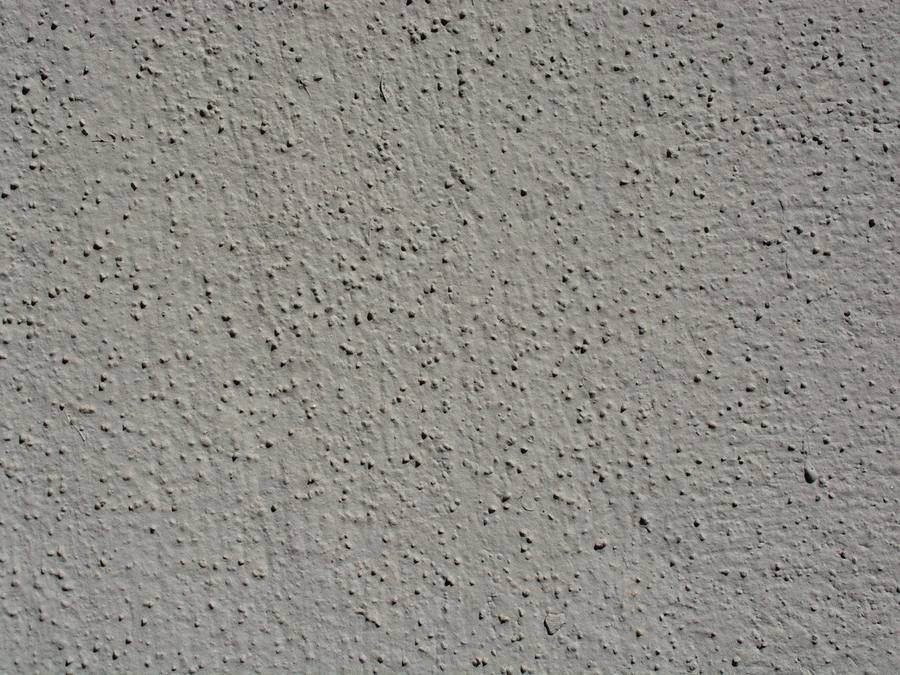
Rendering over pebbledash: the pros and cons
The advantages. Skipping the removal stage avoids days of labour, the skips and the disposal, and the risk of discovering expensive repairs under the dash. That doesn’t make it reliably cheaper: the extra preparation it needs means it typically sits in the same indicative £100–£170 per m² band as stripping. It is quicker, quieter and generally far less disruptive, which matters on attached houses where neighbours share the noise.
The disadvantages. You’re relying on a layer of old render you can’t fully inspect. Even sound pebbledash is an older material, and the new render’s life is tied to it. The new system also adds thickness to an already rendered wall, which affects window sills, reveals, door frames and junctions with neighbouring properties. And you won’t find out what’s underneath — which is fine if there’s nothing wrong, but means any hidden problems stay hidden.
What’s involved. Rendering over isn’t just applying new render to old. The dash needs cleaning, any hollow patches cutting out and repairing, loose stones removing, and the surface preparing so the new system bonds — often with a levelling or base coat to fill the texture of the stones, then mesh, then the finish. Done properly, it’s a thorough job in its own right; our guide on how to render over pebbledash covers that preparation in detail.
Removing pebbledash: the pros and cons
The advantages. You start from the wall itself. Any damage behind the old dash — eroded joints, cracked bricks, failed lintels — is found and repaired. The new render bonds to a known, prepared surface, and its life isn’t tied to an older layer. Wall thickness doesn’t build up. And on solid-walled houses, removing a dense cement dash and replacing it with a breathable system can help the wall dry out.
The disadvantages. Removal is slow, heavy work that produces a lot of waste, and it adds labour and disposal to the job, which sits in the same indicative £100–£170 per m² band. It takes longer, it’s noisy and dusty, and there’s uncertainty about what you’ll find underneath, which can add repairs to the bill. RenderSmart’s specialists remove pebbledash only as part of a full re-render, so this route always includes the new finish — our pebbledash removal page explains how that works. Our pebbledash removal cost guide sets out typical budgets.
The two routes compared
| Render over | Remove and re-render | |
|---|---|---|
| Indicative cost / m² | £100–£170 | £100–£170 |
| Extra work | Levelling, mesh, detailing at reveals and sills | Removal labour, waste, repairs found underneath |
| Suitable when | Dash is sound, bonded and dry | Dash is hollow, cracked, loose or damp |
| Disruption | Lower | Higher — noise, dust, skips |
| Duration | Shorter | Longer |
| Hidden problems | Stay hidden | Found and repaired |
| Wall thickness | Increases | Doesn’t build up |
| Solid walls | Can keep trapping moisture | Chance to switch to breathable render |
indicative Ballpark figures, not fixed prices.
Why solid walls change the decision
On houses built before cavity walls were common — many Victorian and Edwardian homes and some interwar ones — the walls are solid brick or stone. Pebbledash on these houses was usually applied in a dense, cement-based mix. A solid wall needs to be able to dry out, and a dense dash can stop it, trapping moisture in the brickwork. That can show up as damp inside, decaying bricks and mortar, and pebbledash that cracks and blows as moisture works behind it.
In that situation, rendering over the dash — even if it currently seems sound — adds another layer over a wall that already can’t breathe. Removing it and replacing it with a breathable system, such as a suitable silicone or mineral render or traditional lime, is often the better long-term answer, even with the extra removal work. Our lime render cost guide covers the breathable option for period homes.
On modern cavity-wall houses, this concern is much smaller, and rendering over sound pebbledash is more often a reasonable choice.
The practical details of rendering over
Rendering over adds depth to the wall, typically enough to matter at the edges. Window sills may no longer project far enough to throw rainwater clear of the new surface, and may need extending or replacing. Reveals around windows and doors get shallower, and the new render needs neat beads where it meets frames. Junctions with neighbouring houses, porches and extensions need stop beads so the extra depth looks deliberate. And fittings such as downpipes, lights and meter boxes need refitting further out.
None of these is a reason not to render over, but they all need pricing in. A quote for rendering over that doesn’t mention sills and beads is probably incomplete.
When different walls need different answers
It’s common for a house to need a mixed approach. The most exposed elevation — often the side gable facing the prevailing weather — may have failed badly and need stripping, while a sheltered front elevation is still sound enough to render over. A specialist may also recommend stripping areas of hollow dash while rendering over the sound remainder of the same wall, although on a single elevation it’s often simpler and more reliable to treat the whole wall the same way.
If you’re given a mixed approach, ask the renderer to show you the hollow areas they’ve found, explain why each elevation is being treated as it is, and confirm the new finish will look uniform across both. With the same system and finish coat throughout, it should.
Not sure whether your pebbledash can stay? SmartMatch™ pairs you with one vetted local specialist for a free survey and an honest answer.
Get a free quote →What rendering over pebbledash involves
A proper render-over is a sequence of its own: tap test, cleaning and stabilising, cutting out hollow patches, a levelling coat to fill the stones, beads and mesh, then primer and finish, with sills and fittings made good. Our guide on how to render over pebbledash walks through each stage; for this decision, the point is that a quote which jumps straight from “clean” to “render” is skipping the steps that make this route last.
What removing pebbledash involves, step by step
1. Survey and protection. Scaffolding goes up and windows, doors, paths and neighbouring property are protected from debris and dust.
2. Hacking off. The pebbledash is removed back to the brick or block, by hand or with power tools. This is the slowest, noisiest stage.
3. Disposal. The old render and stones are loaded into skips and taken away; on a whole house that’s a lot of heavy waste.
4. Repairs. With the wall exposed, damaged bricks, eroded joints and failed lintels are repaired before anything new goes on.
5. Preparation and the new system. The wall is prepared and levelled where needed, then the new render system goes on: beads, base coat with mesh, primer and finish.
6. Making good. Fittings refitted, sills dealt with, site cleared.
See our re-rendering cost guide for more on the removal stage and what it commonly uncovers.
What happens if the plan changes mid-job
Even after a careful survey, a render-over job can turn into a partial strip. Cleaning and cutting out the known hollow patches sometimes reveals that the bond is weaker than the tap test suggested, particularly around windows, at the base of the wall and on the most exposed corners. The reverse is rarer but possible: a wall marked for stripping turns out to have large areas still firmly bonded.
The way to avoid an argument is to agree the rules before work starts. Ask the renderer to put in the quote what would make them switch an area from rendering over to stripping, how much of a wall would have to be hollow before they’d recommend stripping all of it, and how the change would be priced — ideally at a per-m² rate for removal and making good that’s written down in advance. Agree too that they’ll stop and show you what they’ve found before doing anything beyond the original scope.
If a switch does happen, it’s worth knowing it can also change the paperwork. A larger strip can bring Building Regulations into play, and the guarantee terms for a stripped wall may differ from those for a rendered-over one. Get any change confirmed in writing, even by email.
Semis, terraces and the house next door
On attached houses, the choice has an extra dimension: the neighbours. Removal is loud, dusty and goes on for days, and on a semi or terrace much of that noise travels through the party wall. Rendering over is far less disruptive, which can be a genuine consideration if relations are delicate or a neighbour works from home.
The junction at the party line matters either way. Rendering over adds depth, so a stop bead is needed where your new render meets your neighbour’s pebbledash; removing and re-rendering leaves a similar junction but at a different depth. A good renderer will finish both neatly. If your neighbour’s dash is also failing, doing both houses together — whichever route suits the walls — can share scaffolding and skips and give a far better-looking result than half a pair.
What the choice means for your budget
Take a hypothetical 3-bed semi with around 100m² of pebbledashed wall. As purely illustrative arithmetic, 100m² at indicative £100–£170 per m² comes to about £10,000–£17,000, before any extras — and that applies whichever route the survey points to.
Ask for both routes priced on the same walls, and be wary of a renderer who recommends one without tapping them. Note that the whole-house bands in our house rendering cost guide apply to standard rendering on sound walls, not to pebbledash.
See our 3-bed semi rendering cost guide for more detail.
Thinking about the long term
Cost today is only part of the picture. Rendering over sound pebbledash avoids the upheaval of removal, and on a suitable cavity-wall house it can give many years of good service. But the new render’s life is tied to the old layer beneath it, and if that layer eventually fails, both may need to come off together — which is a bigger job than stripping the dash alone would have been.
Removal is more disruptive, but it resets the wall: repairs are made, the new render bonds directly to the masonry, and on solid walls you can switch to a breathable system that works with the building. For homeowners planning to stay for a long time, or with older solid-walled houses, that fresh start is often worth the extra.
Neither route is automatically the “right” long-term choice. The point is to weigh the disruption and uncertainty against how long you plan to stay and how confident the survey makes you in the existing surface.
Timing and disruption
Rendering over sound pebbledash is usually the quicker route, with the timescale depending on the size of the house, the crew and the weather. Stripping and re-rendering commonly takes noticeably longer, because removal and repairs come first and can only be fully planned once the dash is off. Both depend on suitable weather, as render shouldn’t be applied in frost, heavy rain or very high temperatures.
If timing matters — around a family event or a house sale — tell the renderer at the survey so they can plan the job around it.
A word on incentives
It’s worth knowing that the two routes can create different incentives. A renderer who wants a quicker, simpler job may be tempted to recommend rendering over pebbledash that really should come off, skimping on the preparation to keep the quote low. A renderer who prefers bigger jobs may recommend stripping walls that could reasonably be rendered over.
Most renderers give honest advice, but the best protection is evidence. Ask each renderer to show you the hollow areas, explain what they found, and put their recommendation and reasoning in the quote. If two renderers disagree, the one who can show you the problem on your own wall is usually the one to trust. Our questions to ask a renderer are designed for exactly this visit.
How the choice affects planning and Building Regulations
Building Regulations are where the two routes genuinely differ. In England, stripping render back to the masonry and re-rendering counts as renovating a “thermal element”. Under Approved Document L, where that covers more than 50% of a wall’s surface, or more than 25% of the whole building envelope, the wall should normally be upgraded thermally so far as is technically, functionally and economically feasible, with a simple payback of around 15 years as the usual test. Patch repairs and over-coating a sound surface don’t usually trigger it. So rendering over sound pebbledash generally sidesteps the requirement, while stripping a whole elevation often brings it into play. Building control should be notified for qualifying work, and older solid-walled buildings get special consideration. Confirm the position with your local building control; our guide to building regulations for re-rendering explains more.
That isn’t necessarily a burden. If the walls are coming back to masonry anyway, it’s the cheapest point at which to add insulation. Insulated render systems typically cost around indicative £90–£150 per m², excluding scaffolding and removal of the old dash. Our guide on whether to insulate when re-rendering weighs it up.
Planning applies the same way to both routes, because what the neighbours see is the new finish. Replacing render with a similar-looking render is generally permitted development in England, but swapping pebbledash for a smooth coloured finish changes the appearance and can need permission. Our guide to planning permission for rendering sets out the rules; check with your local planning authority before work starts.
How the choice affects your guarantee
Guarantees can differ between the two routes. A renderer may be more cautious about guaranteeing a new render applied over an old surface they can’t fully inspect, and some manufacturer system guarantees have specific requirements for the substrate. Ask what guarantee each option carries, what it covers, and whether rendering over affects it. Our guide to render guarantees explains the different types.
A quick decision checklist
Rendering over is more likely to suit you if: the pebbledash taps solid across the wall; there’s little cracking; there’s no damp inside; the house has cavity walls; and you want to keep disruption down.
Removal is more likely to be right if: there are widespread hollow areas; cracks are wide, numerous or returning; dash is falling away; there’s damp inside, especially on a solid wall; or you’re worried about what’s underneath and want a fresh start with a breathable system.
If you tick boxes in both lists, that’s perfectly normal — and it’s exactly where a specialist survey earns its keep.
When neither option is right for you
If your pebbledash is sound and you don’t mind how it looks, you may not need to do anything beyond keeping it clean, clearing gutters and repairing the odd crack. If it’s sound but you dislike its appearance, some homeowners also compare masonry wall coatings as a way to refresh a pebbledashed exterior — a different product with its own strengths, worth weighing on its merits. And if there’s a structural or damp problem, that needs diagnosing before any render work.
If you’d like an honest answer for your house, SmartMatch™ weighs render-type experience, verified reviews, online reputation, insurance and accreditation to introduce you to one vetted local specialist for a free, no-obligation survey and quote. Our pebbledash removal page explains the process in more detail.
Frequently asked questions
Can you render over pebbledash?
Is it cheaper to render over pebbledash than remove it?
How do I know if my pebbledash needs removing?
Is rendering over pebbledash a bad idea?
Should pebbledash be removed from a solid-walled house?
Does rendering over pebbledash affect window sills?
Can some walls be rendered over and others stripped?
Does RenderSmart offer pebbledash removal on its own?
How much does it cost to deal with pebbledash on a semi?
Who should decide whether pebbledash can stay?
Get an honest answer on your pebbledash
Tell us about your property and SmartMatch™ pairs you with one vetted local render specialist for a free survey — including whether your pebbledash can stay or needs to go.
Get a free quote →