As an indicative guide, removing pebbledash and re-rendering in a modern through-coloured system typically costs around £100–£170 per m² (indicative). Where the pebbledash is sound and firmly bonded, rendering over it after proper preparation sits in the same indicative band, because levelling, mesh and detailing take the place of removal; where a job lands depends on the survey. On the stripping route, the price is driven by removal — slow, noisy, dusty labour and lots of heavy waste — and by repairs to the wall underneath. RenderSmart’s specialists remove pebbledash as part of a full re-render, not as a stand-alone job.
- Strip and re-render typically costs indicative £100–£170 per m².
- Rendering over sound pebbledash sits in the same indicative band; the survey decides where a job lands.
- Rendering over needs extra preparation — levelling, mesh and detailing at reveals and sills.
- Removal adds labour, heavy waste and the risk of repairs found underneath.
- Repairs to brickwork found underneath can only be fully priced once the dash is off.
- Pebbledash removal is carried out as part of a full re-render, not on its own.
How much does it cost to remove pebbledash and re-render?
The table below gives indicative per-m² costs for the two ways of dealing with pebbledash before a new through-coloured render such as silicone goes on.
| Scenario | Indicative cost per m² |
|---|---|
| Strip pebbledash and re-render | £100–£170 |
| Render over sound pebbledash | £100–£170 |
indicative Ballpark figures, not fixed prices. Significant repairs to the wall underneath, difficult access and lime render can take a job above this band.
Both routes sit in the same band because each carries its own extra work. Stripping adds removal labour, heavy waste and the risk of repairs found underneath. Rendering over avoids that, but needs cleaning, cut-outs, a levelling or dubbing-out coat to fill the stones, full mesh, and extra detailing because the wall gets thicker at reveals and sills. Where your job lands within the band depends on what the survey finds, so ask for both routes to be priced on the same walls.
The whole-house bands in our house rendering cost guide — for example indicative £3,500–£5,000 for one wall or £8,000–£12,000 for three — apply to standard rendering on sound walls, not to pebbledash jobs, so use the per-m² band above for a pebbledashed house. If you’re new to the subject, our guide to exterior rendering explains the main render systems and how a job runs from survey to finish.
Why removing pebbledash is expensive
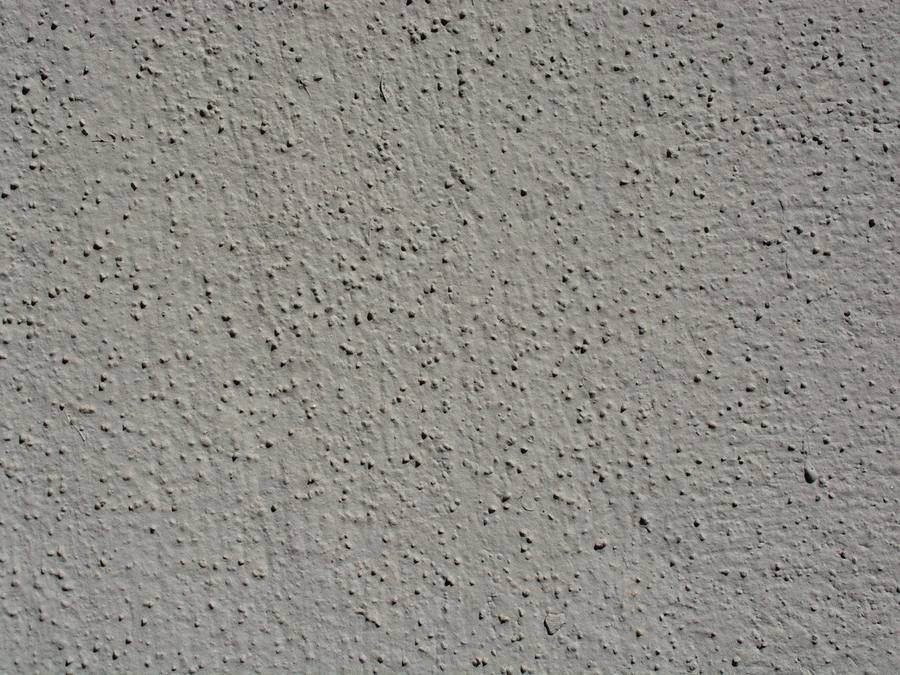
It’s slow, physical work. Pebbledash is a layer of render with small stones thrown into the surface while wet. Removing it means hacking it off the wall by hand or with power tools, usually back to the brick or block. On a whole house that’s days of heavy, noisy, dusty labour, and it can’t really be rushed without damaging the wall.
It produces a lot of heavy waste. Old render and stones are dense, so a whole house produces a lot of heavy waste to load and take away, and disposal is a real line on the quote.
The wall underneath often needs work. Pebbledash was frequently applied to cover poor-quality brick, mixed materials or repairs, and decades of water getting in through cracks can damage what’s beneath. Bricks may need replacing, joints repointing, lintels repairing and uneven areas building out before the new render goes on.
Protection and clear-up. Removal sends debris and dust everywhere. Windows, doors, paths, gardens and neighbours’ property all need protecting, and the site needs clearing at the end.
Only after all that does the new render system go on — and that part costs much the same as on any other wall.
Do you have to remove it, or can you render over?
Not every pebbledashed wall has to be stripped. If the pebbledash is sound and firmly bonded across the wall, with no hollow areas and no significant cracking or damp, it can sometimes be prepared and rendered over. That avoids the removal stage, though the extra preparation it needs means it still sits in the same indicative per-m² band.
It has to come off when the pebbledash is hollow or “blown” — it sounds hollow when tapped — when it’s cracked and letting water in, when it’s loose or falling away, or when it’s linked to damp inside, particularly on a solid wall where a dense cement-based dash may be trapping moisture. Rendering over failing pebbledash simply buries the problem, and the new render will fail with it.
A specialist will tap the wall at the survey to find hollow areas and give you an honest view. On some houses, one elevation can be rendered over while another needs stripping — often the most exposed wall has failed while a sheltered one is still sound. Our guide on whether to remove pebbledash or render over it walks through that decision in depth, and our guide on how to render over pebbledash covers the preparation that route needs.
Why removal is done as part of a re-render
RenderSmart’s specialists remove pebbledash only as part of a full re-render, not as a stand-alone job. There’s a practical reason. Once pebbledash is off, the wall underneath is exposed, often with old keying marks, patched brickwork and mixed materials. It rarely looks like the clean brick some homeowners hope to reveal, and leaving it bare can leave it vulnerable to weather. Stripping it and walking away usually isn’t a good outcome for the house.
Re-rendering in the same project means one scaffold, one set-up and a finished, protected wall at the end. It also means the specialist who uncovers the wall is the one responsible for preparing it, so there’s no gap between trades where a problem can be blamed on someone else. Our pebbledash removal page sets out how the service works.
If you’re hoping to expose attractive brick, talk to a specialist about whether that’s realistic for your house; on many pebbledashed homes it isn’t.
A worked example: pricing a pebbledashed semi
Take a hypothetical interwar semi with about 100m² of pebbledashed wall to treat across the front, rear and side gable after deducting windows and doors. As purely illustrative arithmetic, 100m² at indicative £100–£170 per m² comes to about £10,000–£17,000, before any extras. A house with extensive brick repairs, a two-storey bay or difficult access will be towards the top; a simple, compact semi towards the bottom.
To sanity-check a quote, measure each elevation, multiply height by width and deduct the windows and doors; the per-m² rate the renderer is effectively charging then becomes clear.
What it costs to strip and re-render one elevation
Not every pebbledash job is a whole house. Often it’s one weather-beaten side gable or a rear wall that has failed, while the rest of the dash is holding on. Take a hypothetical gable with around 35m² of wall once openings are deducted. As purely illustrative arithmetic, 35m² at indicative £100–£170 per m² comes to about £3,500–£6,000, before any extras. Scaffolding, set-up and a skip still have to be paid for on a smaller area of work, which can push a single-wall job towards the upper end of the per-m² band.
The catch is appearance: a crisp new render on one elevation will sit beside old pebbledash on the others, which matters most on a gable visible from the street. If you’re phasing the work, record the system, colour and texture so later walls can be matched. And if the specialist’s tap test shows the remaining walls are close to failing too, doing them together saves paying for a second scaffold and set-up a year or two later.
What you might find underneath
The honest truth about pebbledash removal is that nobody knows exactly what’s under it until it’s off. Common findings include poor or mixed brickwork that was never meant to be seen; old repairs and filled openings; eroded mortar joints from years of water getting in; spalled or cracked bricks; and failed lintels over windows and doors.
Most of this is minor and is dealt with routinely as part of preparation. Occasionally something more significant turns up that needs attention before rendering continues. That’s why a good quote explains how unforeseen repairs will be priced — a day rate, a schedule of rates, or an agreement to stop and discuss before anything significant is done. Some homeowners set aside a contingency for this stage.
Pebbledash on solid walls and older houses
On houses built before cavity walls were common — many Victorian and Edwardian homes and some interwar ones — the walls are solid. Pebbledash on these walls was usually applied in a dense cement-based mix, and on a solid wall it can trap moisture, causing damp inside and damage to the brick behind.
If you’re removing pebbledash from a solid-walled house, the choice of new render matters. A breathable system — a suitable silicone or mineral render, or traditional lime — lets the wall dry out rather than repeating the problem. Lime costs more (indicatively around £70–£125 per m² for the render), but on many period houses it’s the right technical choice. See our lime render cost guide.
Choosing the new render
Replacing pebbledash is an opportunity to choose a finish that suits the house for many years. Many homeowners choose a through-coloured system, which doesn’t need routine painting: silicone render is a common choice for its water repellency and clean appearance, monocouche offers value on suitable walls, and acrylic is tough and flexible. On older solid walls, breathability comes first.
A smooth scraped finish gives the clean, modern look most people want when they get rid of pebbledash. If you prefer some texture, a finer dash or roughcast is possible; ask for the finish to be named on the quote.
Pebbledash by house type and era
Pebbledash appears on many types of house, and the house it’s on shapes the job.
Interwar semis and terraces are the classic pebbledashed homes, often dashed on the upper storey or the whole house, with bay windows and recessed porches. Bays add detailing time, and many of these houses have solid or early cavity walls, so breathability is worth discussing.
Post-war council and private housing was frequently pebbledashed over cavity or non-traditional construction. Elevations are often flatter, which helps the price, but some non-traditional house types need specialist advice before any render work.
Post-war bungalows are commonly dashed. Lower walls help with access, but a long perimeter means plenty of wall. See our guide to the cost of rendering a bungalow.
Older period houses sometimes had pebbledash added later over solid walls, which is where trapped moisture and damp problems are a particular risk.
Other costs to budget for
Beyond removal and the new render, a few items commonly appear on pebbledash jobs. Skip permits if the skip has to sit on the road. Window sills, which may need extending or replacing once the wall’s depth changes. Fittings such as downpipes, lights, alarm boxes and satellite dishes removed and refitted. Brick and lintel repairs found once the dash is off. Ground-level detailing, so the new render stops on a bead above paving rather than running into it. And VAT where the renderer is registered.
On a semi or terrace, there may also be scaffold access across a neighbour’s frontage to agree, and on a terrace a pavement scaffold licence. None of these is unusual; the point is to know about them before you sign. Ask for each to be listed on the quote, either priced or marked as excluded, so nothing turns up as a surprise on the final invoice.
Semis, terraces and the house next door
On attached houses, removing pebbledash from your half raises the question of how the new render will meet the neighbour’s dash at the party line. A good renderer finishes on a clean vertical stop bead so the junction looks deliberate. It can look striking — a crisp, smooth render next to old dash — but it does highlight the contrast.
If your neighbour’s pebbledash is in a similar state, it’s well worth asking whether they’d like to do theirs at the same time. Sharing scaffolding, set-up and skips can save money for both households, and a pair of houses finished in matching render usually looks far better than a half-and-half result.
What to expect while the pebbledash comes off
Removal is the most disruptive part of any render job. Expect several days of loud hammering or power tools, plenty of dust despite protection, and a skip on the drive or road. Keep windows closed, move cars and garden furniture away from the walls, and warn your neighbours — particularly on a semi or terrace, where the noise carries through party walls.
Ask your renderer how they’ll protect windows, paths and neighbouring property, where the skip will go, and which days will be noisiest. Once removal is done, the rest of the job is much quieter.
Ready to get rid of your pebbledash? SmartMatch™ pairs you with one vetted local specialist for a free survey — including whether it needs stripping or can be rendered over.
Get a free quote →How long does it take?
A pebbledash removal and re-render takes longer than rendering a sound wall, because of the removal and repair stages. On a typical semi, the whole project is commonly a matter of weeks rather than days, depending on the size of the house, the crew, how stubborn the pebbledash is, what’s found underneath and the weather.
Render shouldn’t be applied in frost, heavy rain or great heat, so ask for a realistic programme that allows for weather.
Planning and Building Regulations
Planning. In England, replacing existing render with render of a similar appearance is generally permitted development. Swapping pebbledash for a smooth, coloured render does change how the house looks, though, and changing the type or colour of a finish can need planning permission. In a Conservation Area, National Park, National Landscape (formerly AONB) or the Broads, permission is needed before cladding the outside of a house in render or pebble dash. Listed buildings need listed building consent for significant works, an Article 4 direction can remove permitted development rights, and flats and maisonettes don’t have householder permitted development rights at all. A call to your local planning authority, or a Lawful Development Certificate if you want certainty, settles it. Rules differ in Wales, Scotland and Northern Ireland. Our guide to planning permission for rendering has more.
Building Regulations. These matter more on a pebbledash job than on most render work, because stripping a wall back to the masonry and re-rendering counts as renovating a “thermal element”. Under Approved Document L in England, where that renovation covers more than 50% of a wall’s surface, or more than 25% of the whole building envelope, the wall should normally be upgraded thermally so far as is technically, functionally and economically feasible — the usual test being whether the improvement pays for itself within about 15 years. Building control should be notified unless the work is covered by a competent person scheme, and older solid-walled houses get special consideration because of breathability and damp risk. Confirm with your local building control before work starts; our guide to building regulations for re-rendering goes into the detail.
In practice, this is the moment to price insulation as well. Insulated render systems typically cost around indicative £90–£150 per m² for the system itself, excluding scaffolding and the removal of the old dash, so ask for a standard re-render and an insulated option to be quoted side by side on the same stripped walls. Our guide to external wall insulation render explains how those systems work.
Comparing pebbledash removal quotes
Pebbledash quotes vary more than most, because assumptions about removal and repairs differ. Check each quote states whether all the pebbledash is being removed or some rendered over, how removal and disposal are priced, how repairs found underneath will be handled, the named render system and finish, mesh and beads, scaffolding, sills and fittings, waste and any skip permit, and VAT.
A quote that’s much lower than the others often skimps on preparation, assumes the pebbledash can be rendered over when it can’t, or leaves repairs open-ended. Ask each renderer to explain their assumptions, and whether they tapped the walls. Our pebbledash removal page sets out what a properly scoped strip and re-render includes.
Is it worth the cost?
For many homeowners, yes. Replacing tired, cracked pebbledash with a modern through-coloured render transforms how a house looks, ends any repainting cycle, and — if the pebbledash was letting water in — protects the wall. On solid-walled houses, replacing a dense dash with a breathable render can help resolve damp.
It isn’t cheap, and whether it adds to your home’s value depends on the street, the property and the quality of the work. The best reason to do it is that it solves a problem you have, with kerb appeal as a welcome bonus.
Keeping the cost down without cutting corners
There are honest ways to manage a pebbledash budget. Get the walls properly surveyed so you know which elevations really need stripping; if some can be rendered over, that avoids removal labour, skips and the risk of open-ended repairs on those walls. Do all the failing walls at once so you only pay for scaffolding, set-up and skips once, and the colour matches throughout. Coordinate with neighbours on attached houses. And be flexible on timing, avoiding the busiest weeks of the season if you can.
What you shouldn’t cut is the removal and preparation. Rendering over failing pebbledash to save money, or skipping repairs to the brick underneath, is the most reliable way to end up paying again in a few years. The new render is only as good as the wall it’s bonded to.
Looking after the new render
Once the pebbledash is gone and the new render is on, maintenance is usually much lighter. A through-coloured system doesn’t need routine painting. On shaded or north-facing walls, green algae can appear over time; a gentle clean with a suitable render cleaner every few years keeps it fresh — avoid high-pressure washing. Keep gutters clear, check for small cracks once a year, and keep your guarantee and colour details safe. Our guide to algae on render explains how to deal with growth safely.
When removing pebbledash might not be right for you
If your pebbledash is sound and you’re happy with how it looks, there may be no need to do anything beyond keeping it clean and repairing small cracks. If it’s sound but you dislike its appearance, rendering over it may be possible without the upheaval of removal. Some homeowners also compare masonry wall coatings as a way to refresh a pebbledashed exterior; they’re a different product with their own strengths, worth weighing on their merits. And if only a small patch of dash has blown, a repair may be all you need: most of our specialists take on projects from around £3,500, so they’re best suited to larger repairs and re-renders; for a single small job, a local builder or plasterer may be quicker.
If the pebbledash is failing, though, stripping and re-rendering is usually the right long-term answer. SmartMatch™ weighs render-type experience, verified reviews, online reputation, insurance and accreditation to introduce you to one vetted local specialist for a free, no-obligation survey and quote. Our guide on how to choose a rendering contractor covers the checks to make.
Frequently asked questions
How much does it cost to remove pebbledash and re-render?
Can you render over pebbledash?
Why is pebbledash removal so expensive?
Can I just remove pebbledash and leave the brick?
How do I know if my pebbledash needs removing?
How long does it take to remove pebbledash and re-render a house?
What render should replace pebbledash?
Does removing pebbledash need planning permission?
Will removing pebbledash help with damp?
Is removing pebbledash worth it?
Get a free pebbledash re-render quote
Tell us about your property and SmartMatch™ pairs you with one vetted local render specialist for a free, no-obligation survey and written quote.
Get a free quote →