Yes, you can usually render over Tyrolean, provided the existing finish is sound, well bonded and dry: a renderer fills and levels the texture with a base coat, beds reinforcing mesh across the whole wall, and applies a modern finish such as silicone or acrylic on top. If the Tyrolean is hollow, cracked across large areas or damp behind, it needs stripping and re-rendering instead, which as an indicative guide typically costs around £100–£170 per m² all-in. Painted Tyrolean needs the paint assessing first, and deep textures need a thicker levelling coat. Repairing and refreshing the existing finish, or a wall coating, are the other routes some homeowners consider.
- Sound, well-bonded, dry Tyrolean can usually be rendered over.
- The texture must be filled and levelled with a base coat, with mesh across the whole wall.
- Hollow, widely cracked or damp Tyrolean needs stripping first.
- Strip and re-render typically costs indicative £100–£170 per m² all-in.
- Painted Tyrolean needs the paint checking; flaking paint must come off.
- Over-rendering adds thickness, so reveals, sills and beads need planning.
What a Tyrolean finish is, and why it dates a house
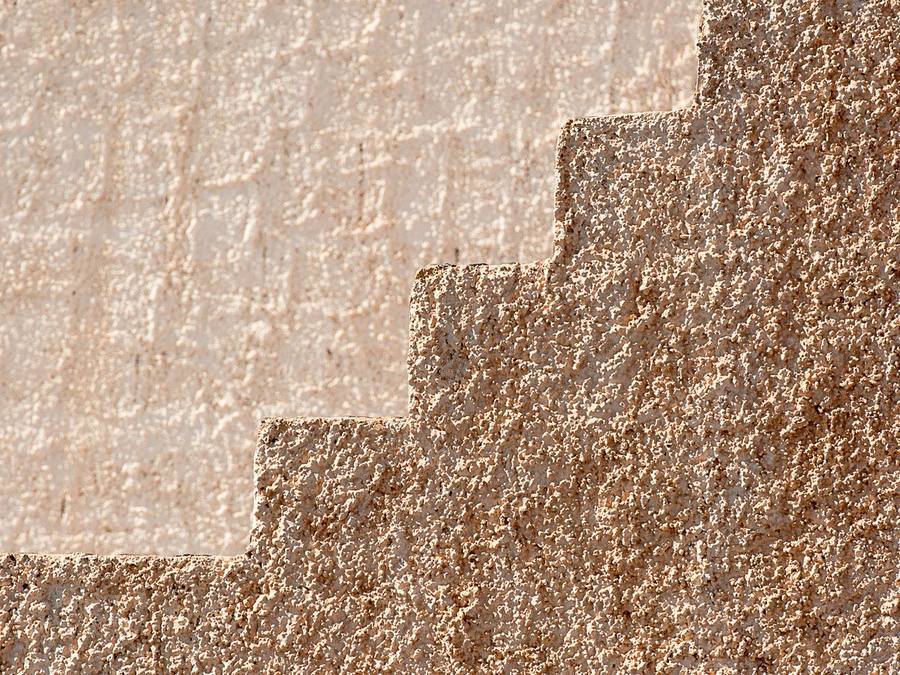
Tyrolean is a textured render finish applied with a hand-operated machine that flicks a wet mix onto the wall, building up a rough, open, honeycomb-like surface. Named after the Tyrol region of the Alps, it was hugely popular on UK houses in the post-war decades, both as a decorative finish and as a quick way to cover blockwork or patched brick.
Traditional Tyrolean mixes were cement-based, sometimes through-coloured and sometimes painted later. It’s usually applied over a sand and cement base coat, so what looks like a single layer is often two or more. The finish is still made today, and our Tyrolean render page explains it as a current option.
Why do people want to cover it? The deep texture holds dirt and green growth, older painted Tyrolean tends to look patchy as the paint weathers, and the look itself has gone out of fashion in many areas. A flat, through-coloured modern render can make a house look cleaner and more contemporary without rebuilding anything.
Can it be rendered over?
Usually, yes — with one big condition. The existing Tyrolean, and whatever sits beneath it, must be sound, well bonded and dry. A new render system is only as good as the surface it’s fixed to. If the old render is coming away from the wall, the new one will go with it.
Where the Tyrolean passes that test, rendering over it avoids the cost, mess and disruption of hacking off, and the existing render becomes a stable background for the new system. Where it fails the test, stripping is the right answer, however tempting it is to cover the problem.
In between, there’s often a middle ground: a mostly sound wall with a few hollow patches can have those areas cut out and repaired before the over-render goes on. Many walls fall into this category, which is why a proper survey matters so much.
First, assess what you’ve got
Before anyone quotes for going over Tyrolean, the wall should be checked. You can make a start yourself, from ground level and safely.
Tap it. Gently tap the render with the handle of a screwdriver or a small wooden block. Sound, bonded render gives a solid, dull knock. A hollow, drummy sound means the render has come away from the wall behind it. Note where and how large the hollow areas are.
Look for cracks. Fine hairline cracks are common and often cosmetic. Wide, stepped or tapered cracks, or cracks that return after filling, can point to movement that needs investigating before any new render goes on.
Check for damp. Staining, bulging, salt deposits, or damp patches inside on the same wall suggest water is getting in or trapped. Find out why before covering anything.
Look at the base. Is the render taken down to or below ground level? Is there a bead at the bottom? Render bridging the damp-proof course is a common problem on older finishes.
Note the paint. Is it painted, and if so, is the paint sound or flaking?
A specialist will do the same checks more thoroughly, often over the whole wall from a scaffold or ladder. Our guide to blown render explains what hollow render means and how widespread it can become.
Painted or unpainted: why it matters
Unpainted Tyrolean is the easier case. Its open, rough surface gives a new base coat a good mechanical key, and as long as it’s clean and sound, it’s a reasonable background.
Painted Tyrolean is less straightforward. A new render bonds to the paint, not the render beneath it, so the paint becomes the weak link. If the paint is sound and firmly adhered, a renderer may use a bonding primer or a specific base coat approved by the system manufacturer for painted surfaces. If it’s flaking, chalky or peeling, it must come off — usually by careful cleaning or mechanical removal — or the new system will fail along that line. Multiple layers of old masonry paint, particularly on a deep texture, can be the hardest of all to deal with.
Some older paints may contain lead, so any abrasive removal should be done with suitable precautions. The principles are exactly the same as for any painted background; our guide on whether you can render over a painted wall explains the tests and preparation in more detail.
How texture depth affects preparation
Tyrolean varies a lot. A fine, light flick is shallow; a heavy, coarse application can be deep and uneven. That depth decides how much work goes into levelling.
A thin-coat finish such as silicone or acrylic is only a few millimetres thick, so it can’t hide texture beneath it — every peak would show through. The wall must first be brought to a flat, even plane with a levelling coat. On a shallow texture that may be a single pass of base coat; on a deep or uneven texture it may need a dubbing-out or levelling coat first, then a full base coat with mesh on top.
More depth means more material, more labour and more curing time between coats, which is why two Tyrolean walls of the same area can be quoted quite differently. It also means more added thickness at the edges, which matters for reveals, sills and beads. Some renderers knock off the sharpest peaks with a scraper or float before levelling to reduce the material needed.
Option A: over-render with a base coat and mesh
This is the most common route for a sound Tyrolean wall. A typical sequence:
- Scaffold, protect and clean. Windows, doors and paths are protected; the wall is cleaned down and any growth treated.
- Repair. Hollow or damaged patches are cut out and made good.
- Remove or treat paint where needed, and apply any bonding primer specified.
- Fix beads at corners, reveals and the base, set out for the new, thicker build-up.
- Level the texture with a levelling or dubbing-out coat where the texture is deep.
- Apply the base coat with mesh bedded across the whole wall, with extra diagonal patches at the corners of openings.
- Prime and finish with the chosen through-coloured finish.
The base coat and mesh are what turn an old, uneven surface into a reliable background. Full mesh is not optional over an existing render: it spreads stresses and helps prevent cracks in the old finish telegraphing through. Our guides to the render base coat and render mesh explain both layers.
Choosing the new finish
Over a levelled Tyrolean wall, a thin-coat system is the usual choice, because it’s designed to go over a base coat and mesh. Silicone is a popular choice: water-repellent, breathable and slow to show dirt. Acrylic is tougher and usually a little cheaper but less breathable. On older solid walls, a mineral finish may suit better.
Monocouche, a one-coat cement-based render, is less often used over existing render because it needs an even, absorbent, consistent background and is applied much thicker, which adds further to the overall build-up.
You don’t have to go smooth. Many thin-coat finishes come in different grain sizes, and some homeowners choose a lightly textured finish that hides minor unevenness and suits the house. Our guide to textured vs smooth render helps you weigh the look against the practicalities.
Dealing with the extra thickness
Going over Tyrolean adds depth to the wall: the levelling coat, the base coat with mesh and the finish together can bring the surface forward noticeably, particularly over a deep texture. That has knock-on effects a good quote will address.
Window and door reveals. The render returns into the reveals, which can make window frames look more recessed and can narrow the visible frame. A careful renderer will plan the reveal detail so frames aren’t buried.
Sills. Existing sills may no longer project far enough to throw water clear of the new face. Extending or replacing sills is common and should be on the quote.
Beads and edges. New corner, stop and base beads are set out for the new thickness. The base bead should sit above the damp-proof course with a drip to shed water.
Fittings. Downpipes, cables, lights, satellite dishes and vents need removing and refitting on longer fixings or extended brackets. Our guide to render beads explains how edges and openings are finished.
Option B: strip it and re-render
Stripping is the right answer when the Tyrolean or the render under it is hollow over large areas, widely cracked, damp behind, or bridging the damp-proof course, or when it’s been painted so many times that sound adhesion can’t be relied on. It’s also worth considering where the extra thickness of an over-render would cause serious problems at windows or eaves.
The render is hacked back to the masonry, the wall repaired and allowed to dry if needed, and a new system applied from scratch. As an indicative guide, an all-in strip and re-render typically costs around indicative £100–£170 per m². It’s noisier, messier and slower, but it gives a fresh start and lets the renderer see and fix the wall itself.
There’s a regulatory point too. In England, stripping render back to the masonry and re-rendering can count as renovating a thermal element under Part L of the Building Regulations. Where the work covers more than 50% of a wall, or more than 25% of the whole building envelope, the wall should normally be upgraded thermally so far as technically, functionally and economically feasible, typically judged on a simple payback of around 15 years. Over-rendering sound render doesn’t usually trigger this. Rules differ in Wales and Scotland, so check with building control first; our guide to building regulations for re-rendering explains more.
Option C: repair and refresh what’s there
If you don’t mind the Tyrolean look but it’s tired, refreshing it may be all you need.
Clean it. A gentle clean with a suitable render cleaner and biocide can transform a grubby, green Tyrolean wall. Avoid pressure washing, which can damage an old textured finish.
Repair it. Cracks and hollow patches can be cut out and re-textured. As an indicative guide, small crack repairs typically cost around indicative £150–£400 and larger patch areas £800–£2,500. Matching a weathered texture exactly is difficult, so repairs can show.
Apply a new Tyrolean coat. Where the existing finish is sound but patchy, a fresh coat of Tyrolean over it, once cleaned and repaired, gives a uniform, renewed finish. New Tyrolean is typically around indicative £50–£80 per m².
Redecorate it. Painted Tyrolean can be repainted, which is a decorating job rather than a rendering one and not something our specialists usually take on.
Option D: wall coatings
Some homeowners with a sound Tyrolean finish also look at specialist masonry wall coatings, which are applied over the existing surface to change its colour and give it a uniform appearance without rendering. They’re a different kind of product from render, with their own specifications and guarantees, and are worth weighing on their merits alongside the options above, particularly if you’re happy to keep the existing texture.
What each option typically costs
The table below gives indicative rates. Your wall’s area, condition, texture depth, access and region decide where you land.
| Option | Indicative cost |
|---|---|
| Over-render: new silicone system, per m² | £65–£95, plus levelling |
| Over-render: new acrylic system, per m² | £60–£90, plus levelling |
| Strip and re-render, all-in per m² | £100–£170 |
| New Tyrolean coat, per m² | £50–£80 |
| Small crack repair | £150–£400 |
| Larger patch areas | £800–£2,500 |
indicative Ballpark figures. The levelling coat over a deep texture is extra labour and material; ask for it itemised. Scaffolding varies by house and should be itemised too.
As illustrative arithmetic only, a hypothetical 100m² of sound Tyrolean over-rendered in silicone would come to roughly indicative £6,500–£9,500 for the new system before levelling and scaffolding, whereas stripping and re-rendering the same area would be roughly £10,000–£17,000 all-in. Whole jobs on sound walls typically fall in bands of £3,500–£5,000 for one wall up to £12,000–£17,000 or more for four or more. Our re-rendering cost guide covers the stripping route in more depth, and our house rendering cost guide covers whole-house budgets.
Over-render or strip: how to decide
Put simply, over-render when the Tyrolean is sound, well bonded and dry across most of the wall, any hollow patches are limited and repairable, the paint (if any) is sound or removable, and the added thickness can be detailed neatly at openings and eaves.
Strip when hollow areas are widespread, there’s damp behind the render, the render bridges the damp-proof course, there are many layers of failing paint, the wall needs inspecting or repairing behind the render, or you want to add insulation and need to start from the masonry.
The wall’s construction matters too. On older solid walls, adding a further, less breathable layer over an existing cement render can make moisture problems worse; stripping and choosing a more breathable system may be wiser.
Two renderers looking at the same wall can reasonably disagree on borderline cases. Ask each to show you the hollow areas they’ve found and explain their reasoning. The one who explains clearly, with reference to your wall, is usually the one to trust.
Not sure whether your Tyrolean can be rendered over? SmartMatch™ pairs you with one vetted local specialist for a free survey and honest advice.
Get a free quote →How it compares with going over pebbledash
Covering Tyrolean is a close cousin of covering pebbledash. Both are rough, textured finishes; both need the texture filling and levelling with a base coat; both need full mesh; and both turn on whether the existing render is sound. The main differences are that pebbledash stones can be loose or poorly bedded, adding a further check, and that Tyrolean is more often painted.
If you’ve read about going over pebbledash, the same logic applies. Pricing differs, though: rendering over pebbledash is typically indicative £100–£170 per m² all-in, the same as stripping. Our guide on whether you can render over pebbledash covers that sister case in detail, including the levelling coat and common mistakes.
Planning and permissions
In England, replacing or covering render with render of a similar appearance is usually permitted development for a house. Changing the type or colour of the finish, though, can alter the external appearance, and that may need planning permission in some cases. In a Conservation Area, National Park, National Landscape (formerly AONB) or the Broads, rendering the outside of a house generally needs permission. Listed buildings need listed building consent for works that affect their character, Article 4 directions can remove permitted development rights, and flats and maisonettes don’t have householder permitted development rights.
Rules differ in Wales, Scotland and Northern Ireland. Always check with your local planning authority before committing; a Lawful Development Certificate gives certainty if you want it in writing.
Common mistakes when covering Tyrolean
Rendering over hollow areas. The new render can only be as secure as the old render beneath it.
Skipping full mesh. Without it, cracks in the old finish and stresses at openings tend to come through.
Too thin a levelling coat. On a deep texture, an inadequate levelling coat leaves the finish uneven and prone to cracking over the peaks.
Ignoring the paint. Going over flaking paint is a well-known cause of new render failing early.
Forgetting sills and fittings. Sills that no longer throw water clear will stain and soak the new render.
Burying the damp-proof course. The new render should finish above it on a base bead, not run down to the ground.
Rushing in poor weather. Base coats and finishes need suitable conditions and curing time between coats.
What to ask before you choose
When a renderer surveys your Tyrolean, ask: Is it sound enough to render over, and where are the hollow areas? Does the paint need removing? How deep is the texture, and how will you level it? Which system are you proposing for each layer, and from which manufacturer? Will there be full mesh across the wall? How much thicker will the wall be, and how will you handle reveals, sills and fittings? Where will the base bead sit relative to the damp-proof course? Would you recommend stripping instead, and why? How will any extra repairs be priced?
Our full list of questions to ask a renderer covers guarantees, payment stages and timing too.
When rendering over Tyrolean isn’t the right answer
Over-rendering isn’t right if the existing render is failing, if there’s an unresolved damp or structural problem, if the house is listed or in a conservation area and consent hasn’t been confirmed, or if the wall is an older solid wall that would be better served by stripping and a more breathable system. And if you’re happy with the Tyrolean look, cleaning, repairing or a fresh Tyrolean coat may be all you need. Our Tyrolean render page explains the finish as an option in its own right, and our exterior rendering guide covers the wider choices.
Most of our specialists take on projects from around £3,500, so they’re best suited to larger repairs and re-renders; for a single small job, a local builder or plasterer may be quicker.
If you’d like an honest assessment of your walls, SmartMatch™ weighs render-type experience, verified reviews, online reputation, insurance and accreditation to introduce you to one vetted local specialist for a free, no-obligation survey and written quote.
Frequently asked questions
Can you render over Tyrolean?
Do you have to remove Tyrolean before rendering?
How do I know if my Tyrolean is sound?
Can you render over painted Tyrolean?
Why does Tyrolean need a levelling coat?
How much does it cost to render over Tyrolean?
Will rendering over Tyrolean make my walls thicker?
What finish is best over Tyrolean?
Can I just put a new coat of Tyrolean over the old one?
Is rendering over Tyrolean the same as rendering over pebbledash?
Find out what your Tyrolean needs
Tell us about your property and SmartMatch™ pairs you with one vetted local render specialist for a free, no-obligation survey and written quote.
Get a free quote →