Smooth render gives a crisp, contemporary look but shows every flaw in the wall, every patch and every streak of dirt; textured render — scraped, coarse-grained, roughcast or Tyrolean — hides uneven walls and repairs far better, but holds more dirt in its texture and looks more traditional. For most modern re-renders, a fine to medium-grain thin-coat finish or a scraped monocouche is the practical middle ground. Choose smooth for flat, well-prepared walls on modern or classic stucco-style houses; choose textured for uneven or older walls, exposed sites and houses where the surrounding streets are textured. Texture rarely drives cost on its own — Tyrolean, for example, typically runs at an indicative £50–£80 per m² — but preparing a wall for a truly smooth finish can.
- Smooth finishes look crisp but show uneven walls, patches and dirt.
- Textured finishes hide flaws and repairs but hold more dirt.
- Fine to medium-grain thin-coat and scraped finishes are the usual middle ground.
- Low, raking light exaggerates every ripple on a smooth wall.
- Colour looks slightly darker and softer on a textured surface.
- Texture rarely changes cost much; Tyrolean is typically indicative £50–£80/m².
Why the texture matters as much as the colour
When people picture a rendered house, they usually think about colour first. But stand in front of two houses in the same shade of cream, one finished smooth and one in a coarse roughcast, and they look like different buildings. Texture decides how light falls across the wall, how shadows form, how flat or soft the house appears, and how it ages.
It also has practical consequences. Texture changes how well the finish hides an uneven wall, whether a future patch repair will show, how quickly dirt and algae build up, and how easy the wall is to clean. Choosing the right finish is about looks and about living with it for many years. The good news is that it’s a choice you can make at the survey, with samples in hand, once the system is decided.
The main render finishes explained
Smooth or floated. The finish coat is worked flat with a float, giving a fine, even surface with little or no visible texture. It’s the look of classic stucco villas and many contemporary new builds. True smooth finishes are most often achieved with sand and cement, lime or specialist fine finishes, and they demand a very flat wall.
Scraped. The standard finish for monocouche. The render is applied thickly, then scraped back with a toothed tool once it has partly set, exposing a soft, slightly open, matt texture. From a distance it reads as almost smooth; close up it has a gentle grain.
Fine grain (around 1mm). Thin-coat silicone and acrylic finishes are sold by grain size, and the exact ranges differ between brands. A fine grain gives a smooth-looking, modern finish with a very slight texture that softens reflections.
Medium grain (around 1.5mm). A common choice for thin-coat re-renders: still clean and modern, but with enough texture to disguise minor unevenness and small patch repairs.
Coarse grain (around 2mm and above). A more visibly textured finish, sometimes in a “rustic” or swirled pattern, good at hiding imperfect walls.
Roughcast and dash. Traditional heavily textured finishes, where a wet mix containing aggregate is thrown at the wall (roughcast or wet dash) or dry stones are thrown into a wet coat (dry dash, the classic pebbledash). Modern versions exist in through-coloured systems. Our guide to K-Rend roughcast covers one popular example.
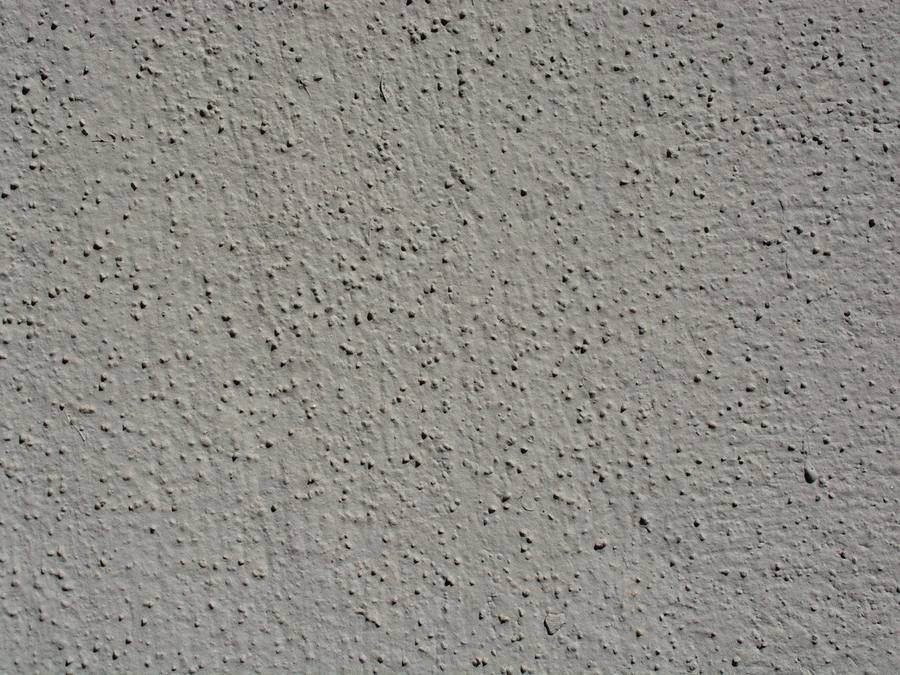
Tyrolean. A honeycomb-like texture flicked or sprayed on with a hand-operated or powered machine, traditionally over a sand and cement base and then painted. See our Tyrolean render page for how it’s applied.
How each finish looks in different light
Light is where texture shows its character. On a smooth wall, light reflects evenly, which gives that crisp, architectural look on a bright, overcast day. But when the sun is low and raking across the wall — early morning, late afternoon, or winter sunshine — every slight undulation in the wall throws a shadow. A dip of a few millimetres that you would never see head-on can show up as a wave across the elevation. Smooth finishes also show trowel marks and the edges of patch repairs most clearly in raking light.
Textured finishes behave differently. Each grain or stone throws a tiny shadow of its own, so the wall reads as a soft, slightly matt surface whatever the light, and small undulations disappear among the texture. Coarse textures also make the wall look a touch darker and more muted, because of all those small shadows.
Scraped and fine-to-medium-grain finishes sit between the two. They look clean in flat light but have enough micro-texture to break up raking light and hide modest unevenness. If one of your elevations catches low sun — typically a west- or south-facing front — that’s worth bearing in mind before choosing a truly smooth finish.
How each finish hides imperfections and repairs
Uneven walls. A smooth finish needs a very flat background. On an older or uneven wall, achieving it means more base coat to level the surface, more care and more time. Textured finishes are far more forgiving: they follow the wall’s line without drawing attention to every dip.
Junctions and mixed walls. Where an extension meets the original house, or brick meets block, slight differences in line can show through a smooth finish. Texture disguises them.
Future repairs. Every render will need some repair over its lifetime, whether from accidental damage, a new fitting being moved or a crack. On a smooth finish, a patch is very hard to hide, because both the edge and any difference in texture show. On a textured finish, a skilled renderer can usually blend a patch in so it’s much less noticeable. On through-coloured systems, colour matching is a separate challenge either way, as the original will have weathered.
Hairline cracks. Fine crazing is more visible on a smooth surface. Texture breaks it up visually.
If your walls are less than perfect, or you know you’ll be adding fittings, a medium grain or scraped finish is usually the safer choice.
Dirt, algae and staining
This is the main trade-off in the other direction. Smooth surfaces give dirt and spores less to hold on to, and rain can rinse them more easily. Coarse textures, roughcast and Tyrolean have far more surface area and little hollows where dust, pollution and algae spores lodge and moisture lingers. On a shaded, damp or north-facing wall, a heavily textured finish can turn green or grey faster than a smooth one in the same spot.
The render system matters as much as the texture here. Silicone finishes are highly water-repellent, so the surface dries quickly and stays cleaner for longer, which partly offsets the effect of texture. A painted Tyrolean depends on the paint used. A scraped monocouche sits somewhere in between.
Streaking is another consideration. Water running off sills, copings and window heads can leave vertical streaks. On a smooth wall they show clearly; on a textured wall they are broken up but can become more ingrained. Good detailing — sills with drips that throw water clear of the wall — helps either way. Our guide to algae on render explains what causes it and how to deal with it.
Cleaning smooth and textured render
Smooth and fine-grained finishes are the easiest to clean. A suitable biocide, left to work, followed by a soft brush and a gentle rinse usually removes algae and dirt evenly.
Textured finishes take more effort. The biocide needs to reach into the texture and be given time to work, and brushing has to be gentle enough not to dislodge aggregate. The temptation is to reach for a pressure washer, but high pressure can blast stones out of roughcast, erode a grained finish and drive water into the wall. Low-pressure rinsing after a biocide treatment is the safer approach.
Painted textured finishes such as Tyrolean are usually refreshed by cleaning and repainting. Our guide on how to clean K-Rend sets out a method that suits most through-coloured finishes.
How texture changes the way colour looks
The same colour looks different on different textures. On a smooth surface, a colour appears at its truest and brightest, with an even, flat tone. On a textured surface, the small shadows within the texture make the colour look a little darker, softer and more varied, especially in low light. A coarse texture can make a pale grey look closer to a mid grey.
This works both ways. Texture can take the edge off a strong colour that might feel too stark when smooth, and it can make a pale shade more forgiving of dirt. But if you’ve fallen for a colour on a smooth sample card, check it on a sample in the actual texture you plan to use, on your own wall, in daylight.
Very dark colours have their own rules about heat absorption on sunny elevations, which apply whatever the texture. Our guide to render colours covers choosing a shade, our guide to silicone render colours covers how popular shades look in practice, and our guide to K-Rend colours shows the range in one well-known system.
Which finish suits which property
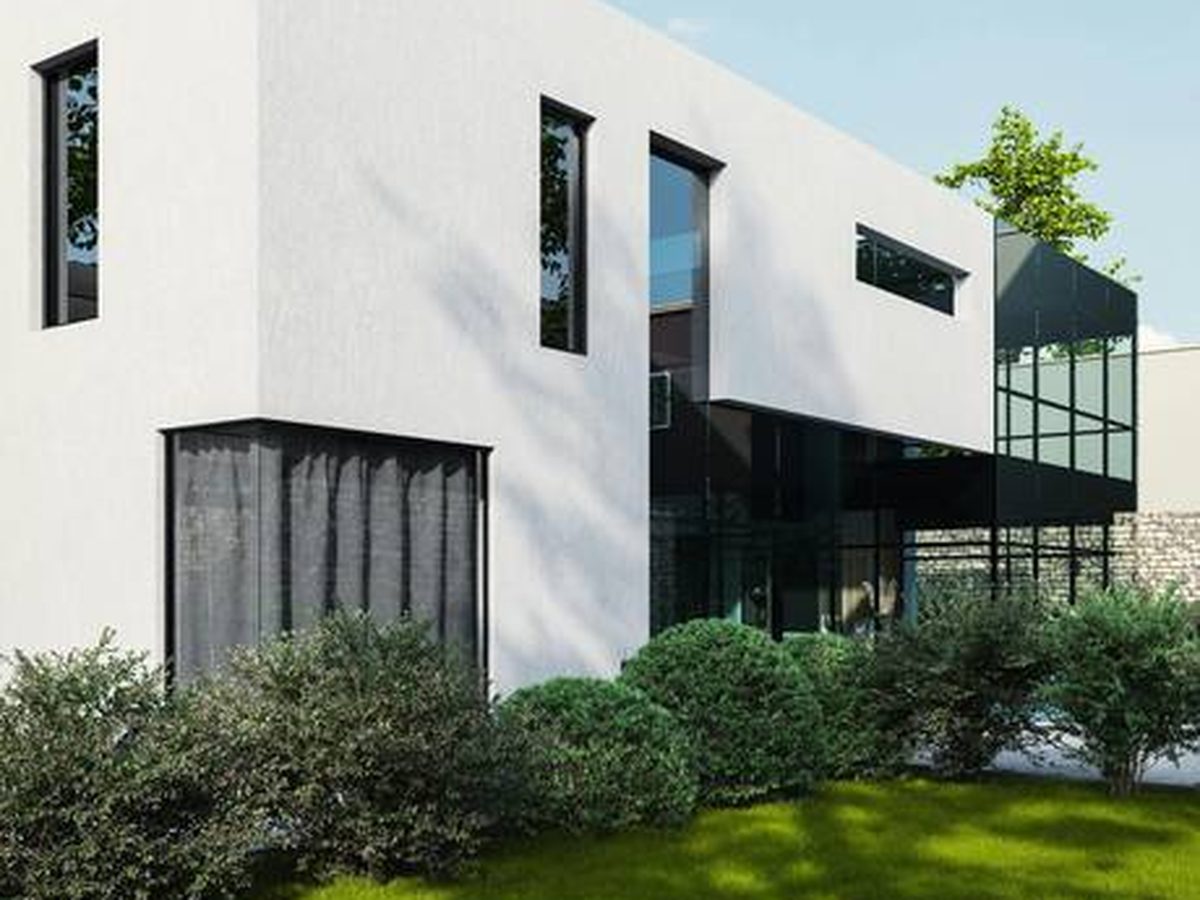
Contemporary and new-build houses. Clean lines suit smooth, fine-grain or scraped finishes. Large, plain elevations with crisp corners look their best when the texture doesn’t compete.
Classic stucco and Regency-style houses. Traditionally smooth, often lined out to look like stone. A smooth finish, often in lime or a suitable traditional render, respects the original character.
Inter-war and post-war semis. Many were built with roughcast or pebbledash. A modern fine or medium-grain thin-coat finish is the usual update, but a textured finish can keep a house in keeping with a street of similar homes.
Cottages and older solid-walled houses. Usually suit softer, more traditional textures that follow the wall’s natural undulations rather than fighting them. Lime finishes are typically floated or lightly textured, never forced dead flat.
Scottish, coastal and upland houses. Harled and roughcast finishes are traditional for good reason: they cope well with driving rain. A textured finish often looks more at home in these places.
Look at the street. Render that sits in harmony with its neighbours usually looks better, and in a Conservation Area a change of finish may need consent.
Which finish suits which exposure
On a sheltered elevation that gets reasonable sun, almost any finish works, and you can choose purely on looks.
On an exposed elevation facing the prevailing wind and rain, the system’s water resistance matters most, but texture plays a part. Traditional heavily textured finishes such as roughcast are robust in driving rain. A smooth finish on an exposed wall shows streaking and staining sooner.
On a damp, shaded or north-facing wall, the risk is algae. A smoother finish, or a fine grain in a water-repellent system, gives spores less to hold on to. A coarse textured finish in deep shade can need cleaning more often.
Near busy roads, traffic dirt builds up more in texture than on smooth surfaces. Under trees, falling debris and constant damp favour a smoother, highly water-repellent finish.
Textured vs smooth render: side by side
| Smooth / fine grain | Scraped / medium grain | Roughcast / Tyrolean | |
|---|---|---|---|
| Look | Crisp, modern, flat | Clean with a soft grain | Traditional, strongly textured |
| Wall flatness needed | Very high | Moderate | Low |
| Hides uneven walls | Poor | Good | Very good |
| Hides patch repairs | Poor | Fair to good | Good |
| Shows raking light | Strongly | Slightly | Barely |
| Holds dirt and algae | Least | Moderate | Most |
| Ease of cleaning | Easiest | Easy | Harder |
| Colour appearance | True and bright | Slightly softened | Darker, more muted |
| Best suited to | Contemporary and stucco-style houses on flat walls | Most modern re-renders | Older, uneven or exposed walls; traditional streets |
Generalisations; the render system, the wall and the quality of application matter as much as the texture.
Does texture change the cost?
Less than you might think. Render is priced mainly by the system and the wall, and within one system the choice of grain size usually makes little difference to the price per square metre. As indicative guides, silicone typically runs indicative £65–£95 per m², monocouche indicative £55–£90 and Tyrolean indicative £50–£80, supplied and applied on a sound wall.
Where texture does affect cost is preparation. A truly smooth finish on an uneven wall needs more levelling, more base coat and more skilled time, which can add noticeably to the job. A textured finish on the same wall may need less. Painted textured finishes such as Tyrolean also cost more to repaint over the years, because of the extra surface area and paint needed.
Ask your renderer to price the finishes you’re considering side by side for your walls, so you can see whether the difference is meaningful. Our guides to render cost per m² and house rendering cost explain how rates and totals are built up.
Which render systems offer which finishes
Silicone and acrylic come in a range of grain sizes, typically from fine to coarse, and some offer textured or rustic patterns. These are the most flexible choice for texture; our guide to silicone render finishes covers the grades in detail.
Monocouche is usually scraped, though some products can be given other finishes, including a dash with aggregate thrown into the surface.
Sand and cement can be floated smooth, given a textured finish, or used as the base for Tyrolean or dash, and is then usually painted.
Lime can be floated, lightly textured, or finished as roughcast (harling), and is often limewashed.
Mineral and cork finishes have their own textures, from fine to visibly granular.
If you’re set on a particular texture, mention it at the survey so the specialist can recommend a system that offers it and suits your wall.
Weighing up finishes for your house? SmartMatch™ pairs you with one vetted local specialist who can show you real samples on your walls.
Get a free quote →How to choose: samples and test panels
Finish choices are hard to make from photos or small sample cards, because texture is all about light and scale. A few steps help you choose with confidence.
Ask for samples in the actual system and grain size you’re considering, in your chosen colour. Hold them against the wall at different times of day, including when the sun is low. Look at finished houses nearby in the textures you’re weighing up — your renderer may be able to point you to recent jobs. Stand back as well as close up: a texture that looks heavy at arm’s length can read as soft and subtle from the pavement. For a large or expensive job, ask whether a small test panel is possible in an inconspicuous spot.
Bear in mind that the finish you choose should match across the whole house. Mixing textures can work deliberately — a smooth band around windows, say — but accidental differences between walls look like mistakes.
The verdict: which finish for which situation
You want a sharp, contemporary look on a flat, modern wall: smooth or fine-grain thin-coat, ideally in a water-repellent system.
You want a clean, modern look but your walls aren’t perfect: medium-grain thin-coat or scraped monocouche. This suits many re-renders.
You have an older, uneven or solid wall: a softer, more traditional texture in a breathable system, usually lime, rather than forcing a smooth finish.
Your house is on an exposed coastal or upland site: a robust textured finish in keeping with local tradition, or a water-repellent thin-coat with careful detailing.
The wall is deeply shaded or north-facing: a finer texture in a highly water-repellent system, to slow algae.
You’re matching a street of textured houses or a Conservation Area: follow the local texture and check with the council before changing it.
You want to refresh existing Tyrolean or dash: consider whether a new textured finish or a smoother modern system is the better update, and whether the old surface can be rendered over or must come off. See render over Tyrolean and render over pebbledash for that technical question.
Common mistakes when choosing a finish
Choosing smooth for an uneven wall without budgeting for preparation. The result can show every ripple, or the quote rises sharply once the levelling is priced.
Choosing a heavy texture for a shaded, damp wall. It can go green quickly and is harder to clean.
Choosing from a sample card alone. Texture and colour change with light and scale.
Forgetting future repairs. If you plan to add fittings, an extension or new windows later, a smooth finish makes patching harder to hide.
Ignoring the street. A finish wildly different from its neighbours can look out of place, and in protected areas may need consent.
When neither finish is the right answer
Sometimes the texture question is a distraction from a bigger one. If your existing render is cracked, hollow or causing damp, the priority is the system and preparation, not the finish. If your brickwork is attractive and sound, you may not want render at all — re-pointing or cleaning may suit the house better. And if you’re only unhappy with the look of sound existing render, re-rendering purely to change it is a large spend for a modest gain; some homeowners consider a wall coating or masonry paint instead, which is a different route from re-rendering.
When a re-render is the right answer, SmartMatch™ weighs render-type experience, verified reviews, online reputation, insurance and accreditation to introduce you to one vetted local specialist for a free, no-obligation survey and written quote, with samples of the finishes that suit your walls. Most of our specialists take on projects from around £3,500, so they’re best suited to larger repairs and re-renders; for a single small job, a local builder or plasterer may be quicker. For the wider picture, start with our exterior rendering guide.
Frequently asked questions
Is textured or smooth render better?
Does smooth render show imperfections?
Does textured render get dirtier than smooth render?
Which render finish suits most re-renders?
Is Tyrolean render old-fashioned?
Does textured render cost more than smooth?
Does texture change how render colour looks?
Can you get smooth silicone render?
Which render finish is easiest to clean?
Which render finish hides repairs best?
See the finishes on your own walls
Tell us about your property and SmartMatch™ pairs you with one vetted local render specialist for a free, no-obligation survey and written quote.
Get a free quote →