K-Rend goes green because airborne algae has settled and started growing on a wall that stays damp and shaded for long spells. It is a surface organism feeding on moisture and daylight, not a sign the render has failed. It cleans off with a gentle, render-safe biocidal treatment — never a pressure washer — and comes back more slowly once you tackle the damp and shade that feed it. On a through-coloured render the fix is cleaning and water management, not painting.
- Green or black growth on K-Rend is living surface algae, not render failure — it’s cosmetic and treatable.
- It thrives on walls that stay damp and shaded: north-facing elevations, walls under trees, and surfaces near gutters, soil or open ground.
- Clean it with a gentle, render-safe biocidal wash — a pressure washer drives water into the finish and can do real harm.
- K-Rend is through-coloured by design, so it doesn’t need paint to look right; a clean restores the colour you chose.
- Treating the cause — trimming shade, fixing leaks, clearing splashback — slows regrowth far more than cleaning alone.
- Green concentrated in one wet patch, or damp showing indoors, is worth investigating rather than just washing.
Why is my K-Rend going green?
The green tinge spreading across your render is alive. It’s a thin film of algae — microscopic, plant-like organisms that drift through the air as spores and settle on almost any outdoor surface. Where they land on something that stays moist and gets a little daylight, they take hold and multiply, and over a few seasons a once-crisp wall can carry a noticeable green or grey-green bloom. The same organisms are why fences, patios, north-facing roofs and garden ornaments go green; a K-Rend wall is simply another surface for them to colonise.
This matters because the instinctive reaction — that the render is “going off” — is almost always wrong. The algae sits on the surface; it isn’t eating the render or pulling it apart. What the growth is really telling you is that that particular wall stays damp for long enough, often enough, for living things to settle on it. Treating it as a moisture-and-shade story rather than a render-quality story is the key to dealing with it sensibly. Our wider guide to algae on render covers the same organisms on every render type; this page focuses on what it means for a K-Rend wall.
Does green growth mean the render has failed?
In the vast majority of cases, no. Surface algae is a cosmetic issue, not a structural one, and it appears on cheap and premium renders alike — including correctly installed K-Rend systems. A wall can be perfectly sound, well bonded and doing its job while still wearing a green film, in exactly the way a healthy paving slab can go green without crumbling. So a bloom of algae on its own is not evidence that your installer cut corners.
There is an important caveat. Algae feeds on damp, so heavy, persistent growth concentrated in one spot — rather than a general film across a shaded elevation — can be a clue that something is keeping that area wetter than it should be: an overflowing gutter, a cracked downpipe, a leaking sill or a defect letting water sit. In that situation the green is a symptom worth reading.
Why does one wall go green and another stay clean?
Homeowners notice it constantly: the front of the house looks immaculate while the side or rear elevation is turning green. The reason is simple — algae needs damp and shade, and some walls offer far more of both. North- and east-facing elevations get little direct sun, so they dry slowly and stay cooler and wetter for longer. South-facing walls dry quickly after rain, giving algae far less chance to establish.
Shade and shelter do the rest. A wall tucked under overhanging trees, beside a tall fence or in the lee of a neighbouring building stays damp and collects spores and organic debris. So does a wall facing open fields, woodland or water. Low-level greening near the ground is usually rain splashback — water bouncing soil and moisture back onto the render — while greening along the top of a wall often points to a gutter or roofline issue shedding water down the face. Reading where the green is tells you a great deal about why it’s there.
Green algae, black spots and orange staining: what’s the difference?
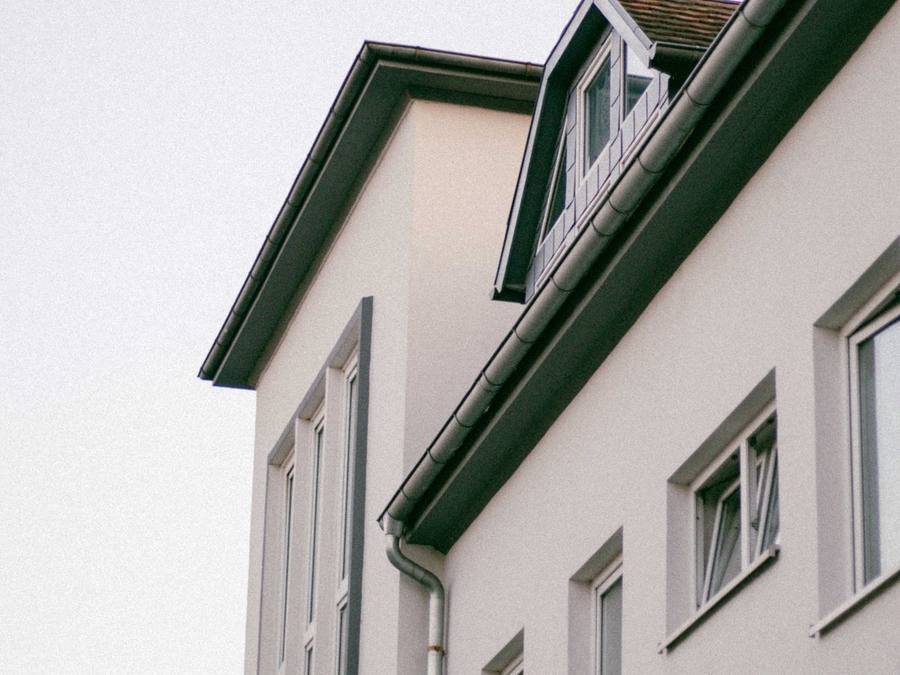
Not all discolouration is the same thing, and telling them apart helps you respond correctly. Green is the classic algae film — soft, even and very common. Black or very dark grey marking can be algae or mould, but it can also be ordinary atmospheric dirt collecting where water runs down the wall; dirt tends to follow drip lines from sills and copings rather than spreading as an even film. Orange or rust-red patches are often a different type of algae, but streaks of that colour running from metal fixings, brackets or railings are more likely to be rust staining.
Lichen — small, raised, crusty patches rather than a smooth film — grips harder and is slower to clean, though it’s still surface-only. The practical point is reassuring: the biological growths all respond to the same gentle, biocidal cleaning approach. Dirt, rust and white salt deposits are a different matter, covered in our guide to render staining. The thing to rule out is anything that looks like it’s coming through the render from behind rather than sitting on top — which points to damp, not algae.
A ten-minute check before you do anything
Before buying a product or booking a clean, a short walk round the house will tell you whether you’re dealing with routine algae or something that needs a closer look. Do it after a spell of rain, when wet areas show up clearly.
- Map the green. Is it an even film across a whole shaded elevation, or a concentrated patch? Even films are usually just orientation and shade; patches have a local water source.
- Look up. Check the gutter and downpipe directly above any heavy patch. Water marks, moss in the gutter or a joint that drips are the usual culprits.
- Look down. Is the green confined to the bottom of the wall? Check whether soil, gravel or paving sits above the bottom edge of the render, and whether rain splashes onto it.
- Look at the openings. Streaks running from the ends of window sills suggest water isn’t being thrown clear of the wall face.
- Tap and look closely. Algae sits on an intact surface. Cracks, bulges or areas that sound hollow when tapped gently are a different issue — see K-Rend cracking.
- Check inside. Damp patches, peeling decoration or mould on the inside of the same wall mean the problem may not be surface-only.
If everything points to shade and orientation, you’re looking at maintenance. If the check turns up a leak, a bridged base or internal damp, fix that first — otherwise any clean is a temporary result.
How colour and texture change how visible it is
Two identical walls can host the same amount of algae yet look completely different, and that comes down to the render itself. Because K-Rend is through-coloured — the pigment runs through the topcoat — there is no paint layer, and the colour you chose is the colour you see. On pale shades such as off-whites and light creams, even a faint green film shows up clearly, which is why owners of pale renders notice algae earliest. Darker greys and warmer K-Rend colours disguise it for longer, though the growth is still there.
Texture matters just as much. A coarse dry-dash or roughcast finish has far more surface area and tiny sheltered pockets that hold moisture, so it tends to green up faster and is harder to clean than a smooth, scraped finish. None of this is a reason to choose a render purely to dodge algae — every exterior surface greens eventually — but it explains why your wall behaves the way it does, and why the same treatment can look more or less dramatic depending on the finish you have.
How the green comes off without harming the finish
The right approach is gentle and chemical, not forceful. A soft wash — a low-pressure application of a render-safe biocidal treatment that kills the algae rather than just removing what you can see — is the established method. Many of these products are designed to be left on the wall, with the dead growth weathering away over the following weeks rather than being scrubbed off on the day. Done properly it lifts the green without touching the finish underneath.
For a small, reachable area at ground level, a careful homeowner can apply a proprietary render-safe treatment with a low-pressure sprayer, following the product instructions to the letter and protecting plants below. Anything above head height, a whole elevation, or growth that keeps returning is a job for someone with proper access equipment. The products, preparation and step-by-step method are set out in our guide on how to clean K-Rend; the golden rule is patience — let the treatment do the work rather than attacking the wall.
Why a pressure washer is the wrong tool
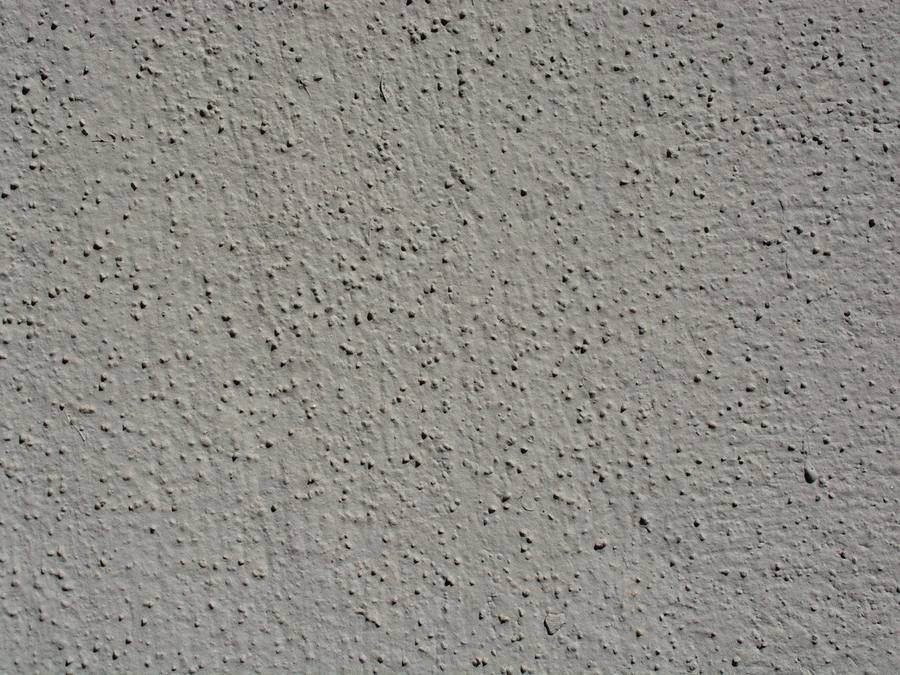
It’s a common and damaging mistake. A pressure washer makes the green vanish on the day, which feels like success. But high-pressure water on a thin-coat render does three bad things at once. It can erode or strip the textured topcoat, leaving patchy, lighter scars that look far worse than the algae did. It forces water into the finish and any hairline gaps, where trapped moisture can contribute to cracking or frost damage later. And because it removes the visible film without killing the organism, the algae grows back on a surface you’ve just roughened up for it.
If your render is still within a guarantee period, read the cleaning and maintenance terms before anyone touches it — damage caused by an unsuitable cleaning method is not something you want to be arguing about later. And if a cleaning contractor reaches for a high-pressure lance on your render, that’s your cue to stop them: the correct method is low pressure and the right chemistry, not brute force.
Does a green K-Rend wall need painting?
No. The point of a through-coloured render is that the colour is built into the material, so a wall that has simply gone green needs cleaning, not covering. Once the algae is treated, the original colour comes back. Painting a through-coloured render changes it from a finish that doesn’t need routine repainting into one that does, so it’s a decision about changing the finish, not a cure for algae — and the paint film will be colonised by algae in exactly the same conditions.
Some homeowners do eventually choose to change the look of a rendered house, and products for that exist; that’s a separate decision with its own pros and cons, best discussed with a specialist who has seen the wall. For a sound K-Rend finish that is merely green, the proportionate response is to clean it and address the damp and shade feeding it. If the render itself is genuinely worn out or failing, the honest answer is repair or re-rendering, which a survey will establish.
Treating the cause, not just the symptom
Cleaning removes today’s green; fixing the conditions slows tomorrow’s. Algae needs persistent moisture, so the most effective long-term move is to keep that wall drier. Start with the obvious water sources: clear and repair gutters and downpipes so rain isn’t sheeting down the render, check that sills and flashings throw water clear of the wall, and make sure ground drainage isn’t leaving the base of the wall sodden. A single overflowing gutter can keep an elevation green no matter how often you clean it.
Next, tackle shade and airflow. Cutting back overhanging branches, climbers and shrubs pressed against the wall lets sunlight and breeze reach the surface so it dries faster between showers. Where greening is low down, reducing splashback — a strip of gravel instead of bare soil, or simply keeping borders from piling up against the render — makes a real difference. None of this stops algae for good in a damp climate, but together these steps can turn a wall that greens quickly into one that needs attention far less often. They belong on any render maintenance routine.
Green on a fairly new K-Rend wall
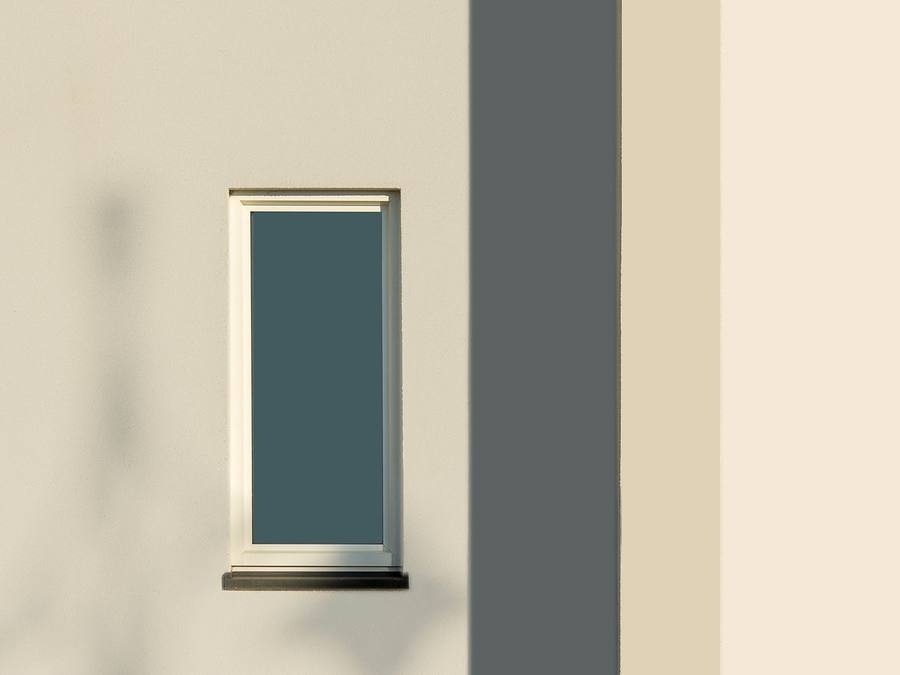
It can be disheartening to see green appear on render that was only applied a year or two ago, and owners understandably wonder whether something went wrong. On a susceptible wall — north-facing, sheltered by trees, backing onto fields — algae can establish within the first few years on any render. A new estate on the edge of farmland is a classic example: the houses facing the fields go green first, whatever was applied.
What separates normal early greening from a possible issue is pattern. A light, even film on the shaded side is weather and orientation. Green that follows a straight line, appears only below a particular detail, or sits alongside cracking or staining from behind may point to a detailing problem — a sill that doesn’t project enough, a missing drip, or water getting in at a junction. In that case, take dated photographs after rain and raise it with the installer while any workmanship guarantee is still running. Keep the conversation factual: describe where the growth is and when it appeared, rather than assuming a fault.
How often will the green come back?
Honesty matters here, because no treatment makes render immune. In the UK’s damp, mild climate, some regrowth is inevitable — the question is how fast. A wall in a favourable spot, cleaned properly and kept dry, can stay looking good for a long time between treatments. A north-facing wall under trees, near fields or close to water can show again relatively soon even after a thorough clean, simply because the conditions strongly favour algae.
The sensible approach is to treat it like clearing the gutters: a planned maintenance task rather than an emergency, with a quick look at each elevation every spring. Catching a light film early makes each clean easier than waiting until growth is heavy and established.
If you’re re-rendering a wall that always goes green
Sometimes the green is a sign of a wall that is due for work anyway — old render that is cracked, patched or tired as well as discoloured. If you’re planning a re-render, that’s the moment to design out as much of the problem as you can, rather than repeating the same conditions under a fresh finish.
- Detailing: ask how sills, copings and the base of the wall will shed water. Projecting sills with drips and a properly formed base detail above ground level keep water off the face.
- Finish: on a shaded elevation, a scraped finish is easier to keep clean than a coarse dash.
- Colour: mid-tones hide early growth better than brilliant whites; view samples on the shaded side, not just the front.
- Additives: ask whether the proposed topcoat includes any algae-resistant additive and what the manufacturer says about how long it lasts. Treat any answer as slowing growth, not preventing it.
- Surroundings: sort the gutter, the overhanging tree and the raised border before the scaffold comes down.
Costs depend on the wall’s condition and size; our house rendering cost guide sets out typical ranges, and the K-Rend cost guide covers the system specifically. For how render choice fits the wider job, see our guide to exterior rendering.
When to bring in a professional
Plenty of light, ground-level greening can be handled by a careful homeowner with the right render-safe product. It’s worth calling in help when the practicalities or the diagnosis get harder. Height and access are the obvious triggers — anything needing ladders, towers or a scaffold is safer in trained hands — as is a whole-house clean, where consistent, streak-free results across large elevations take the right equipment.
The other trigger is when the green keeps winning. Persistent regrowth, growth concentrated in one wet patch, or damp showing through inside should be looked at properly rather than re-cleaned, because that’s where surface algae stops being the real story — our guide to damp after rendering explains the usual causes. A K-Rend specialist can tell you honestly whether the wall needs repair or re-rendering, or simply a clean. Most of our specialists take on projects from around £3,500, so they’re best suited to larger repairs and re-renders; for a single small job, a local builder or plasterer may be quicker.
Green render when buying or selling a home
Because algae looks worse than it is, green render can rattle buyers and sometimes appears in survey reports. Keep it in proportion: surface algae is a cosmetic maintenance item, not a structural defect, and a proper biocidal clean usually resolves it. If you’re selling, a clean before marketing is one of the simplest ways to lift kerb appeal; if you’re buying, heavy greening is rarely a dealbreaker, though it’s reasonable to ask whether it’s simply weathering or a clue to a gutter or damp issue.
The one thing to check, on any rendered home, is that the green really is surface growth and not a mask for something behind it. A genuinely failed or damp-affected wall is a different and more serious matter than algae, and the two can look similar from the pavement. When in doubt, a specialist’s assessment settles it — and if the render is sound and simply weathered, a clean wall is a wash away, not a rebuild.
Green render hiding cracks, patches or a tired finish? Get a free, no-obligation re-render or repair quote from one vetted local specialist.
Get a free quote →Frequently asked questions
Why is my K-Rend going green?
Is green algae damaging my render?
Can I pressure wash K-Rend to remove the green?
What is the best way to clean green off K-Rend?
Should I paint my K-Rend to stop it going green?
Why does only one wall go green and the others stay clean?
How often will the green come back after cleaning?
Does K-Rend going green mean it was installed badly?
Does green on K-Rend mean there is damp inside?
Can I stop K-Rend from going green altogether?
Get a free K-Rend repair or re-render quote
Tell us about your property and SmartMatch™ pairs you with one vetted local render specialist for a free, no-obligation survey and written quote. No directory roulette, no pressure.
Get a free quote →