White K-Rend looks superb but shows surface algae and grime sooner than darker shades — not because it attracts more, but because the contrast is starker. Keep it bright by choosing a finish and detailing that shed water well, tackling the damp and shade that feed algae (clear gutters, trim vegetation, improve drainage) and giving it an occasional gentle, render-safe biocidal soft wash, never a pressure washer. Because it’s through-coloured, the first answer to a tired white wall is cleaning, not painting.
- White K-Rend shows algae and grime soonest because the contrast against white is starkest, not because it attracts more.
- Choose your white deliberately: a crisp bright white, a clean white or a softer warm off-white each behave differently.
- A scraped finish and good water-shedding detailing at sills, copings and the base keep a white wall cleaner for longer.
- Keep it bright with an occasional gentle, render-safe biocidal soft wash — never a pressure washer.
- Tackle the causes: clear gutters, trim vegetation and improve drainage so walls dry quickly.
- It’s through-coloured, so cleaning, not painting, is the first answer to a tired white wall.
The beauty and the trade-off of white
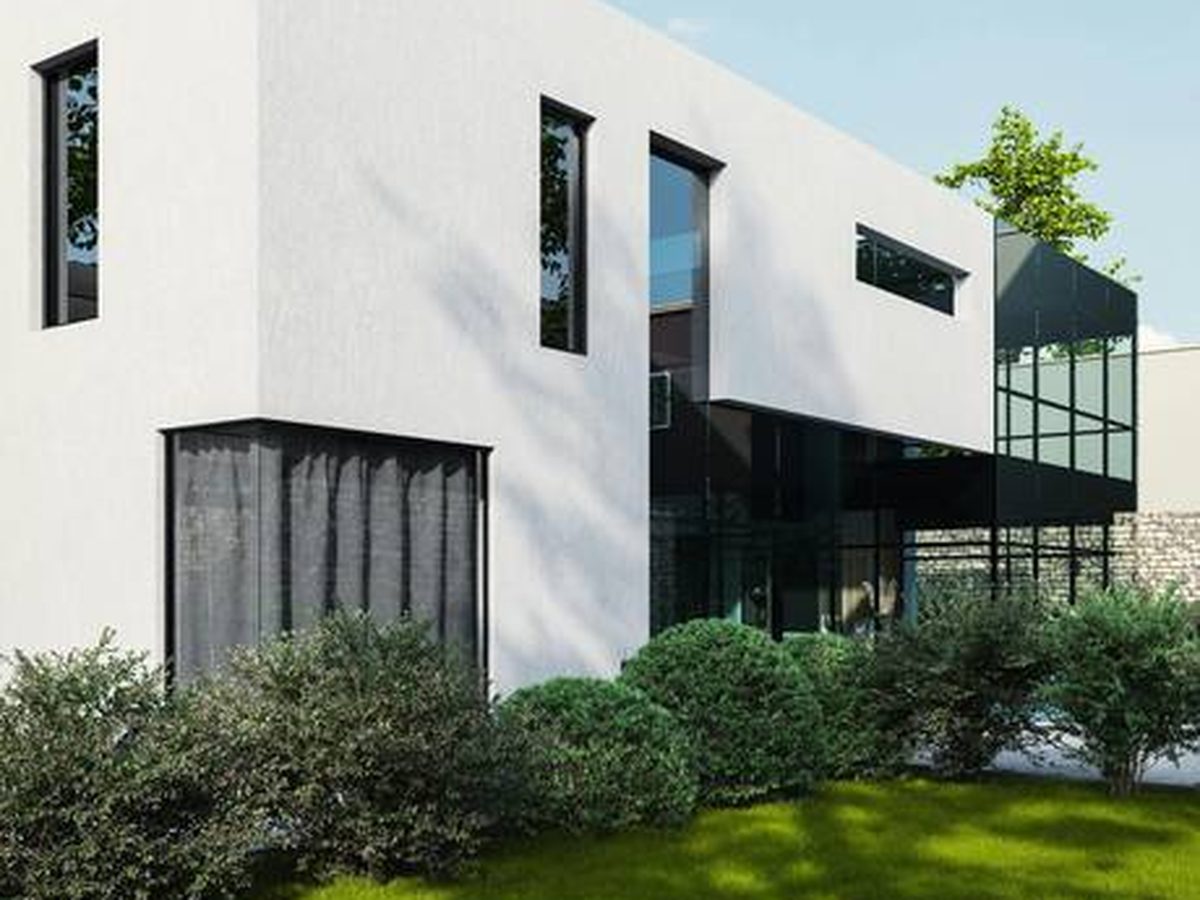
White K-Rend is one of the most striking choices you can make: clean, bright and architectural, it gives a home an immaculate face. It comes with one honest trade-off worth understanding before you choose it. White is the colour that shows dirt and algae soonest. Not because white render attracts more growth than grey or cream, but because any green, grey or black film contrasts far more starkly against white than against a darker shade.
So the upkeep question isn’t a flaw unique to white; white simply shows what every render eventually picks up. The good news is that keeping white K-Rend bright is manageable, and most of the work is done before the render goes on: choosing the right white, the right finish and the right detailing. This guide covers those decisions first, then the cleaning and maintenance that keep a white wall looking fresh for the long run.
Choosing your white: bright, clean or soft
“White” covers more ground than people expect. At one end is a crisp, near-pure bright white, which reads sharp and modern and is the most demanding to keep looking pristine; K-Rend Polar White is a crisp, bright example and has its own guide. A clean, bright-leaning white is often used as detailing against grey, as in the Sterling White and Pewter Grey pairing. At the softer end are warm off-whites such as K-Rend Champagne, which give much of the brightness with a gentler, more forgiving character.
The practical difference is how they live day to day. The brighter and cooler the white, the more starkly it shows algae, splashback and run marks, and the more it can look cold on a shaded wall. A softer, warmer white hides early marks a little better and sits more comfortably beside brick, stone and timber. If you love the crisp look, have it, but go in knowing it rewards a little more care. If you want white with less upkeep, lean towards the softer end.
Where white K-Rend works best
White is happiest on walls that dry quickly: south- and west-facing elevations with good sun, open aspects without overhanging trees, and walls well clear of the ground or with gravel at the base. On those elevations it stays bright for long stretches with little attention. It struggles more on north- and east-facing walls, walls tucked beside tall fences or neighbouring buildings, and walls close to trees or damp vegetation, where the surface stays damp for longer.
That doesn’t mean a north-facing frontage can’t be white; plenty are. It means you should expect that elevation to need cleaning sooner than the others, and it may be the place to choose a softer white or to be especially careful with detailing. Look at the walls you have, not the house in the brochure. For the wider design question of how white works across different property styles, see our guide to white render houses.
Scraped or dry-dash: which finish stays whiter?
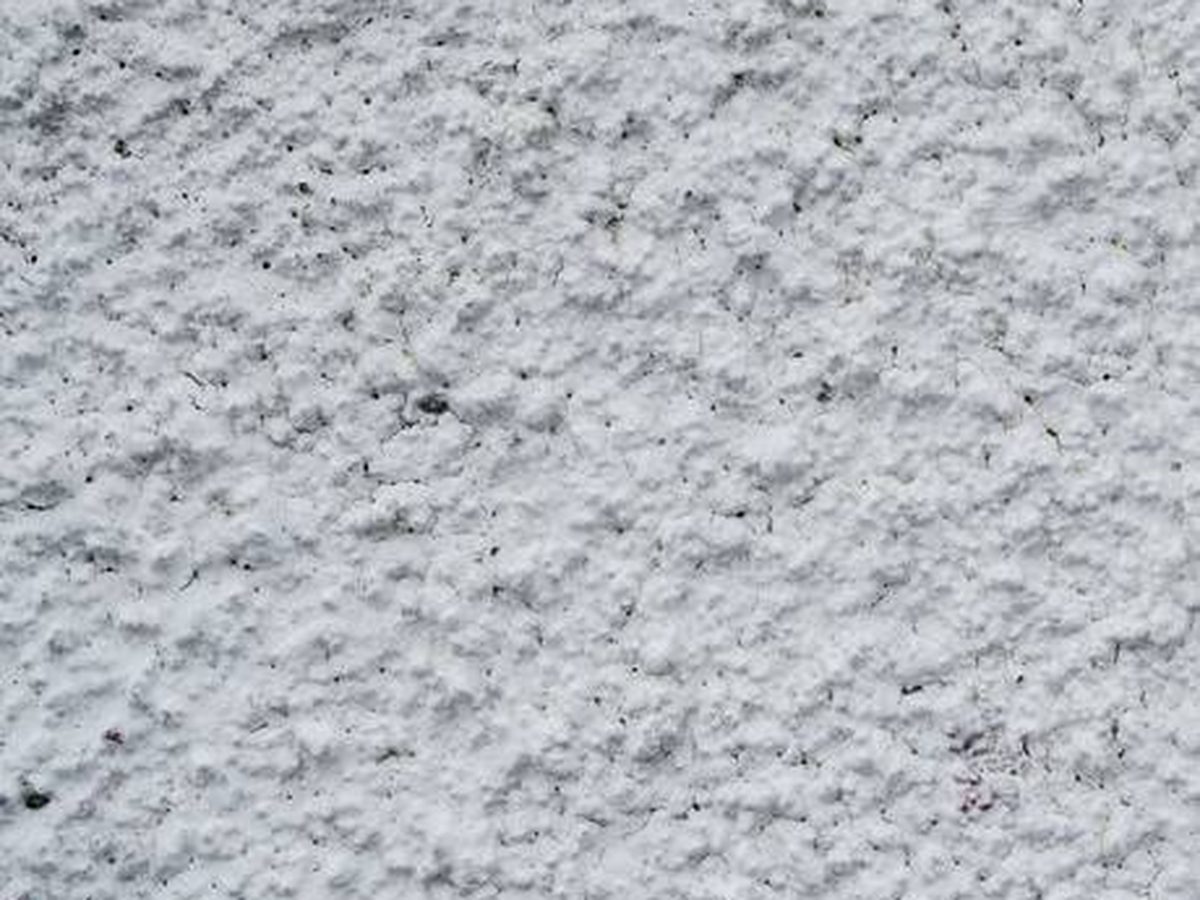
K-Rend is commonly finished either scraped or dry-dashed, and other finishes exist in some ranges; on white the choice matters more than on darker colours. A scraped finish gives a fine, even texture with relatively little surface for dirt and moisture to settle into, so it is the easier of the two to keep looking clean and the easier to wash. A dry-dash finish has aggregate thrown into the surface; it is tough and hides minor imperfections, but it has far more surface area and small sheltered pockets that hold moisture, so it tends to green up sooner and is harder to clean.
The aggregate also changes the colour. On a dash finish you see the stones as well as the white base, so the wall reads less purely white than a scraped one. If a crisp, bright white is the look you’re after and low upkeep matters, a scraped finish is usually the better match. If you prefer a textured, traditional look, our guide to K-Rend roughcast explains what you gain and give up.
Detailing that keeps a white wall cleaner
Much of the grime on white render isn’t random. It follows water. Rain running off a window sill without a proper drip leaves a grey streak beneath each corner. Copings and parapets that don’t project far enough send dirty water straight down the face. Downpipes too close to the wall, or leaking at joints, leave long vertical marks. At the base, rain bouncing off a patio or soil border splashes mud onto the lowest band of render.
The fix is design, and it’s cheapest at the specification stage. Ask your installer how water will be thrown clear at sills, copings and the head of the wall, how the render will finish at the base, and whether a gravel strip or slightly lower ground level is sensible to cut splashback. Properly fitted beads at edges, stops and the base give clean, protected lines that stay crisp. On a white wall, these details are the difference between a finish that streaks within a year and one that stays even.
Why white is unforgiving of poor workmanship
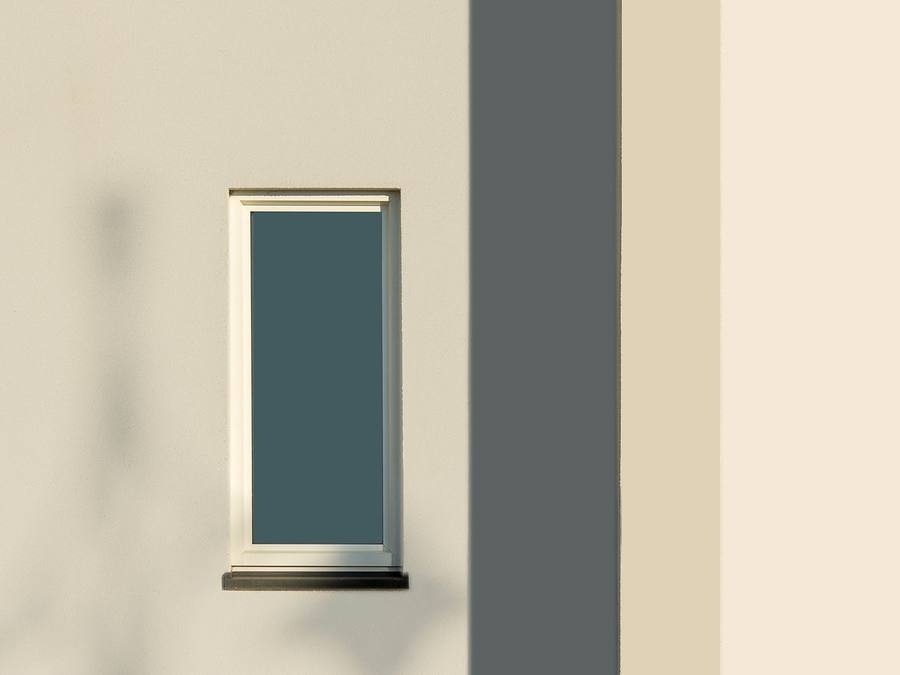
A mid grey hides a multitude of small sins; white hides almost none. Uneven scraping, patchy texture, visible joins where one day’s work met the next, and messy edges around windows all show more clearly on a bright white wall, especially in low, raking light. Because the colour runs through the render, these can’t simply be painted out afterwards.
When you’re comparing installers, ask how they plan each elevation so that work breaks at natural points such as corners, beads or changes in plane rather than mid-wall, and ask to see white jobs they completed a few years ago, not just fresh photographs. A white finish that still looks even after a few winters is the best evidence of an installer who works carefully. For more on what to look for, see our guide to finding a K-Rend approved installer.
White K-Rend next to windows, sills and brick
A white wall is only as clean-looking as the things around it. White uPVC frames are the obvious one: two different whites side by side can make one look slightly off, and a new render can make older frames look yellowed by comparison. Hold a sample against an actual frame before deciding, and if the frames are due for replacement, consider choosing them together with the render.
Stone and concrete sills matter too. Rain washing off a dirty or porous sill carries that dirt straight onto the white below, so a sill that has looked fine against brick for years can quickly start streaking a new white wall. Ask whether sills will be cleaned, extended or fitted with a drip. Metal brackets, satellite fixings and old pipe clips can leave rust marks on white, so it’s worth removing redundant fixings before the render goes on rather than rendering round them.
Where a brick plinth or neighbouring brickwork stays exposed, the junction needs a clean stop bead with a proper drip, so water leaving the render is thrown clear rather than staining the brick and the line stays crisp. It’s easy to get right at the specification stage and hard to correct afterwards.
Why white render goes green
The green or grey film that appears on white render is living surface algae: airborne spores that settle and grow wherever a wall stays damp and shaded long enough. It feeds on moisture and a little daylight, not on the render, so it’s a surface issue rather than a sign the render is failing. It’s the same growth that turns patios, fences and north-facing roofs green; white render just makes it obvious sooner.
Where it appears tells you why. Low-level greening is usually splashback. Greening along the top of a wall often points to a gutter or coping problem. A whole elevation going green evenly is usually shade and aspect. Heavy growth concentrated in one wet patch is worth investigating, because it can be a clue to a leak or defect keeping that spot damp. Our fuller guide on why K-Rend goes green goes deeper into the causes.
Marks on white render that aren’t algae
Not every mark on a white wall is green growth. Grey run-off streaks below sills and copings are dirty rainwater, not algae, and the long-term fix is better water shedding. Brown or rusty marks usually trace back to metal fixings, brackets or a leaking pipe above. Dark staining at ground level is often soil and splashback. Black speckling can be algae, lichen or an airborne deposit.
Each has a different cause, and treating them all the same can waste time or make things worse. A good starting point is to work out where the water or dirt is coming from before cleaning anything. Our guide to render staining explains the common types and what each one is telling you.
How to clean white K-Rend safely
The principle is simple: a gentle, render-safe biocidal soft wash that kills the existing growth, which then weathers away, and never a pressure washer, which can scar the finish in a way that shows starkly on white. It’s the same method used on any K-Rend, and our guide on how to clean K-Rend walks through it step by step, including what you can safely do yourself and when to call in someone with proper access equipment.
Tackle the cause to stay brighter for longer
Cleaning restores today’s brightness; reducing the conditions that feed algae keeps a white wall bright between cleans. The most effective step is to keep the wall drier. Clear and repair gutters and downpipes so rain isn’t running down the render, make sure sills and flashings shed water away, and stop soil and mulch building up against the base. A single overflowing gutter can keep a white wall greening no matter how often you clean it.
Then tackle shade and airflow. Cut back overhanging branches, climbing plants and shrubs pressed against the wall so sunlight and breeze can dry it faster after rain. None of this stops algae for good in a damp climate, but these steps can noticeably lengthen the gap between cleans.
What to expect in the first few years
A freshly rendered white wall looks its very best on the day the scaffold comes down, and it’s worth being realistic about what follows. Sunny, well-drained elevations may stay crisp for years. On cool, shaded or north-facing walls, a faint green film can begin to appear within a few years, often first beneath sills, along the base and on the side of the house nearest trees. That’s normal surface growth, not a defect.
Take photographs of each elevation once the job is finished; they make it much easier to judge later whether a change is gradual weathering or something new. What isn’t normal on any colour is cracking, hollow-sounding patches or render pulling away; those are repair questions rather than cleaning ones, and are worth raising with the installer while any guarantee is in force.
A simple upkeep routine for white K-Rend
White K-Rend doesn’t need much, but it does reward a little regularity. In spring, walk round the house and look at each elevation in daylight for early green film, new streaks and any cracks. In autumn, clear gutters and check downpipes before the wet months, and trim back growth that has crept towards the walls over summer. After heavy storms, glance at sills and copings for new run marks that suggest water is going where it shouldn’t.
When a light film appears, deal with it early: a gentle clean on a thin film is quicker, cheaper and kinder to the finish than waiting until growth is heavy. Many owners find a proper soft wash every few years keeps white K-Rend looking bright, with shaded elevations needing it sooner than sunny ones. Keep a note of when each elevation was last cleaned so you can see which walls need it most.
Planning a white K-Rend finish or need a tired one assessed? SmartMatch™ pairs you with one vetted local render specialist for a free, no-obligation survey and quote.
Get a free quote →Cleaning first: why painting isn’t the first answer
White K-Rend is through-coloured by design: the colour runs through the topcoat, so it doesn’t need routine painting to stay white. When a white wall starts to look grey or green, the first answer is a proper clean and fixing the damp and shade behind it, which brings back the colour that is already in the render.
Painting over a sound through-coloured render gives up that built-in colour and introduces a redecoration cycle the wall didn’t previously have. Some homeowners do consider a paint or coating for other reasons, and that’s a separate decision; if you’re weighing it, ask a specialist whether the product is compatible with your render system and how it affects breathability and any existing guarantee. If a white render is genuinely worn out at the end of its life, the honest answer is usually re-rendering rather than covering it.
What white K-Rend costs
Choosing white doesn’t usually change the price. A standard palette white generally costs the same as any other standard shade,. As a guide, K-Rend is commonly around indicative £65–£95 per m² fitted, with one elevation typically around indicative £3,500–£5,000 and a full house of four or more walls around indicative £12,000–£17,000+.
The things that move the figure are the wall’s condition, removal of any old render, scaffolding and access, the finish and the detailing. Good sill and coping detailing may add a little to the job, but on a white wall it is money that keeps paying back in cleaner elevations. For the brand-specific breakdown see our K-Rend cost guide, and for every render type compared, our house rendering cost guide.
When white K-Rend might not be right for you
White K-Rend is worth it for the right owner. The crisp look is hard to beat, and with reasonable sun, good drainage and sound detailing the upkeep is modest. Think twice if your main walls are heavily shaded or north-facing and you want truly minimal upkeep; there, a warm off-white or a mid grey will look fresher for longer with less attention, while still keeping the house light. A bright white can also look stark on a rural cottage or among warm brick and stone, and in a conservation area a change of colour may need permission, so check with your council first.
Sometimes the real question isn’t the colour. Older, solid-wall and listed homes usually need a breathable lime render rather than a modern cement-based system, and a wall with damp or movement needs that sorted first. Most of our specialists take on projects from around £3,500, so they’re best suited to larger repairs and re-renders; for a single small job, a local builder or plasterer may be quicker.
Getting white K-Rend specified properly
A white finish that stays bright starts with a clear specification. Before you sign, check the quote names the exact white and finish, the system and base coat being used, how the existing wall will be prepared, and how sills, copings and the base will be detailed to throw water clear. Ask what cleaning method the installer recommends, and confirm in writing what any guarantee covers and what would invalidate it.
View a large sample of your white on the actual wall, on both a sunny and a shaded elevation, before committing; a white that looks perfect in sun can read cooler in shade. For how a white finish fits into the wider project, from survey to scaffold to curing weather, our guide to exterior rendering is the place to start. If you’d rather not vet installers yourself, SmartMatch™ pairs you with one vetted local specialist who can survey the wall, talk through whites and finishes, and give you a written quote.
Frequently asked questions
Why does white K-Rend go green or grey?
Which white K-Rend shade is easiest to keep clean?
Does the finish affect how clean white render stays?
How do I keep white K-Rend clean and bright?
Can I pressure wash white render?
Why are there grey streaks under my windows?
Should I paint white K-Rend to restore it?
Is white K-Rend high maintenance?
Is white K-Rend a good choice for a north-facing house?
Does white K-Rend cost more than other colours?
Get a free K-Rend quote
Tell us about your property and SmartMatch™ pairs you with one vetted local render specialist — for a free, no-obligation survey and written quote for a fresh white finish. No directory roulette, no pressure.
Get a free quote →